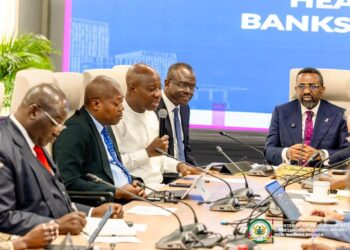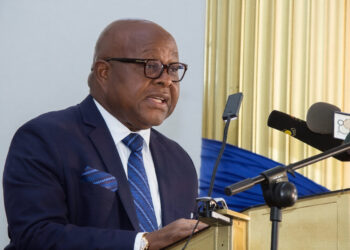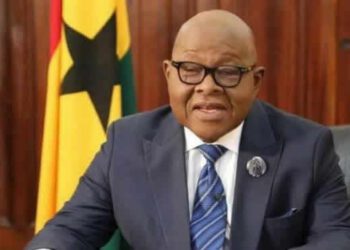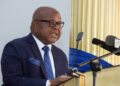
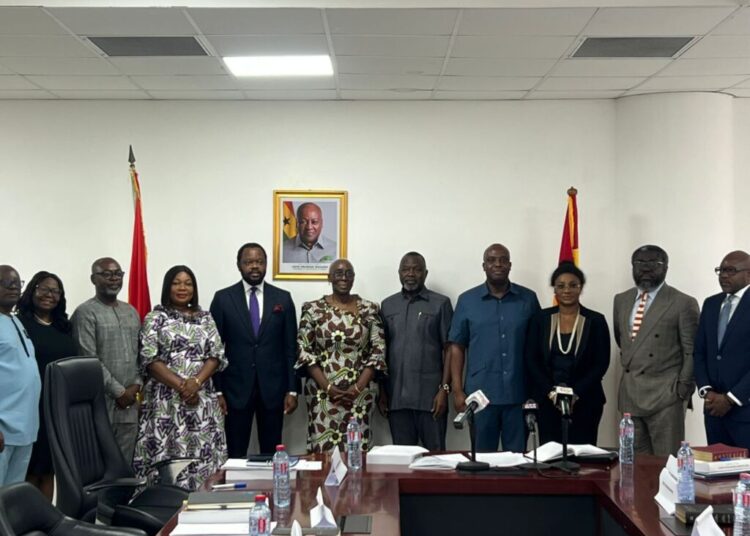
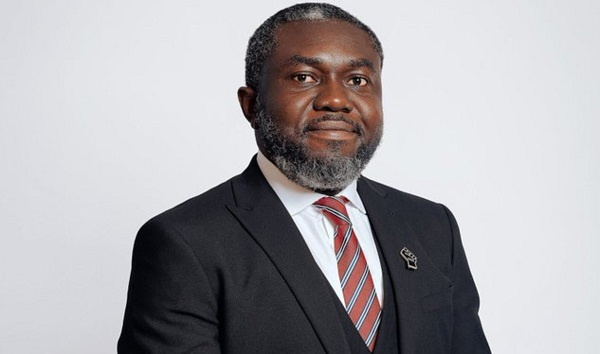
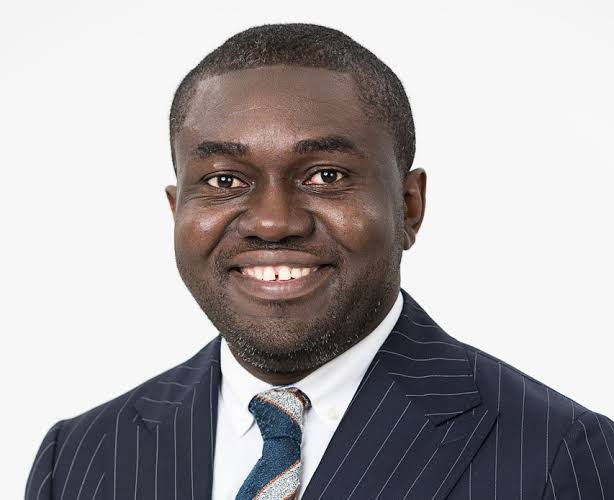
Ghana’s Constitutional Review Implementation Committee started work on 28 August, the day it was inaugurated, and is pushing to meet a drafting deadline set for November, according to its Secretary, Osagyefo Oliver Barker-Vormawor.
He told The Vaultz News in an exclusive interview at his Accra office that the eleven-member committee is securing an office, setting up workstations, and working to get its budget approved alongside the technical drafting.
He frames that effort as part of the assignment rather than a preliminary to it, since the government timeline left little lead time for the preparation any drafting body needs before it can draft. Measuring the committee solely by whether a bill appears in November, he cautions, would leave that entire body of work uncounted.
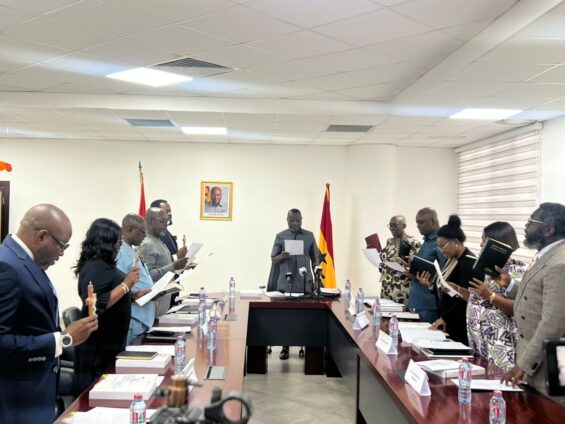
Barker-Vormawor was clear that the committee has not been idle. “As far as the government is concerned, work started on the 28th of August when we were inaugurated,” he said. The committee did not wait for the ceremony to settle. “Truth be told, the committee even held its first meeting on the very afternoon.”
That leaves roughly ten weeks between inauguration and the November deliverable, a window that must absorb both the technical drafting and everything required to make drafting possible.
Securing An Office, Workstations And A Budget
The preparatory tasks are practical ones. The committee is working to identify an office, set up workstations so members can work together, and secure approval for a committee budget, all while the drafting clock runs.
Barker-Vormawor counts that as genuine progress rather than administrative overhead, noting that the committee has effectively been asked to stand up the secretariat meant to support it. The body charged with drafting constitutional amendments is also the body assembling the machinery it will draft with.
His concern is how that work will be counted. If performance is assessed only on the production of a draft bill by November, he said, the setup effort disappears from the ledger even though it conditions everything else.
The point carries weight because Ghana has been here before. An earlier implementation committee reached the drafting stage without ever establishing a public presence, an outcome that says as much about institutional support as about the people involved.
The Student Movement Ghana Lost
Asked for his closing message to Ghanaians following the process, Barker-Vormawor turned to a constituency he says has gone quiet. He recalled the strength of student activism during the military era that began with the rise of General Ignatius Kutu Acheampong in 1972 and ran to the end of the decade, and he described its decline on Ghanaian campuses as a real loss.
His argument is that constitutional change of this scale cannot be delivered by a committee alone. “So a grand constitutional movement like that requires an awakening,” he said.
What he wants is organisation rather than sentiment. Young people, in his account, need to form structures that engage the process directly, and he counts carrying as many people along as possible within the committee’s own mandate.
He framed his hope in terms of ownership. He wants young people to become interested, take the political movement for themselves and run with it, rather than wait for the committee to hand them a role.
Why The Numbers Point To The Young
The appeal rests on electoral arithmetic rather than idealism. “Because at the end of the day, the vast majority of the voters are going to be young people.” From that he draws a blunt conclusion about what happens if they stay home. “Without young people showing up at the polls, the process fails.”
The consequence is that the committee’s technical output and the country’s demographic reality are bound together. A flawlessly drafted amendment package still dies if the generation that forms the bulk of the register treats the referendum as somebody else’s business.
That is the tension running through both halves of the interview. A committee still assembling its own working infrastructure is asking a generation with no recent tradition of mass organising to build a movement around its work, and it has weeks rather than years to make the case.
Whether the awakening he describes materialises will depend less on drafting than on whether anyone with reach into campuses and youth networks decides this process belongs to them. The committee cannot manufacture that, and by his own account it should not try, since its neutrality depends on explaining the choice rather than selling it.
READ ALSO: Global Rivers Experienced One of Their Driest Years in Decades in 2025 – WMO