President Bola Ahmed Tinubu has declared that Nigeria is entering an “age of prosperity,” arguing that the economic reforms implemented since he assumed office have corrected the country’s economic direction and created the foundation for a new phase focused on jobs, production and improved living standards.
Addressing Nigerians as the country marked its 66th Independence Anniversary, Tinubu used his national address to present a largely forward-looking assessment of his administration’s economic programme, shifting the emphasis from the difficult reforms of his first years in office to the broader prosperity those measures are intended to deliver.
According to the President, Nigeria’s independence had always carried a promise that went beyond political sovereignty, arguing that the country’s founding generation envisioned a nation capable of providing opportunity, dignity and a better life for its citizens.
He acknowledged that Nigeria’s 66-year journey had been marked by war, military rule, economic crises, insecurity and political upheaval, but said the country had endured because of the resilience of its people.
Tinubu noted that the central challenge now was to ensure that the promise of independence translated into tangible improvements in the lives of Nigerians.
His address comes after more than three years in which his administration has defended a series of far-reaching economic measures, including the removal of fuel subsidies and changes to the foreign exchange system, as necessary interventions to address longstanding distortions in the economy.
Tinubu, however, argued that the hardship associated with the measures should be understood as part of the treatment required to address deeper structural problems.
He compared the Nigerian economy to a patient suffering from cancer who must choose between painful treatment and temporary relief that allows the disease to worsen.
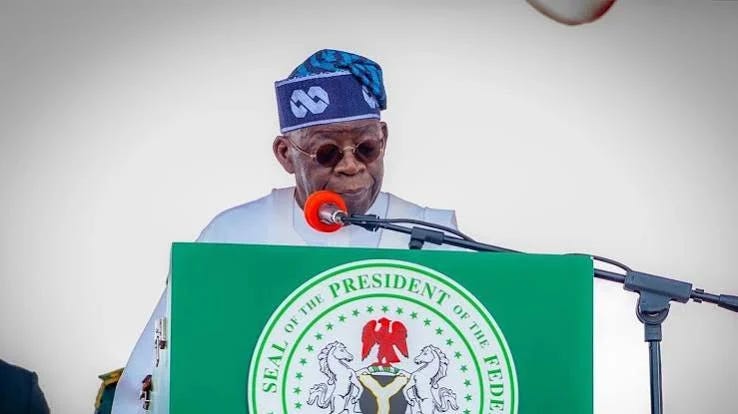
“By 2023, poverty was rising, and hope was nearly gone. The country’s situation was darker than ever. We had no choice but to act. Nigeria was like a sick patient who receives the terrible news that he has cancer.
“His doctor explains that the treatment will be difficult and painful, but that it offers a strong prospect of recovery. The patient has a choice. He can begin treatment, endure its discomfort and fight the disease. Or he can ask only for morphine, dull the pain and leave the cancer to spread.”
Bola Ahmed Tinubu
He added, “for too long, Nigeria’s leaders chose morphine while praying for a miracle that never came. They focused on symptoms while allowing the disease to take hold deep within the fabric of our society.”
Tinubu further noted that his administration chose to confront those underlying weaknesses rather than continue policies that, in his assessment, had postponed difficult decisions.
He acknowledged that the reforms produced “real” side effects but insisted that they should not be confused with the structural problems they were designed to address.
“When this Administration assumed office, we resolved to do things differently. We chose to excise the cancer. The reforms that followed were difficult. The side effects were real. Yet, we must never confuse the medicine with the disease.
“Our reforms did not create the weaknesses in our economy. They confronted them. Now, as certain influential but regressive voices would have us abandon the treatment and return ourselves to the abuse of addictive subsidies, we must resist their siren song.”
Bola Ahmed Tinubu
The President used the anniversary address to argue that the difficult phase of economic adjustment had now given way to a different national priority.
From Economic Reform to Jobs, Production and Shared Prosperity
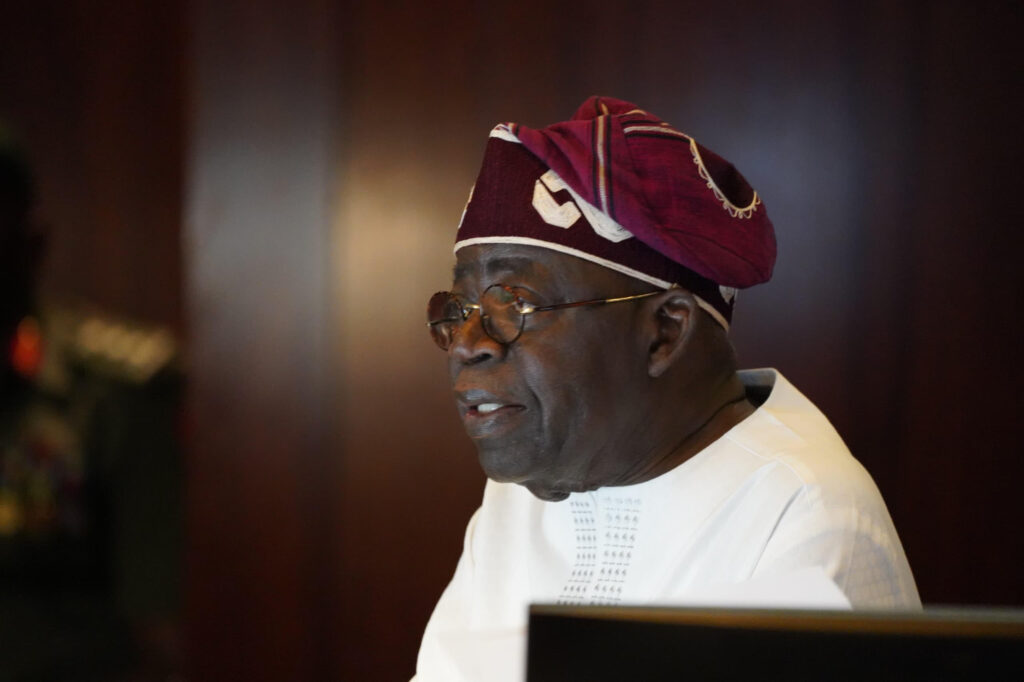
According to President Bola Ahmed Tinubu, the government’s overriding purpose during its first three years had been to “correct our nation’s course,” but he argued that the next phase must focus on translating economic reforms into broader prosperity.
“Three and a half years later, the evidence that Nigeria’s economic outlook has improved is undeniable. Our economy has grown by over 4 per cent this year. Both oil and non-oil sectors have contributed to the renewed period of stable growth.
“Oil theft is down. Inflation has fallen substantially from its peak. Our foreign reserves have been rebuilt, our foreign exchange market has stabilised, and in 2025 this country recorded its highest revenue from non-oil exports in its history, exceeding $6 billion. This is real money being made by real Nigerian businesses.”
Bola Ahmed Tinubu
The shift towards prosperity, however, was not framed solely in terms of headline economic indicators.
Tinubu defined prosperity through the experiences of ordinary Nigerians, including farmers, manufacturers, young workers and families dealing with the cost of food, transportation, education and healthcare.
He noted that the next stage of government policy would therefore focus on lowering production costs, improving infrastructure, expanding employment and increasing the productive capacity of the Nigerian economy.
“Now, our purpose is simple: shared and widespread prosperity. When I speak of prosperity, I do not speak merely of a larger economy, abstract numbers or better statistics. I mean something much more personal. I mean a Nigeria in which the farmer can cultivate his land safely, produce more at lower cost, and earn a decent return for his labour.”
Bola Ahmed Tinubu
Agriculture featured prominently in the President’s plans for reducing the cost of living.
He indicated that the government would expand mechanised irrigation and dry-season farming, improve access to seeds and fertiliser, increase agricultural mechanisation and invest in storage and transportation.
The government also plans to continue infrastructure development, including roads, railways and ports, with the aim of connecting farms and factories to markets more efficiently.
Tinubu argued that reducing the cost of production and transportation would ultimately help bring down prices for consumers.
The strategy extends to industrial production, with the President saying Nigeria would use its gas resources to power new industries, support the revival of factories and expand digital connectivity.
He also placed young Nigerians at the centre of the next phase of the government’s economic agenda, describing the country’s youthful population as a potential source of economic strength.
The President noted that the government would invest in skills demanded by employers while providing Nigerian businesses with infrastructure and financing needed to expand.
He also called for greater domestic production and stronger participation by Nigerian companies in international markets.
“I want to see more Nigerians making things. I want to see more Nigerian farms feeding our cities and supplying our factories. I want to see Nigerian businesses selling Nigerian goods to the whole world. I want young Nigerians building unicorns and creating opportunities for others here at home.”
Bola Ahmed Tinubu
He added, “we will use our gas to power new industries. We will support businesses that work to bring factories back to life in our great industrial centres.”
Moreover, he called on Nigerians to maintain confidence in the direction of the country and resist pressure to reverse the reforms.
The President ended his Independence Day address indicating that, “the age of reform has done its work. Now begins the age of prosperity. An age in which the promise of this great nation must finally become the lived experience of Nigerians from all walks of life.”
READ ALSO: Ghana Builds Fiscal Buffers Ahead of 2027 Debt Pressure