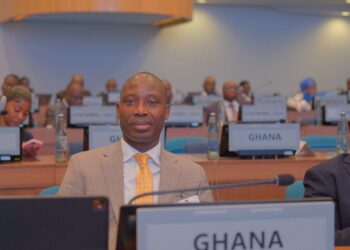

Prof. Samuel Kobina Annim, Director of the African Centre for Statistics at the UN Economic Commission for Africa (UNECA), has said Africa’s national statistical systems still fail to measure the variables that drive transformation. He made the call while delivering the inaugural lecture of the Academic Policy Dialogue Series at the University of Cape Coast (UCC).
The lecture, titled “Building Pan-African Statistical System: The Stakes for the Academic and Policy Community,” ran online and drew more than 100 participants, according to the moderator.
Prof. Annim named inequality, productivity, trade vulnerability, capital flight and grain stocks as the missing measures, and the organising Department of Data Science and Economic Policy says it will turn the discussion into a policy brief and communique.
Prof. Annim spoke from three vantage points. He taught at UCC about a decade ago, led the Ghana Statistical Service (GSS) through the 2021 Population and Housing Census, and now serves as the continent’s lead UN statistics official.

That record gave his message weight with an audience of academics and policymakers who depend on the numbers his office helps produce. The School of Economics at UCC organised the series, and his lecture opened it.
The Gaps in Africa’s Statistics
Prof. Annim told participants that African statistical systems concentrate on familiar headline indicators and neglect the figures that explain how economies change. Inequality shows who benefits from growth. Productivity shows whether output rises for sound reasons.
Trade vulnerability, capital flight and grain stocks show how exposed a country is to shocks. He first raised the list in his own inaugural lecture, and he repeated it in Cape Coast: “I talked about inequality, I talked about productivity, trade vulnerability, capital flight, and stock of grains.”
Prof. Annim directed his sharpest criticism at researchers. He questioned the habit of building studies around gross domestic product while the driver of that growth goes unmeasured. “Why would somebody do a research paper on GDP cross-country analysis when you are not measuring productivity? Productivity is what you need to improve on your GDP.“
For an academic audience, the remark amounted to a challenge. Scholars default to the data that exists, and when productivity statistics are absent, conclusions about growth rest on a narrow base.
How the Ghana Statistical Service Acted
Prof. Annim said his advocacy has already produced a result at home. His inaugural lecture in 2022 pressed the case for productivity data, and the statistical service responded.

“When I talked about productivity doing my inaugural in 2022, I got GSS to publish its first-ever work on productivity, hoping that it’s going to be institutionalized and then we can measure productivity as a country.”
Prof. Samuel Kobina Annim, Director of the African Centre for Statistics at the United Nations Economic Commission for Africa (UNECA)
The word that matters in that statement is institutionalized. A single publication cannot reveal a trend, while a series released year after year can. Whether the GSS makes productivity a regular release will decide if the gain lasts.
Numbers Citizens Can Recognise
Prof. Annim also challenged how statistics are judged. Accuracy and precision matter, he said, but relatability matters as well. He used the continent’s 6.3% unemployment rate to make the point.
“Our thinking about numbers should not just rely on accuracy and precision. It’s more about the relatability of the numbers. I keep saying that why would anybody think about the fact that Africa’s unemployment is 6.3%?”
Prof. Samuel Kobina Annim, Director of the African Centre for Statistics at the United Nations Economic Commission for Africa (UNECA)
A single continental rate says little to a young graduate in Accra, a trader in Kumasi or a farmer in the Northern Region. Numbers that people recognise in their own lives invite scrutiny, and scrutiny strengthens public debate on jobs and policy.
Seville, Beyond GDP and the Next Step
Prof. Annim linked the measurement debate to wider global conversations. He pointed to the financing for development outcome agreed in Seville, Spain, which he said carries a strong data and statistics narrative. He also referred to the Beyond GDP debate, which questions whether national output alone can describe progress.

His centre has produced 10 statistical briefs over the past year on how Africa’s statistics reflect its development aspirations and realities. Two of them, on population and GDP, were presented at UCC. They show a push to move African statistics beyond routine reporting and toward measurement that guides policy and earns public trust.
The next test comes from Cape Coast. The Department of Data Science and Economic Policy will publish its policy brief and communique for policymakers in Ghana and across Africa, and those documents will show whether the lecture’s argument turns into a demand for new indicators.
READ ALSO: Justin Kodua Commands 71 Percent Support in NPP General Secretary Race