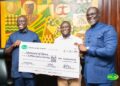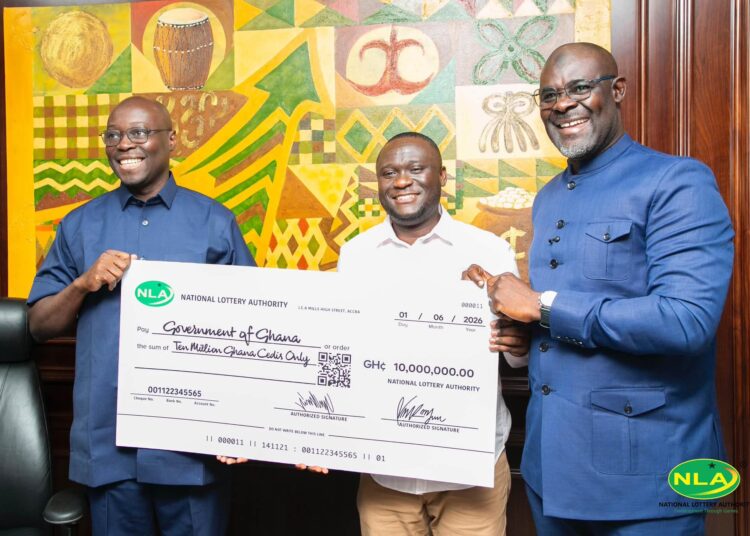
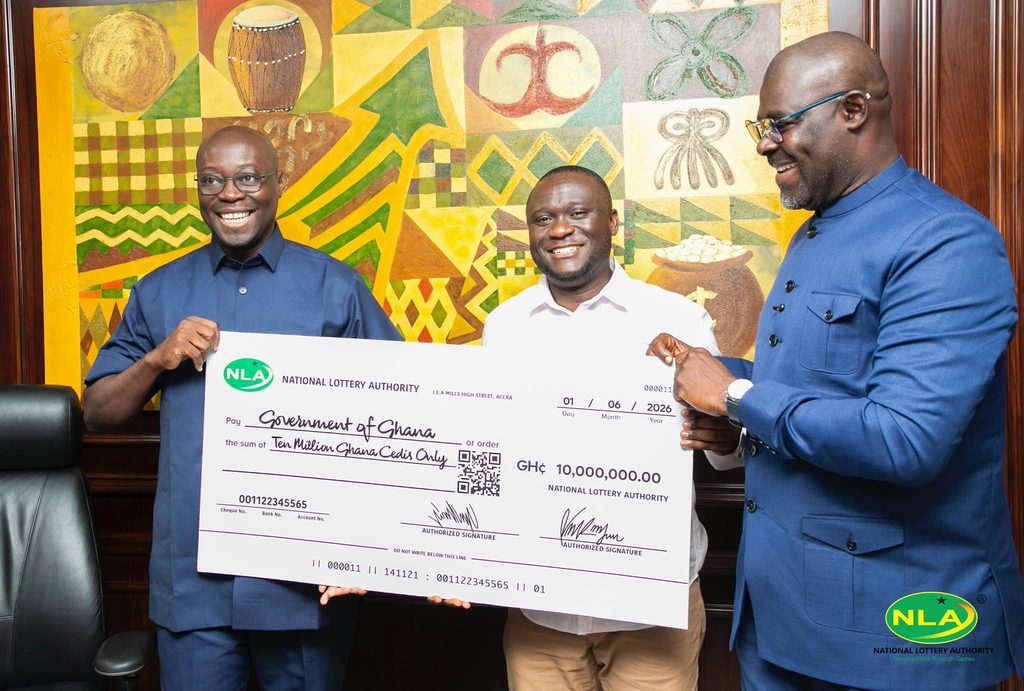
The National Lottery Authority (NLA) has paid GH¢10 million into the Consolidated Fund, reopening a wider fiscal question over how much value Ghana receives from public institutions that generate their own revenue.
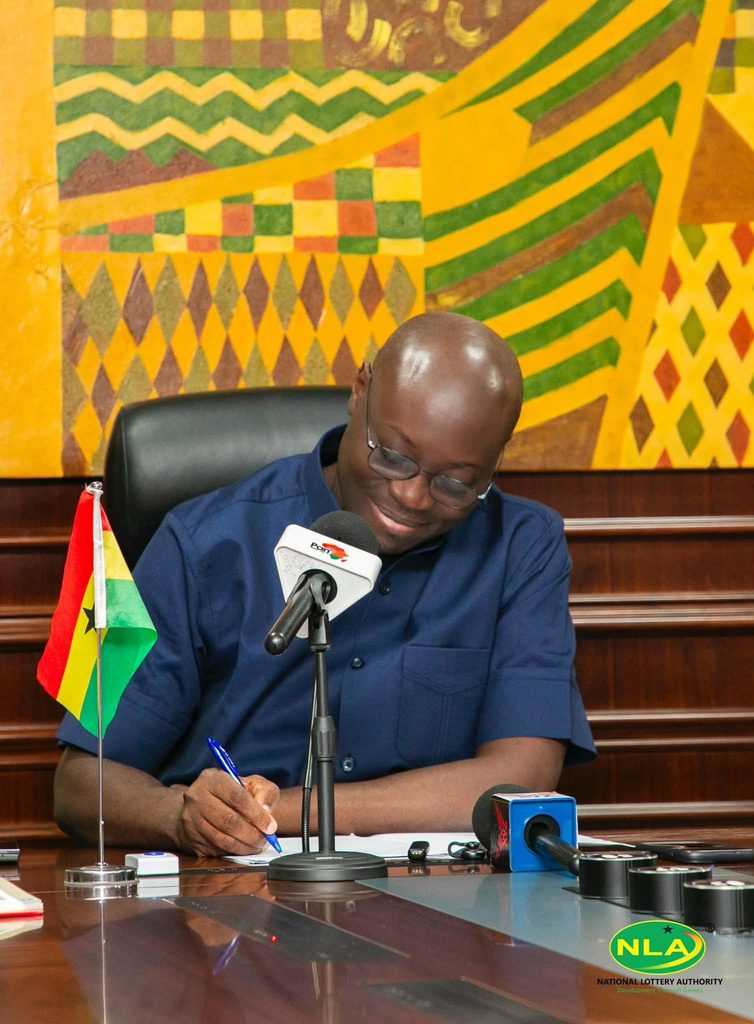
Finance Minister Dr Cassiel Ato Forson described the payment as the NLA’s first dividend since 2017 and said the government is reviewing revenue-sharing arrangements involving the Authority. In an official NLA post, Director-General Mohammed Abdul-Salam said the cheque reflected a renewed focus on efficiency, transparency and revenue generation.
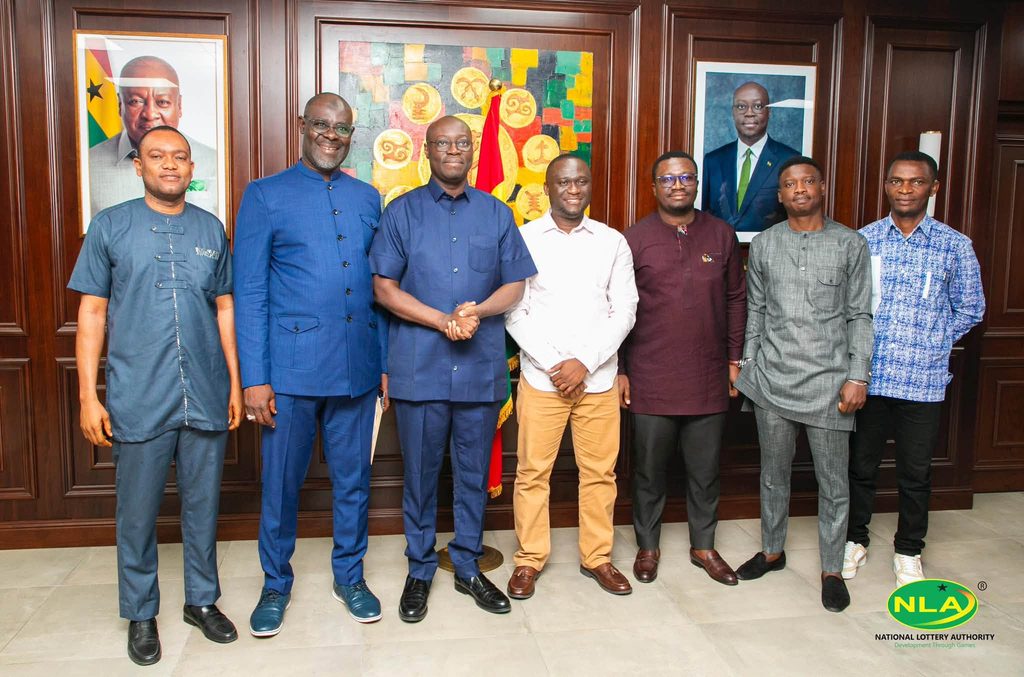
The payment was presented to the Finance Minister on Friday, 2 October. Ato Forson welcomed the return to dividend payments but cautioned that the amount should not become merely symbolic.
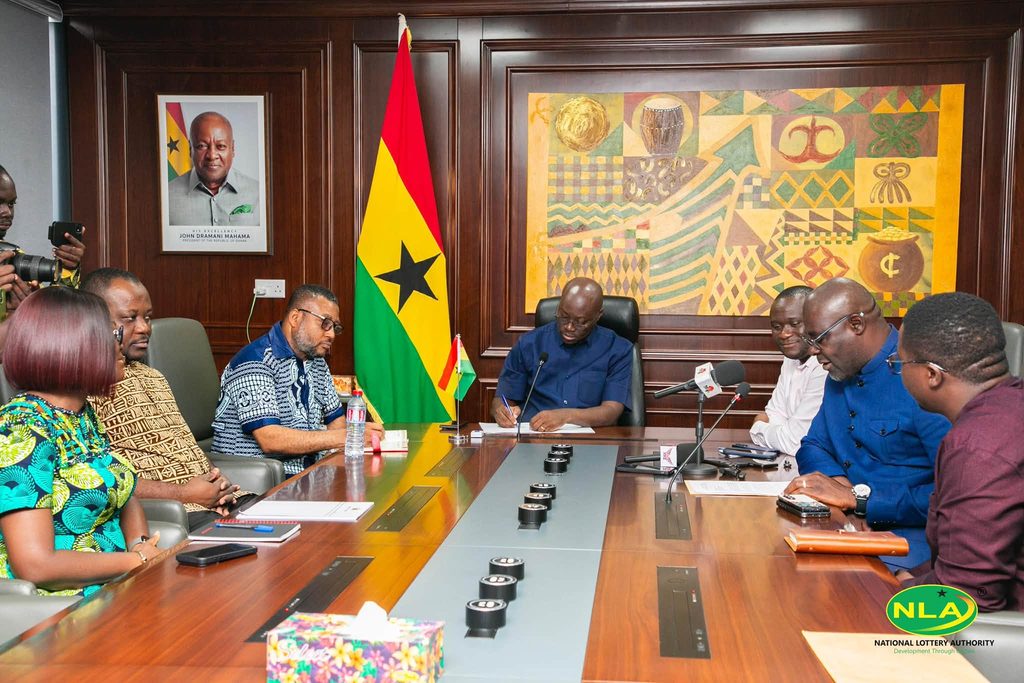
He said the Ministry of Finance and the Attorney-General are working to complete this month a review of agreements that, in his account, have transferred an unreasonable share of NLA revenue away from the state.
Dividend Return Reopens Revenue Question
For the Economy desk, the significance lies less in the GH¢10 million cheque than in the renewed focus on non-tax revenue. Ghana’s fiscal consolidation depends not only on taxes, but also on dividends, fees, royalties and other returns from assets and institutions held on behalf of the public.
The NLA is unusual in that discussion because it is both a statutory authority and an operator of the national lotto under the National Lotto Act, 2006. Lottery turnover cannot therefore be treated as money automatically available to the Treasury.
Prize payouts, retailer and operator arrangements, operating costs and statutory public-interest obligations sit between gross lottery activity and any distributable return. That makes the quality of the Authority’s accounts and commercial agreements central to judging how much value can sustainably reach government.
That issue has become more visible across the public sector. Vaultz recently examined the government’s broader dividend push, after the 2025 State Ownership Report showed strong aggregate profitability alongside limited dividend payments by state-owned enterprises.
NLA is a statutory authority and regulator rather than a conventional commercial SOE, but the underlying fiscal question is similar: how much internally generated value ultimately reaches the public purse?
Contract Review Targets State Take
The agreement review could become the more consequential part of Friday’s announcement. Any fiscal gain will depend on the terms eventually retained, amended or terminated, the revenue generated across licensed channels, prize obligations, operating costs and the share that remains available to the Authority and the state.
No findings from the review have yet been published, so the public record does not yet establish the scale of any foregone or recoverable revenue.The direction is consistent with the mandate given to the current NLA board when it was inaugurated in May 2025: strengthen revenue generation and modernise the Authority’s operations.
In February 2026, the NLA also announced the introduction of 5,000 new point-of-sale devices, describing improved system visibility and higher revenue potential as part of the objective. Those operational changes provide context for the current dividend, but the stronger test will be whether audited performance and recurring transfers improve over time.
The issue is already part of a wider lottery-sector restructuring. Vaultz previously reported a proposed KGL revenue deal expected to deliver GH¢550 million in 2027 under a revised revenue-sharing model. Friday’s statement suggests the Finance Ministry is looking beyond a single arrangement and assessing whether the broader commercial structure delivers sufficient value to the state.
Dividend Is Not Total Revenue
The first-dividend-since-2017 claim also requires a precise reading. It does not mean Ghana received no lottery-related revenue after 2017. Taxes paid by private operators, licence or contractual payments to the NLA, and programme contributions are different transactions from a dividend paid by the Authority to government.
NLA’s own records, for example, show a GH¢10 million contribution to the YouStart programme in 2022. The new development is the resumption of a dividend to the state.
That distinction is important because public debate around the Authority has also centred on how internally generated resources are used. Earlier Vaultz coverage of the fund use debate highlighted competing concerns over statutory obligations, public-interest spending and the need for transparent flows through public financial systems.
Reform Must Improve Predictability
For the budget, a one-off GH¢10 million payment is modest. The larger economic value would come from a repeatable framework in which government can estimate NLA returns with greater confidence and account for them transparently as part of non-tax revenue.
That would improve revenue forecasting without assuming that every cedi of lottery turnover is distributable profit. The October agreement review will therefore be the next test.
If it changes the state’s effective share of lottery income, the impact should ultimately be visible in NLA accounts and future transfers to government. If it does not, Friday’s cheque will remain important mainly as the restoration of a payment channel that the Finance Minister says had been dormant since 2017.
READ ALSO: Profit Without Dividend Is Not Public Value, SIGA Boss Tells State Boards