
Ghana’s financial recovery is moving faster than the measured expansion in physical industrial output, creating a test of how effectively easier monetary conditions are transmitting into production.
Bank of Ghana data show nominal private-sector credit expanded by 41.2 per cent year-on-year in June 2026, while real credit growth reached 34.1 per cent. The Ghana Statistical Service reports that the industrial production index grew by 3.0 per cent in the second quarter.
The two indicators measure different processes and should not be treated as directly interchangeable. Credit growth captures financing to firms and households, while the industrial index tracks changes in production volumes across mining, manufacturing, utilities and related activities.
Even so, the divergence matters because cheaper and more abundant credit should, over time, support working capital, capital expenditure and productive capacity.

The comparison comes as borrowing conditions have eased sharply. The average bank lending rate fell to 15.6 per cent in June from 27.0 per cent a year earlier, while the 91-day Treasury bill yield declined to 5.3 per cent from 14.7 per cent. Financing costs have therefore fallen substantially, but industrial output is responding more gradually.
Credit Runs Ahead
Bank of Ghana figures show that nominal private credit rose to GH¢119.64 billion at end-June, from GH¢84.75 billion a year earlier. The increase added GH¢34.89 billion to the stock of credit and extended the rebound already visible in private credit conditions.
The expansion continued beyond the second quarter. By August, nominal private-sector credit was still growing by 35.5 per cent year-on-year, while real credit increased by 29.0 per cent. Average lending rates stood at 15.9 per cent, compared with 24.2 per cent a year earlier. The credit recovery is therefore broader than a single monthly movement.
Stronger credit does not automatically produce an immediate rise in factory or mine output. Firms may use loans to refinance obligations, finance inventories, support payrolls or meet working-capital needs. Investment loans can also take several quarters to feed through to installed capacity and production.

Industry Moves Slower
GSS data put second-quarter industrial production growth at 3.0 per cent. Physical output was therefore higher than a year earlier, but its 3.0 per cent expansion contrasted sharply with the 34.1 per cent growth in real private credit recorded at end-June.
That gap does not prove lending is being used inefficiently. The Index of Industrial Production is a physical-volume measure, while bank credit covers the wider private economy. A large share of borrowing supports activities outside industry, and even industrial borrowing may affect output only after investment and production lags.
The more useful interpretation is that financial transmission is strengthening faster than the measured response in industrial production. Whether that gap narrows will depend partly on where banks direct new lending and whether firms convert lower financing costs into productive investment.
Lending Skews Services
The sectoral distribution of bank credit helps explain the divergence. At end-June, services accounted for 36.6 per cent of total bank credit, commerce and finance absorbed 24.1 per cent, and construction 10.7 per cent. Together, those three areas accounted for 71.4 per cent of total bank credit, reinforcing the concentration already visible in the banking data.
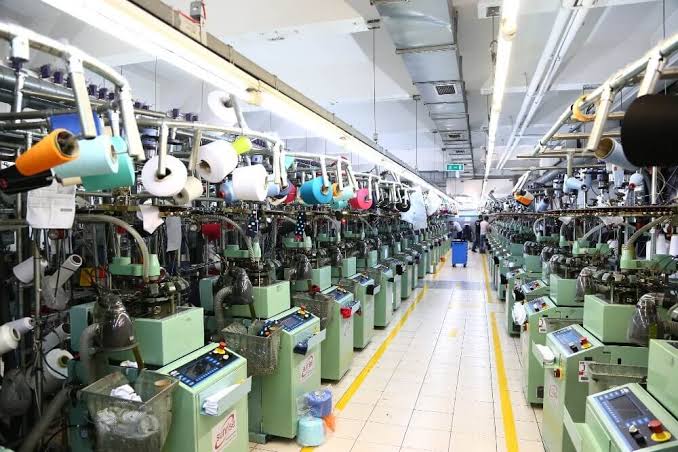
Manufacturing accounted for 9.9 per cent of credit, down from 10.6 per cent a year earlier, while mining and quarrying increased its share to 6.0 per cent from 2.8 per cent. The pattern shows that the credit boom is broadening financing, but its largest channels are not concentrated in manufacturing.
Credit flowing to services and commerce can support employment, distribution, trade and consumption without producing an equivalent movement in an industrial volume index. Construction can generate large spillovers, but projects also take time before financing appears as completed output.
Transmission Still Incomplete
The data therefore point to an incomplete rather than failed transmission process. Falling interest rates have stimulated credit demand, and banks are supplying substantially more finance, but physical production has not accelerated at the same pace.

For policymakers, the next question is not simply whether banks are lending more. It is whether the composition, maturity and use of that credit increasingly support productivity, investment and export capacity. Lower financing costs give firms room to rebuild inventories and invest, but sustained output gains will also depend on demand, energy costs, imported inputs and the wider operating environment.
The next industrial-production release will be important. If credit growth remains strong while industrial output accelerates, it would suggest financial easing is feeding more visibly into productive capacity. If the gap persists, attention will shift from the quantity of credit to where it is going and what firms are doing with it.