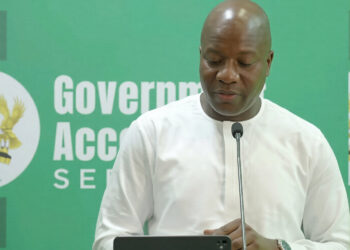
The Minister for Local Government, Chieftaincy and Religious Affairs, Hon. Mahama Ayariga, has announced that contractors will return to site within days or weeks to resume work on Phase 2 of the Kumasi Central Market, popularly known as Kejetia Market, following successful negotiations and ministerial approval for funding.
Speaking on the 24-Hour Economy during the Government’s Accountability Series, Hon. Ayariga provided updates on market infrastructure development across the country, with particular focus on the long-stalled Kejetia Market project and a broader national market development agenda.
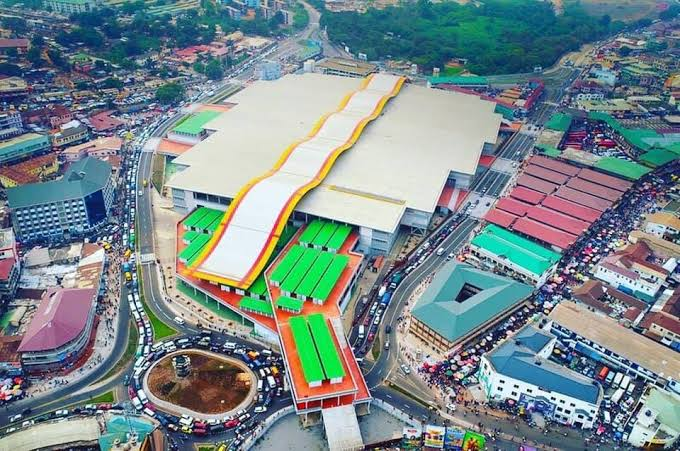
Hon. Ayariga recalled that while Phase 1 of the Kejetia Market was successfully constructed, Phase 2 had stalled at about 60 percent completion for the past two years.
He disclosed that negotiations with the contractor have now been completed, and the Minister of Finance, Hon. Dr Cassiel Ato Forson, has given approval to commence work on Phase 2.
Engaging Stakeholders on Phase 3
“The contractors will be moving back to site very shortly. Very soon, within a matter of days or weeks, they will be back on site for Kejetia Market Phase 2.”
Hon. Ayariga

He added that the Finance Minister had also approved the use of proceeds from Phase 1 and Phase 2 to enable contractors to begin work on Phase 3 of the project, indicating a coordinated financing approach across all three phases of the market’s redevelopment.
Hon. Ayariga said discussions on Phase 3 would continue with the Kumasi Metropolitan Assembly, the Ashanti Regional Coordinating Council, and the Asantehene, Otumfuo Osei Tutu II, to determine the way forward on implementing the next phase of the project.
He said these engagements would also cover negotiations on pricing and financing arrangements for Phase 3 once contractors return to site.
Two-Phase Market Delivery Model
Beyond Kejetia, Hon. Ayariga outlined a broader two-phase approach to market infrastructure delivery nationwide.
He explained that the first phase focuses on delivering market stores, sheds and essential commercial spaces, while a second phase delivers complementary social amenities such as police and fire stations, enabling more speedy delivery of markets through more structured financing aimed at achieving 100 percent completion by 2028.
He said Phase 2 of this broader national programme would subsequently commence under future funding arrangements through the District Assembly Common Fund.
To ensure the pace of work meets expectations, Hon. Ayariga disclosed that a committee has been established to review contractor performance nationwide.
He warned that contractors displaying a lack of capacity would have their contracts terminated and reassigned to more competent contractors, while confirming that funding for Phase 1 projects remains readily available for contractors who complete their work.
Pro-Women Market Development Agenda
Hon. Ayariga revealed that the finance minister has outlined an ambitious national market development programme that will be formally announced in the 2027 budget, stating that he would leave those specific details for the Finance Minister’s own announcement.
He added that it remains his intention to explore financing options for markets across the country’s various regional capitals.
He framed the government’s broader commitment to market development as closely tied to the push for a 24-hour economy aimed at creating jobs and improving conditions for market women.
“This is a pro-women’s government, a government that is concerned about the welfare of women, because most of the time our women are in the markets, from early morning in the scorching sun until late at night.”
Hon. Ayariga
Hon. Ayariga said that, building on the ongoing rollout of modern markets across Metropolitan, Municipal and District Assemblies (MMDAs), assemblies would be guided to integrate local economic development into their planning and budgeting processes, while partnering with the private sector and development partners to unlock local economic potential.
Regional Economists to Guide MMDAs
He disclosed plans, developed in consultation with the Minister of Finance, to appoint regional economists in every region to guide MMDAs in their economic development strategies.

He explained that spatial development frameworks developed by the Land Use and Spatial Planning Authority provide economic blueprints down to the district level, which regional economists would use to help assemblies explore and unlock their economic potential.
He noted that this effort would be supported by structured government investment, alongside strengthened local revenue mechanisms including property rates, betterment rates, lorry station levies and basic rates across the country’s assemblies.
READ MORE: GLA Calls on Stakeholders to Partner in Library Transformation Drive