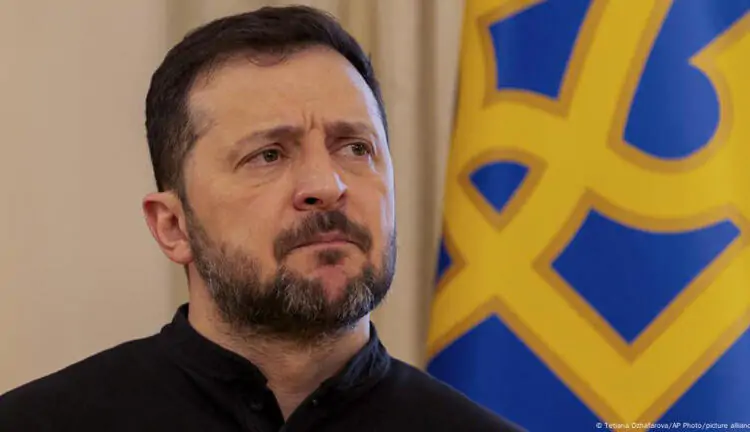
South Korea said today that it will recall its Ambassador to Ukraine, escalating a diplomatic dispute with Kyiv over Ukrainian President Volodymyr Zelenskyy’s disclosure of the transfer of two North Korean prisoners of war to South Korea.
The move comes days after South Korean President Lee Jae Myung threatened to take unspecified punitive measures if Ukraine refused to apologize for revealing the transfer, which Seoul says was supposed to remain confidential.
South Korea’s Foreign Ministry did not specify when Ambassador Park Hee-chang would return to Seoul. In a statement, the ministry said that South Korea would continue consultations with Ukraine and expressed hope that the dispute between the two countries could be resolved smoothly.
The diplomatic row began after Zelenskyy disclosed the transfer of the North Korean soldiers during his address to the United Nations on September 23. South Korea has accused Ukraine of violating a nondisclosure agreement concerning the transfer, which took place in mid-September. Kyiv, however, has denied agreeing to such an arrangement.
The two North Korean soldiers were among thousands of troops deployed by Pyongyang to support Russia’s war against Ukraine. They were captured in early 2025 and subsequently expressed a desire to resettle in South Korea, saying they could face persecution if they were returned to North Korea.
South Korea had agreed to accept the soldiers. Under South Korean law, the country regards North Korea as part of its territory and maintains a policy of accepting and providing financial support to North Korean defectors.
South Korean officials said the decision to keep the transfer confidential was motivated by concerns over the safety of the two soldiers and their relatives in North Korea. Disclosure of their identities and location could potentially expose their families to retaliation.
However, experts have suggested that the South Korean government may also have been concerned that publicizing the soldiers’ arrival could complicate its efforts to improve relations with North Korea.
North Korea’s state media has not commented on the transfer of the two prisoners. Pyongyang has previously reacted angrily to high-profile defections by North Korean citizens, accusing South Korea of kidnapping them.
Relations between the two Koreas have remained tense, with North Korea having rejected dialogue with South Korea and the United States while placing greater emphasis on strengthening its nuclear capabilities since 2019.
South Korea In A Difficult Diplomatic Position
The latest dispute puts Seoul in a difficult diplomatic position. While South Korea is protesting Ukraine’s disclosure of the prisoners’ transfer, experts say that maintaining relations with Kyiv remains important to Seoul’s national interests.
Ukraine could provide South Korea with intelligence concerning North Korea’s expanding military cooperation with Russia, including information about North Korean troops’ involvement in the war and their battlefield experiences.
Experts also argue that cooperation with Ukraine is important to South Korea’s broader relationships with Western countries supporting Kyiv in its war against Russia. A prolonged diplomatic dispute could therefore complicate some of Seoul’s strategic interests at a time when North Korea’s military cooperation with Moscow is attracting increasing attention.
Observers have suggested that Zelenskyy’s decision to reveal the transfer may have been intended to highlight the risks posed by North Korea’s military support for Russia and strengthen international arguments for continued assistance to Ukraine.
The disclosure also brought greater attention to the role of North Korean soldiers in Russia’s war against Ukraine and the circumstances surrounding their capture.
It remains unclear what further measures South Korea may take if the dispute with Ukraine continues. The Foreign Ministry’s decision to recall Ambassador Park represents a significant escalation, but Seoul has also indicated that it remains open to consultations with Kyiv.
The South Korean government has previously demonstrated support for Ukraine since Russia launched its full-scale invasion. Seoul has provided $445 million in humanitarian assistance to Ukraine since 2022.
The Ambassador’s recall therefore comes as South Korea attempts to balance its protest over the disclosure with the broader strategic importance of maintaining relations with Ukraine. While Seoul wants the confidentiality dispute addressed, it also has an interest in preserving channels of cooperation with Kyiv, particularly concerning North Korea’s growing military relationship with Russia.
For now, South Korea and Ukraine remain divided over whether a nondisclosure agreement existed, with Seoul maintaining that the transfer was covered by such an arrangement and Kyiv denying that it agreed to one. The South Korean Foreign Ministry has nevertheless said that it hopes consultations will lead to a smooth resolution of the dispute.
READ ALSO: India’s ‘Cockroach’ Party Threatens Nationwide Protests Over Election Chief