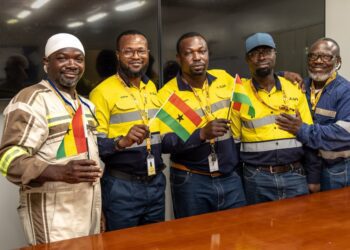
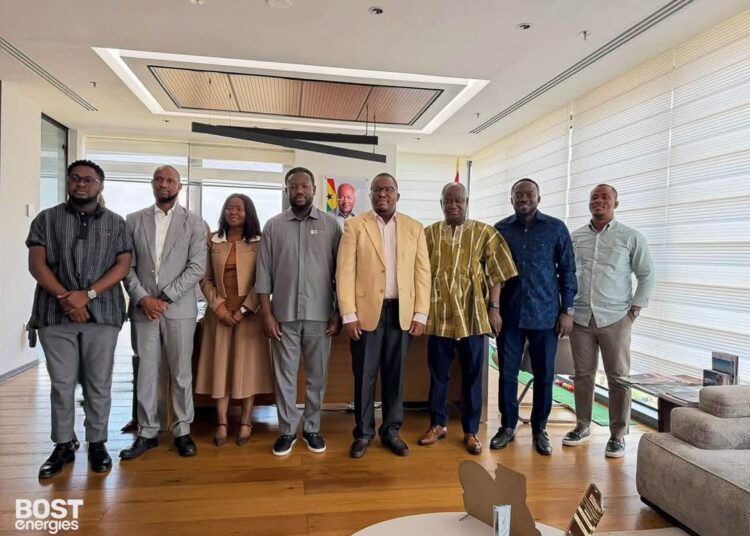
Ghana’s petroleum storage and transportation infrastructure has become another point of interest for the Eswatini National Petroleum Company (ENPC), as the southern African delegation continues its engagement with institutions across Ghana’s petroleum value chain to examine operational practices and approaches to energy security.
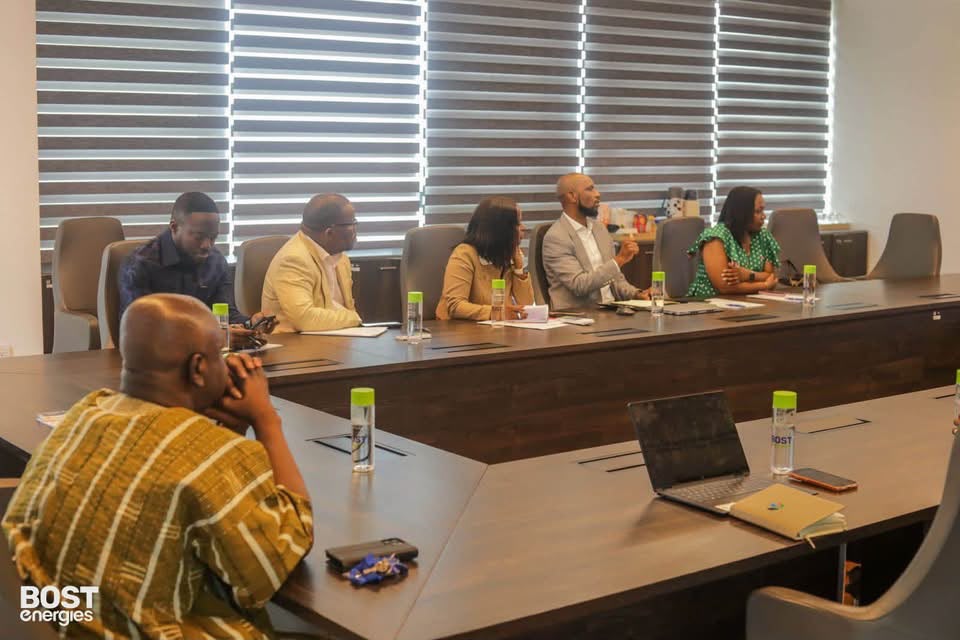
BOSTenergies hosted the ENPC delegation for a knowledge-sharing session focused on its storage and transportation network, business framework and operational arrangements.
The engagement was led by Managing Director Afetsi Awoonor and Deputy Managing Director Nat Salifu Acheampong, alongside department heads who briefed the visitors on the company’s operations.
The visit adds a logistical and commercial dimension to the delegation’s wider study of Ghana’s petroleum industry, following engagements with institutions involved in upstream petroleum governance, downstream regulation and refining.
For ENPC, the discussions offer an opportunity to examine how Ghana’s institutions organise different parts of the petroleum supply chain.
For BOSTenergies, the engagement creates scope to share operational experience with a national petroleum company seeking to strengthen its understanding of the sector.
Storage And Transportation At The Centre Of Discussions
BOSTenergies’ engagement with ENPC focused on the infrastructure and business arrangements through which the company operates its petroleum storage and transportation network.
These functions are important to the movement of petroleum products through the downstream value chain. Storage infrastructure provides capacity to hold products before distribution, while transportation arrangements support their movement between supply points and markets.
Together, these functions can influence the reliability of product distribution, the management of supply interruptions and the ability of market participants to respond to changing demand.
BOSTenergies said its department heads explained the company’s operational framework and how its business is run, giving the visiting delegation an opportunity to learn from its experience.
The company described the session as a platform for both organisations to exchange knowledge and strengthen their institutional relationship.
“ The team from Eswatini is in Ghana to study best practices in the petroleum sector, and they came to learn how BOSTenergies functions.”
BOST Energies
The statement underscores the practical focus of the engagement: examining how a Ghanaian institution manages its business and infrastructure rather than limiting the visit to general discussions about cooperation.
However, BOSTenergies did not disclose specific operational procedures shared with the delegation, identify individual projects discussed or announce a formal agreement arising from the meeting.
Visit Broadens ENPC’s Exposure To Ghana’s Petroleum Value Chain
The BOSTenergies engagement forms part of a broader series of interactions between ENPC and Ghanaian petroleum institutions.
During its visit to the Tema Oil Refinery (TOR) on October 5, the delegation examined refining processes, safety practices, petroleum-product supply and national energy infrastructure.

Its engagement with the Petroleum Commission focused on Ghana’s upstream oil and gas value chain, while discussions with the National Petroleum Authority (NPA) covered downstream regulation, including product quality, safety, efficiency and market oversight.
The sequence of engagements provides exposure to different functions within the petroleum industry, from upstream resource governance and refining to regulation, storage and transportation.
These activities are closely connected, even though they serve distinct purposes. Refining converts crude oil into petroleum products; regulation establishes and enforces requirements for downstream market operations; and storage and transportation infrastructure supports the movement and availability of products.
Understanding how these functions interact can help a visiting national petroleum company assess the institutional arrangements that underpin the broader supply chain.
ENPC’s mandate includes petroleum-product sourcing, storage and trading to support supply security. Its discussions with BOSTenergies therefore have particular relevance to the logistics and infrastructure dimension of its work.
The visit does not, by itself, establish that ENPC intends to adopt a particular Ghanaian model. Rather, the engagements provide an opportunity to examine operational approaches that may inform the company’s own decisions.
Knowledge Exchange Puts African Energy Cooperation Into Practice
BOSTenergies framed the meeting as an example of African cooperation through practical knowledge exchange, expressing its intention to continue hosting similar sessions.
“Moments like this show what African unity looks like in action.”
The company also indicated that the engagement would not be its last knowledge-sharing session, signalling an interest in maintaining channels for institutional learning and cooperation.

For African petroleum institutions, such exchanges can create opportunities to compare approaches to infrastructure management, technical operations and supply security. They may also help organisations identify practices that can be adapted to their own operating environments.
Nevertheless, the value of knowledge-sharing initiatives ultimately depends on what follows the discussions. Continued engagement, the application of relevant lessons and clearly defined areas of cooperation would help establish whether the exchange produces practical benefits beyond the visit itself.
BOSTenergies did not announce a joint project, investment commitment or implementation timetable with ENPC. The immediate outcome remains the sharing of information about its operational and business framework.
Energy Security Depends On More Than Infrastructure
The engagement also draws attention to the relationship between physical infrastructure and wider energy-security objectives.
Storage and transportation capacity can help support product availability, but infrastructure alone does not determine how effectively a petroleum system responds to disruption.
Supply planning, commercial arrangements, operational efficiency and coordination across institutions also influence the performance of the value chain.
For a company responsible for petroleum sourcing, storage and trading, learning how another institution organises these functions may provide useful operational insights.
The extent to which those insights translate into stronger supply security will depend on how they fit the company’s own market conditions and institutional responsibilities.
Ghana’s experience may offer lessons in this regard, but the two countries’ operating environments and institutional arrangements should not be assumed to be identical.
The delegation’s engagements across multiple Ghanaian institutions create an opportunity to consider the petroleum value chain as an interconnected system rather than as a collection of isolated operations.
From Courtesy Visits To Lasting Cooperation
BOSTenergies said it was pleased to host the delegation and looked forward to continued knowledge-sharing and collaboration.
The session led by Afetsi Awoonor and Nat Salifu Acheampong represents another step in ENPC’s engagement with Ghana’s petroleum industry, adding storage and transportation operations to the areas examined during the visit.

The next measure of the engagement’s significance will be whether the knowledge exchanged informs operational improvements, strengthens institutional relationships or leads to further technical cooperation.
For now, the visit highlights the role that African petroleum institutions can play in learning from one another as they seek to strengthen their operations and support energy security across the continent.
READ ALSO: Akufo-Addo’s Cabinet Weighed Ghana-BRICS Membership – Ablakwa Discloses