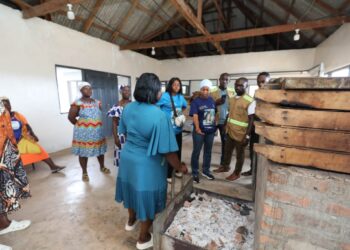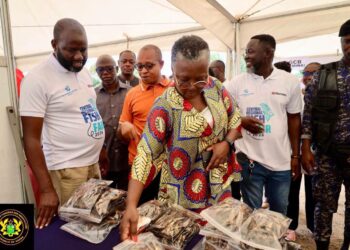
The Veterinary Services Department of Ghana is strengthening efforts to promote responsible antimicrobial use and improve farm biosecurity among poultry farmers in Ghana’s Western Region, with support from the United Kingdom Government funded Tackling Deadly Diseases in Africa Programme (TDDAP), implemented by the Palladium Group and its consortium partners.
The intervention involves training two poultry Farmer Field Schools on antimicrobial use (AMU), antimicrobial resistance (AMR) and farm biosecurity, equipping farmers with practical knowledge to prevent infections, manage animal health risks and improve production practices.
The training also introduces a monitoring system that enables farmers to report antimicrobial use at the farm level to the Veterinary Services Department, providing a basis for improved oversight, data collection and evidence-based decisions on the use of veterinary medicines in poultry production.
”The introduction of a farm level antimicrobial use monitoring system provides an important opportunity to strengthen collaboration between poultry farmers and veterinary authorities, improve understanding of medicine use patterns and support responsible practices that protect animal health, public health and the sustainability of poultry production.”
Veterinary Service Department
Strengthening Responsible Antimicrobial Use
Antimicrobials remain essential to veterinary medicine, particularly in treating bacterial infections and protecting animal health. However, inappropriate use, including unnecessary administration, incorrect dosing and failure to follow professional guidance, contributes to the development and spread of antimicrobial resistance.
AMR occurs when bacteria and other microorganisms develop the ability to survive treatments that previously controlled or eliminated them. As resistance increases, infections become more difficult to treat, potentially resulting in higher veterinary costs, prolonged illness, animal losses and reduced productivity across livestock value chains.
The Food and Agriculture Organization of the United Nations (FAO) identifies antimicrobial misuse in livestock production, aquaculture and crop production as a significant concern because resistant microorganisms can spread through animals, food systems and the environment.
The organisation therefore promotes responsible medicine use alongside improved hygiene, disease prevention and farm management.
‘’For poultry farmers, the implications extend beyond the immediate cost of medicines. Poor antimicrobial practices can increase production risks, undermine the effectiveness of available treatments and expose farms to avoidable financial losses.’’
Food and Agriculture Organisation of United Nations, FAO
The training supported by Palladium and its partners seeks to address these risks by strengthening farmers’ understanding of when antimicrobial medicines are appropriate, why veterinary guidance matters and how preventive management can reduce the need for treatment.
Responsible use does not mean withholding essential medicines from sick animals. Rather, it requires appropriate diagnosis, professional advice, correct administration and adherence to prescribed treatment instructions. Farmers also need to understand that antibiotics treat bacterial infections and are not effective against viral diseases.

These distinctions are important in commercial poultry production, where decisions concerning disease control, flock health and medication can affect operating costs, productivity and the quality and safety of poultry products.
Farm Biosecurity as an Economic Safeguard
Farm biosecurity constitutes another major component of the intervention, recognising that preventing infections is an important way to reduce dependence on antimicrobial medicines.
Effective biosecurity measures include regular cleaning and disinfection of poultry houses and equipment, restricting unnecessary farm access, controlling rodents and other disease carriers, maintaining clean water supplies and ensuring proper handling of animal waste.
Farmers can also reduce disease risks through appropriate vaccination, adequate ventilation, suitable stocking densities, good nutrition and the separation of sick birds from healthy flocks under veterinary guidance.
The FAO emphasises that improved hygiene and responsible antimicrobial use are complementary measures in containing AMR. Better prevention reduces the likelihood of infections, while appropriate treatment helps preserve the effectiveness of medicines when they are genuinely required.
”For poultry enterprises, these practices have direct commercial relevance. Disease outbreaks can disrupt production cycles, increase mortality, raise expenditure on veterinary services and medicines, and reduce the quantity of marketable birds.”
Food and Agriculture Organisation of United Nations
Preventive investment can therefore support more predictable production and strengthen farm-level resilience. Although biosecurity requires resources, its potential benefits include fewer avoidable infections, improved animal welfare and more efficient use of farm inputs.
The training also reinforces the importance of viewing antimicrobial resistance through a One Health perspective, which recognises the interdependence of human, animal and environmental health.
Resistant bacteria can move between animals, people and the environment through several pathways, including direct contact, contaminated food and animal waste. This makes AMR a concern for the entire poultry value chain, from production and processing to distribution and consumption.
Strengthening farm level practices consequently contributes to wider efforts to protect public health while sustaining the productivity of the livestock sector.

Monitoring to Improve Veterinary Oversight
The introduction of a system for reporting antimicrobial use represents a significant operational component of the training.
Farm-level monitoring can help veterinary authorities understand which medicines farmers use, how frequently they administer them and the circumstances in which treatment becomes necessary. When properly recorded and analysed, such information can support surveillance, identify patterns of use and guide targeted interventions.
It can also improve communication between farmers and veterinary professionals by providing a clearer picture of medication practices and the health challenges affecting poultry operations.
Reliable data is particularly important because antimicrobial resistance cannot be addressed effectively through awareness campaigns alone. Monitoring helps authorities assess practices, identify potential problems and develop responses based on evidence rather than assumptions.
The World Organisation for Animal Health (WOAH) similarly emphasises the importance of monitoring antimicrobial use in animals alongside investments in disease prevention, biosecurity and surveillance.
”For the system introduced through the Farmer Field Schools, sustained participation by farmers will be essential. Records need to be accurate, consistently maintained and useful to both producers and veterinary authorities.”
WOAH
Training must therefore translate into routine farm practices, supported by accessible reporting procedures, continued technical guidance and feedback that demonstrates the value of participation.
The Veterinary Services Department and its partners can build on the initiative by encouraging wider adoption of responsible antimicrobial practices and strengthening the integration of farm-level information into veterinary oversight.
Ultimately, the intervention links animal health management with business sustainability and public health protection. By improving farmers’ knowledge, promoting preventive practices and introducing a mechanism for reporting antimicrobial use, the initiative supports a more accountable approach to poultry production.
Its longer-term value will depend on how consistently farmers apply the lessons, how effectively veterinary authorities use the information collected and whether the practices become embedded in everyday farm management.
READ ALSO:GoldBod Sells $125m in Maiden Auction