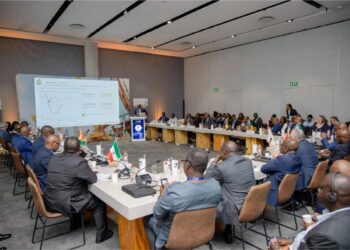
Microsoft is pushing to move artificial intelligence beyond routine office tasks and into the operational systems of energy producers, utilities and mining companies, an approach that could have implications for Ghana as it seeks to improve industrial efficiency, strengthen resource governance and capture more value from its natural resources.
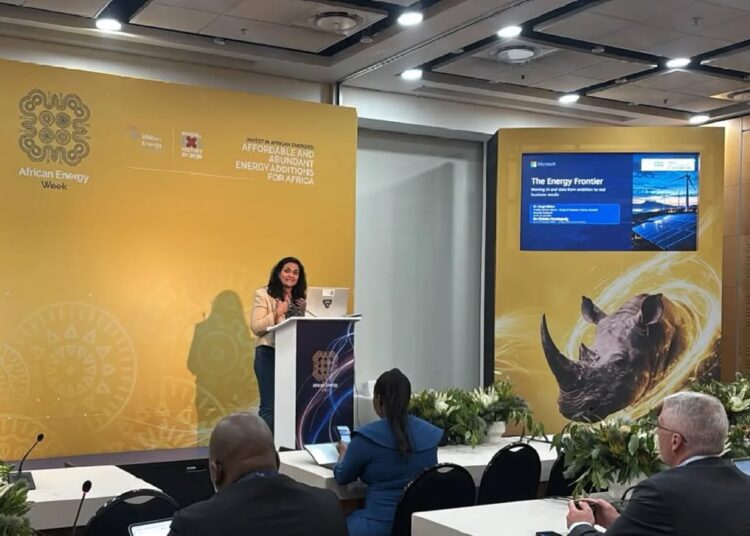
At a Microsoft-hosted session at African Energy Week 2026 on Monday, Gargi Mishra, the company’s Frontier Industry Advisor for Energy and Resources, discussed how organisations can connect data generated across industrial operations with AI tools to support faster decision-making, identify problems earlier and improve asset performance.
The discussion comes as Ghana’s energy and extractive industries manage increasingly complex operational demands, from maintaining oil and gas infrastructure and improving electricity reliability to monitoring mining operations and strengthening oversight of natural-resource revenues.
While AI is not a substitute for investment in infrastructure or effective regulation, its ability to analyse connected operational data could offer companies and public institutions additional tools to address these challenges.
“The opportunity for the energy sector is to connect the data companies already generate across their operations with AI capabilities that can help them make better decisions,”
Gargi Mishra, Microsoft’s Frontier Industry Advisor for Energy and Resources
She explained that bringing information from industrial systems and business applications together could give operational teams a clearer picture of asset performance, allowing them to identify emerging problems and manage facilities more effectively.
Ghana’s Industrial Data Challenge
For Ghana, the potential application extends across the petroleum value chain. Upstream operators generate substantial volumes of information from wells, processing facilities and production equipment, while power companies manage data on generation, transmission, distribution and equipment performance.
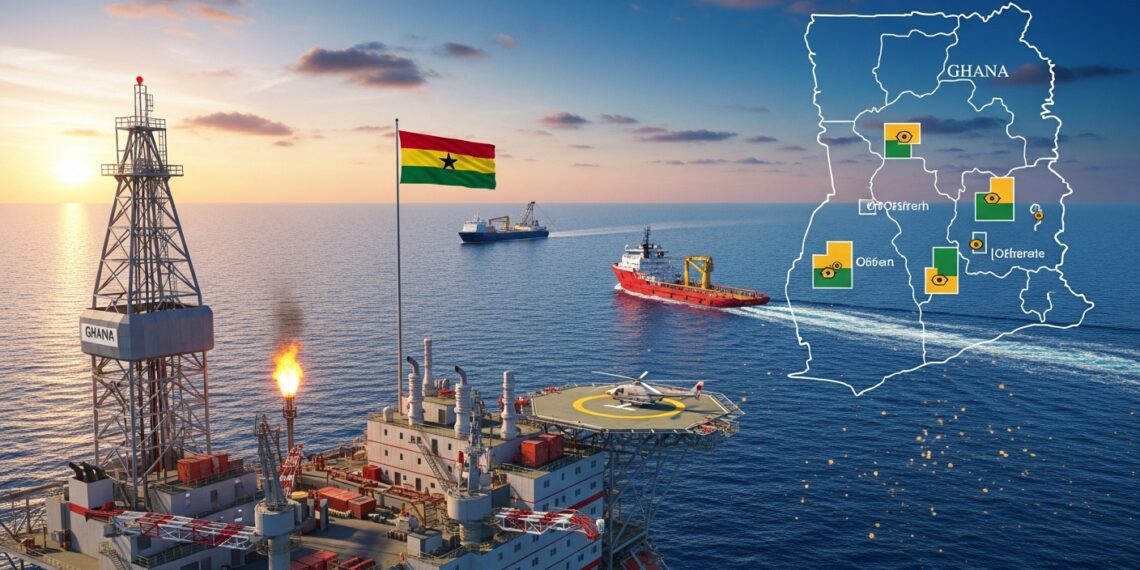
Mining companies also rely on operational information to manage machinery, production schedules, maintenance and resource use.
When these systems operate in isolation, however, the information they generate may not provide decision-makers with a complete view of operational risks or performance.
Connecting relevant datasets could help companies detect unusual equipment behaviour, plan maintenance before failures occur and improve coordination between technical and management teams.
In the power sector, predictive analytics could support earlier identification of equipment problems and more targeted maintenance planning.
For oil and gas operators, similar applications could help teams monitor asset conditions and investigate production disruptions.
In mining, AI-assisted analysis could support equipment monitoring and operational planning, although the usefulness of these applications would depend on the quality of available data and the systems already in place.
These are potential applications rather than outcomes demonstrated at the session. Their value in Ghana would depend on whether companies can integrate AI into actual operating processes, rather than simply introduce new software or run small-scale trials.
Ghana’s broader resource-management challenge also creates a possible role for data analytics in public-sector oversight.
Where reliable and appropriately governed datasets are available, analytical tools could help institutions identify inconsistencies, monitor trends and bring information together for better-informed decisions.
Such tools would support, not replace, professional verification, regulatory judgement or independent oversight.
Moving Beyond AI Experiments
A central issue in Microsoft’s presentation was how organisations can move AI from isolated productivity applications into the workflows employees use every day.
The company presented its Copilot ecosystem alongside Azure, Copilot Studio and Power Apps as tools for connecting information, developing tailored applications and deploying AI agents for specific tasks.

The objective is to make AI useful within existing business processes, rather than leave it as a separate application that employees must access independently.
Gareth Ireland, Microsoft’s Senior AI Specialist, said successful implementation requires organisations to consider how AI interacts with their existing systems and operational priorities.
“The question is not simply how to introduce an AI model, but how to integrate it into the systems and processes people already use,”
He added that industrial applications require the right combination of data, applications and workflows so that AI can support employees’ daily responsibilities and contribute to operational objectives.
For Ghanaian companies, that distinction matters. A demonstration may show that an AI tool can summarise reports or answer questions, but deploying it across an industrial operation requires more: reliable information, integration with existing platforms, trained staff, defined responsibilities and a clear process for checking the system’s output.
An AI assistant that helps an engineer retrieve maintenance records, for example, is not the same as a system authorised to change equipment settings or influence a safety-critical decision.
The more directly AI interacts with industrial operations, the more important it becomes to establish boundaries around its authority and the decisions that must remain under human control.
Cybersecurity And Data Governance Take Centre Stage
The integration of AI into energy and mining operations also raises questions about cybersecurity, data access and accountability.
These concerns are particularly important where applications draw information from systems supporting critical infrastructure or handling commercially sensitive records.
Ireland highlighted cybersecurity and data governance as essential considerations when AI tools interact with sensitive business information or operational systems.
For Ghana, wider adoption would therefore require companies to establish clear rules on which datasets AI systems can access, how information is protected and who is responsible when an automated recommendation is inaccurate.

Organisations would also need to consider how to prevent unauthorised access and how to preserve the reliability of systems that support essential services.
Human oversight remains especially important in industrial environments. AI-generated analysis can help staff process information and identify patterns, but the results may be incomplete or misleading if the underlying data is poor, outdated or interpreted without the necessary operational context.
This makes implementation discipline as important as the technology itself. Companies would need to assess the risks of each use case, test systems against real operating conditions and ensure that employees can question or verify recommendations before acting on them.
Turning Technology Into Industrial Value
Microsoft’s focus on operational AI places the emphasis on how technology can improve the performance of existing industrial assets, rather than simply increase the number of AI tools an organisation uses.
For Ghana, the potential gains would need to be measured against practical outcomes: reduced equipment downtime, better maintenance planning, more reliable electricity infrastructure, improved operational visibility and stronger use of information in resource-sector decision-making.
These benefits would not arise automatically from adopting AI; they would depend on implementation quality, workforce capability, data infrastructure and sustained investment.
The approach also presents a skills challenge. Engineers, geologists, power-system specialists, mine operators and data professionals would need to work together to determine where AI can add value and where human expertise must remain decisive.

Without that combination, organisations risk acquiring technology that is poorly integrated into their operations or difficult to maintain over time.
For Ghana’s energy and mining industries, the question is therefore not whether AI can produce useful analysis, but whether companies and institutions can build the systems, safeguards and technical capacity needed to use that analysis responsibly.
Microsoft’s message at African Energy Week 2026 was that industrial AI becomes more useful when connected to the data and workflows already underpinning operations.
For Ghana, translating that proposition into measurable results will depend on moving beyond experimentation and aligning technology adoption with clearly defined operational, commercial and public-interest objectives.
READ ALSO: DVLA Records GH¢25m Surplus, GH¢98.1m in Statutory Fund Contributions