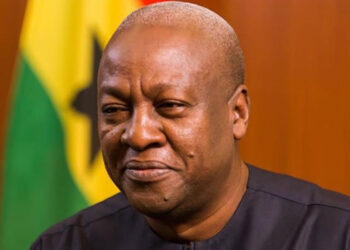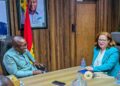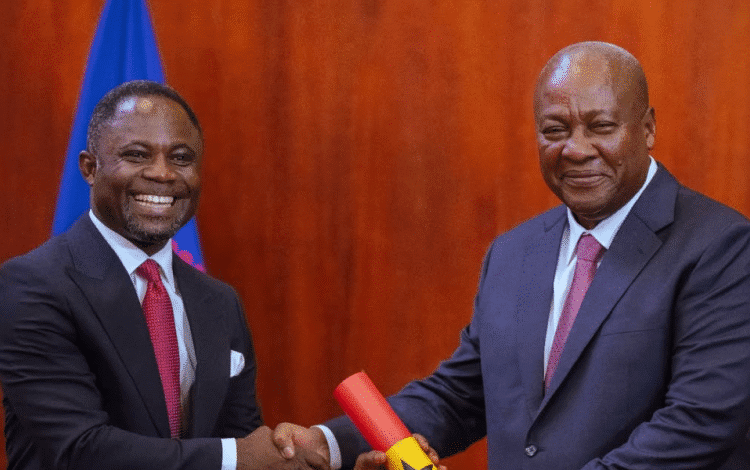
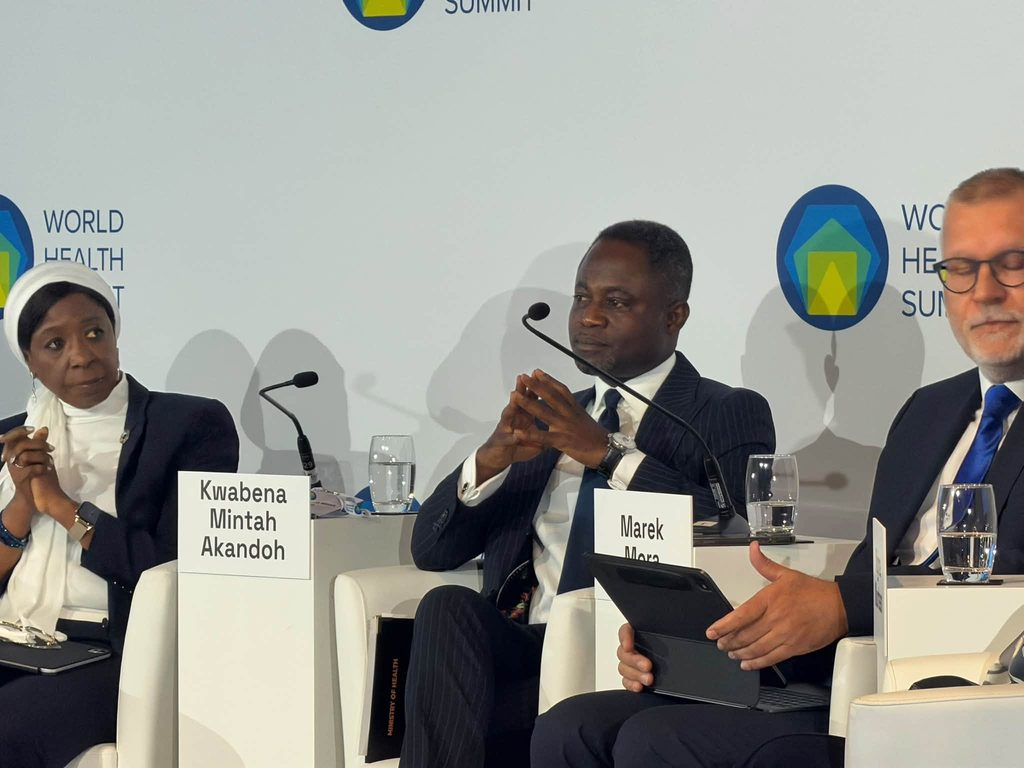
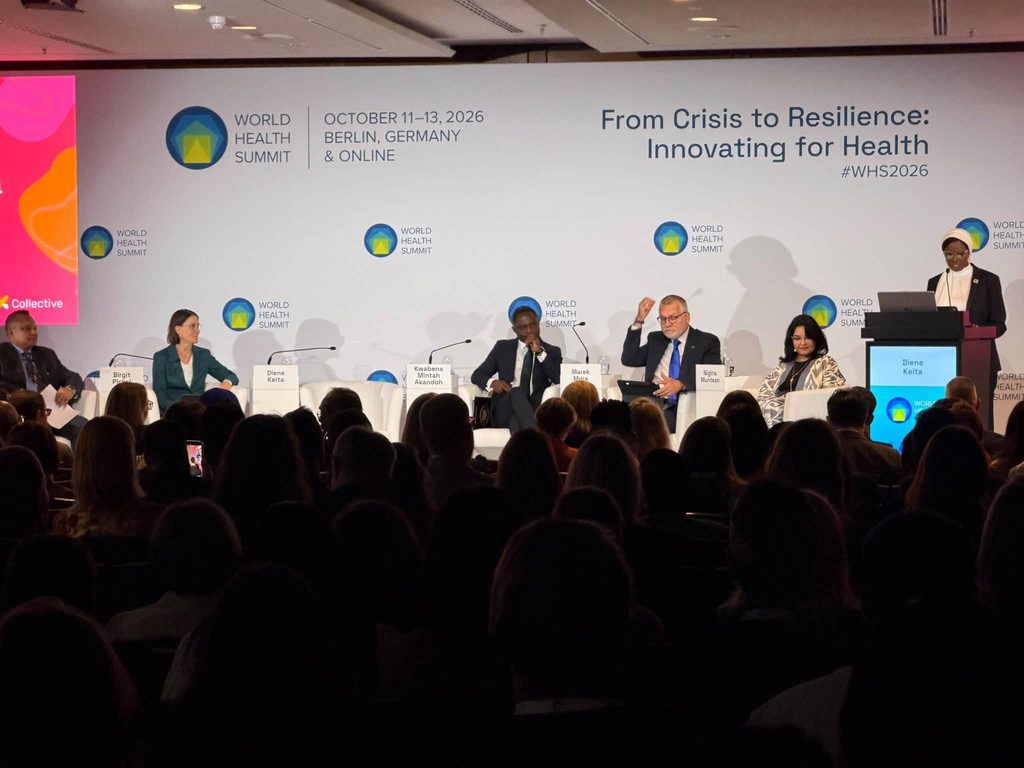
Ghana is expanding domestic health financing as part of President John Dramani Mahama’s Accra Reset agenda, Health Minister Kwabena Mintah Akandoh has disclosed. He described the shift at a luncheon hosted by Reem Alabali Radovan, Germany’s Federal Minister for Economic Cooperation and Development.
Hon Akandoh explained that revenue from the National Health Insurance Levy rose from about GH¢6.5 billion in 2024 to about GH¢9.8 billion in 2025, and that the government used the money to introduce free primary healthcare and the Ghana Medical Trust Fund, known as MahamaCares.
He added that Ghana is also raising its immunisation spending as it prepares to pay for vaccines fully by 2030.
“We cannot be talking about health sovereignty without domestic mobilization of resources.”
Kwabena Mintah Akandoh, Minister for Health
Accra Reset Puts Sovereignty Into Practice
The luncheon question asked how greater domestic resources have changed the decisions Ghana makes on health. Hon Akandoh answered by defining the idea behind the policy. Sovereignty, he explained, means that a country must carry the responsibility of financing its own health expenditure.
He also asked governments to change how they see that spending. “Every country must see the expenditure in health not as a cost but as an investment.”
His remarks follow earlier reporting that President Mahama told a New York gathering that the Accra Reset moves from design to execution. The initiative, set out on the Accra Reset site, gave the Minister a platform to show what execution looks like in one sector.
Levy Receipts Climb From GH¢6.5 Billion to GH¢9.8 Billion
Hon Akandoh turned to the National Health Insurance Levy. When President Mahama assumed office, he stated that the President increased revenue from the levy to boost domestic mobilisation.
Receipts moved from about GH¢6.5 billion in 2024 to about GH¢9.8 billion in 2025, a rise of roughly GH¢3.3 billion. He said the government then took the decision to invest that money in the health sector. Yet the Minister did not make clear how much of the increase came from higher rates and how much from wider collection.
Three Programmes Cover Every Level of Care
The extra revenue paid for new programmes. The government added free primary healthcare, and it set up the Ghana Medical Trust Fund, which Akandoh described as dedicated to funding non-communicable diseases.
President Mahama has promoted the free healthcare revolution abroad, and the government has allocated money to the Ghana Medical Trust Fund. Hon Akandoh described how the three programmes fit together. Free primary healthcare ends at the polyclinic level.
Where it cannot reach, patients turn to the National Health Insurance Scheme, and where the scheme does not cover a disease, MahamaCares steps in. At every level of care, he stated, “you have one intervention or the other.”

The scheme remains central to that chain. Earlier reporting shows that the government has paid GH¢2.1bn in NHIS claims, and that active membership has grown.
Hon Akandoh said the new revenue lets Ghana decide when and where investment is needed most. Putting money into primary healthcare, he explained, shifts attention to early detection, prevention, palliative care and health promotion. The aim is to ease pressure at the stage when complications set in.
Immunisation Spending Doubles Under Country Ownership
The Minister offered what he called a very interesting example. Ghana once planned to exit Gavi by 2030, he disclosed. He went to the President and drew his attention to the matter. Hon Akandoh recalled that President Mahama looked him in the eye and replied that immunisation “is a public good, so we have to pay the money for it.”
The spending figures show the shift. Ghana spent about US$24 million on immunisation in 2025, and the figure rose to US$48 million in 2026. For 2027, Hon Akandoh expects about US$54 million. By 2030, he stated, Ghana should be financing immunisation 100 percent, which he described as “sovereignty and country ownership.”
Hon Akandoh’s remarks give figures, but they leave gaps. He gave no budget for MahamaCares and no timetable for extending free primary healthcare beyond polyclinics.
For Ghana’s health sector, the test now lies in whether rising levy receipts keep funding these commitments. That includes the immunisation programme, which Hon Akandoh expects to be fully self-financed within four years.
READ ALSO: Moody’s Sees Ghana’s Debt Risks Easing, Upgrades Rating to B3