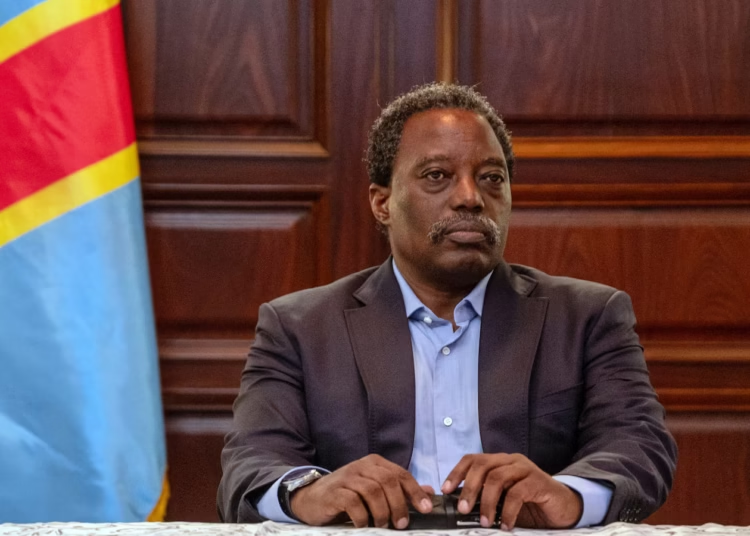
Former DR Congo President Joseph Kabila has taken charge of a new rebel alliance seeking to overthrow President Félix Tshisekedi’s government, escalating his confrontation with the administration he once handed power to.
The Front for the Refoundation of the Nation (FRN) unveiled earlier that it would coordinate resistance forces against “tyranny” in the country.
According to the Coalition Adviser Claude Ibalanky, the coalition aims to “unite and coordinate all resistance forces to put an end to tyranny by any means necessary, including the use of force.”
“The signatories have decided to pool their forces, resources, and means to create a framework for action through which all Congolese people, acting in unison, will undertake the task of liberating their country.”
Claude Ibalanky
The Former President had previously denied links to the M23 rebel group, which has seized large areas of mineral-rich eastern DR Congo.
The new coalition brings together figures from the Alliance Fleuve Congo (AFC)-M23 alliance, which has played a central role in the conflict destabilising the country’s eastern provinces.
The Congolese government, on the other hand, has not publicly commented on the coalition’s formation.
Kabila Joins M23 Figures in Key Positions
The FRN, announced in Goma, the largest city in eastern DR Congo, has been under M23 control since last year.
M23 leader Sultani Makenga has been appointed one of four deputies to Kabila within the new movement. The other three deputies also come from the AFC-M23 alliance, underscoring the coalition’s links to the armed group responsible for major territorial gains in the east.
The coalition’s stated objective is to coordinate forces opposed to Tshisekedi’s administration and pursue its removal, including through the use of force.
The announcement places Kabila more directly at the centre of the country’s armed opposition at a time when the conflict in eastern DR Congo continues to threaten security and political stability.
Kabila ruled the country from 2001 until January 2019, when Tshisekedi assumed office following a disputed election. Although the former president remained largely out of public view for several years after leaving power, he has increasingly criticised his successor’s leadership.
His appointment as head of the FRN adds a new dimension to the conflict, linking a former head of state to a coalition involving senior figures from the M23 rebellion. The government has yet to issue a public response to the latest development.
Former President Accuses President Tshisekedi of Governance Failures
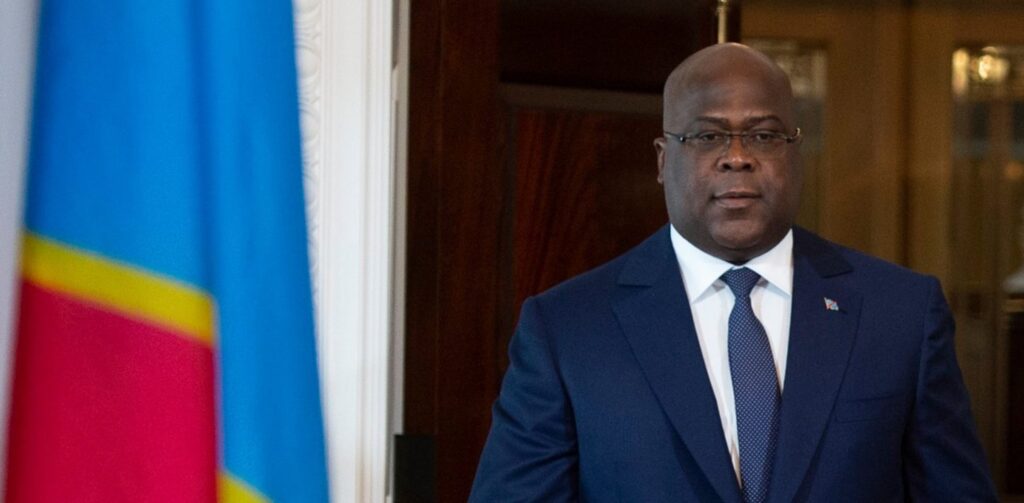
The formation of the FRN follows renewed criticism from Kabila, who has accused Tshisekedi’s government of undermining constitutional governance, mismanaging the economy and failing to restore security.
In an address delivered days before the coalition’s unveiling, Kabila stated that he would outline how Congolese people should act to “rescue” their country.
Earlier, he accused the government of disregarding proposals he had presented the previous year, including initiatives intended to help end the conflict in eastern DR Congo.
Kabila also alleged that the administration had resorted to arbitrary arrests of political opponents and military officers.
The Former President’s growing criticism comes against the backdrop of his own legal troubles. He was sentenced to death in absentia for treason last year, although he had previously rejected allegations linking him to M23.
Conflict and Constitutional Dispute Deepen Political Uncertainty
The emergence of the FRN adds to uncertainty in a country that has endured decades of armed conflict, particularly in its eastern provinces, where more than 100 militia groups operate amid ethnic tensions and struggles for political influence and control of valuable natural resources.
The fighting has repeatedly undermined efforts to establish lasting security, while M23’s territorial advances have intensified pressure on Tshisekedi’s administration.
Political uncertainty is also growing as the country approaches the end of Tshisekedi’s second term in 2028.
In May, the president suggested that elections scheduled for that year might not take place because of the conflict.
He also indicated that he could seek a third term “if the people want” despite the constitution’s existing two-term limit.
Parliament has since passed a bill that could pave the way for a referendum to remove that restriction. The proposed changes have triggered opposition, with authorities clashing with protesters who demonstrated in the capital last month.
The convergence of renewed rebel activity, unresolved security threats in the east, and disagreements over constitutional limits poses significant challenges to the country’s political stability.
READ ALSO: Ghana, Italy Deepen Energy Investment Talks Under Jinapor