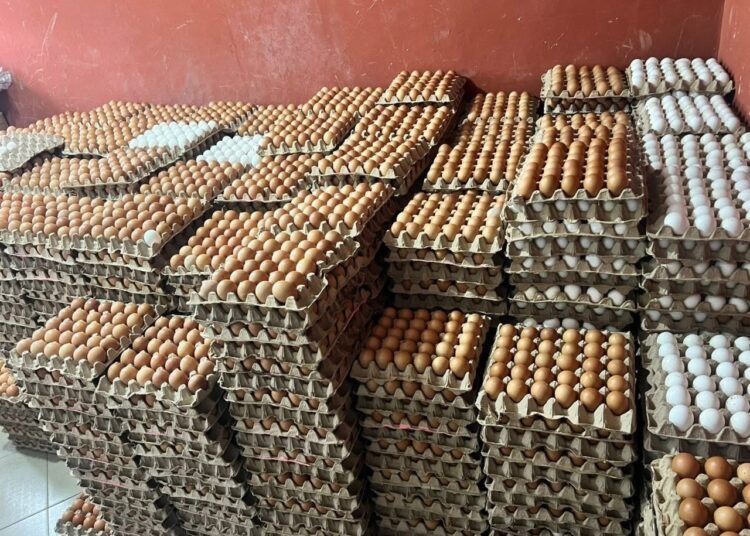
Ghana has started exporting eggs to Burkina Faso as the government intensifies efforts to find markets for excess domestic production and ease the financial pressure on poultry farmers struggling to sell their output.
Minister for Food and Agriculture, Hon. Eric Opoku said the exports followed negotiations with Burkinabè authorities after President John Dramani Mahama directed the agriculture and trade ministries to secure access to the neighbouring country’s market.
According to Hon. Opoku, Ghanaian officials encountered more than 20 trucks loaded with eggs at the border during the negotiations. The vehicles were subsequently granted clearance to enter Burkina Faso, paving the way for continued cross-border trade in Ghanaian eggs.
”Immediately after our negotiations, they allowed all of them to enter, and since then, Ghana has been exporting eggs to Burkina Faso.”
Minister for Food and Agriculture, Hon. Eric Opoku
The opening of the Burkina Faso market provides Ghanaian poultry farmers with an additional outlet at a time when excess egg production is placing pressure on prices, sales and farm revenues.
Hon. Opoku acknowledged that the export arrangement alone would not absorb the existing surplus, highlighting the need for additional domestic and regional markets to support the country’s expanding poultry industry.
The development also underscores the importance of regional trade in strengthening agricultural value chains. Access to neighbouring markets can help producers sell excess output, improve cash flow and reduce the risk of unsold products accumulating on farms.
For Ghanaian poultry businesses, sustained access to these markets will depend on effective trade arrangements, reliable distribution networks and the ability to supply buyers consistently.
While the exports represent progress in addressing the immediate challenge, the government is also considering measures to increase local consumption and establish more predictable demand for eggs.
School Feeding Programme Targeted
The government is considering incorporating eggs into meals served under the Ghana School Feeding Programme as part of efforts to expand the domestic market.
The Ministry of Food and Agriculture is working with the Ministry of Education to advance the proposal, which could create a regular institutional purchasing channel for poultry farmers while improving the nutritional value of meals provided to schoolchildren.
A structured procurement arrangement under the programme could help connect egg producers with institutional buyers, giving farmers a more dependable market for their products.
Such an approach could also support local agricultural businesses by creating demand that extends beyond households and conventional retail outlets.
However, the effectiveness of the proposal will depend on its implementation, including procurement arrangements, supply coordination and the capacity to distribute eggs to participating schools.
The continuing surplus illustrates a broader challenge facing Ghana’s poultry sector: increasing production does not automatically translate into stronger farm incomes when market access and consumption fail to keep pace.
‘’Without reliable outlets, higher production can depress prices and make it difficult for farmers to recover the costs of feed, labour, animal health services and other operational expenses.’’
Minister for Food and Agriculture, Hon. Eric Opoku
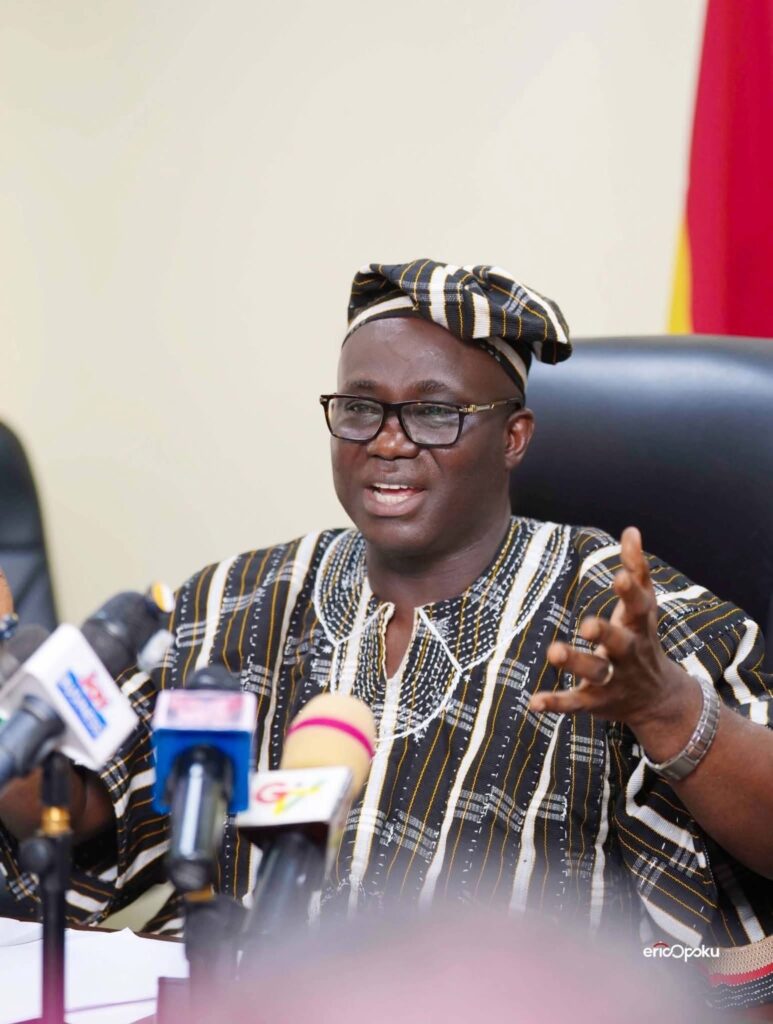
Hon, Opoku mentions that, expanding consumption and developing stronger links between producers and institutional buyers will be important to ensuring that increased output translates into sustainable business opportunities.
Bechem Factory to Strengthen Processing
Mr Opoku made the remarks during an inspection of a poultry, meat and feed-processing facility under construction at Bechem in the Ahafo Region.
The facility is designed to process 6,000 birds per hour across separate production lines for broilers and layers. Its supporting infrastructure will include three cold rooms, a hatchery and a feed mill.
The project is expected to strengthen poultry processing capacity and improve the connection between farmers, processors and distribution networks.
Under the proposed operational model, the government plans to establish contractual arrangements with poultry farmers in the Ashanti, Upper East and neighbouring regions.
Farmers would receive birds from the facility’s hatchery, raise them to maturity and supply them to the factory for processing and distribution. The arrangement is intended to establish a more organised supply chain linking production with industrial processing.
Two trucks are also being procured to distribute the facility’s packaged and branded products to the market.
Mr Opoku said construction was approximately 50 per cent complete, adding that outstanding payment certificates had been settled following earlier delays. The contractor expects the facility to become operational by the end of the first quarter of 2027.
The factory could provide an important link between poultry production and value addition by creating capacity to process birds and distribute finished products through organised channels.
Nevertheless, its contribution to the sector will depend on effective implementation of the proposed farmer contracts, dependable supplies of birds, operational efficiency and access to buyers.
Ghana’s egg exports to Burkina Faso provide an immediate response to the challenge of excess production, but the longer-term outlook for poultry farmers will depend on a broader market strategy.
Expanding regional trade, stimulating domestic consumption and investing in processing and distribution infrastructure will be essential to preventing recurring surpluses from undermining farm profitability.
As the government pursues these measures, the priority will be to ensure that increased poultry production is matched by sustainable demand, enabling farmers to maintain viable businesses while strengthening Ghana’s domestic poultry industry.
READ ALSO:IC Insights Flags Cedi Risks as Ghana’s Fiscal Spending Looms