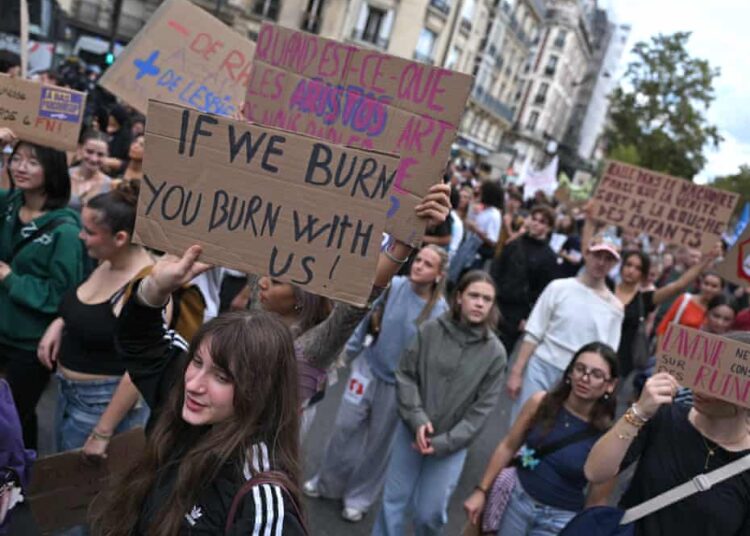
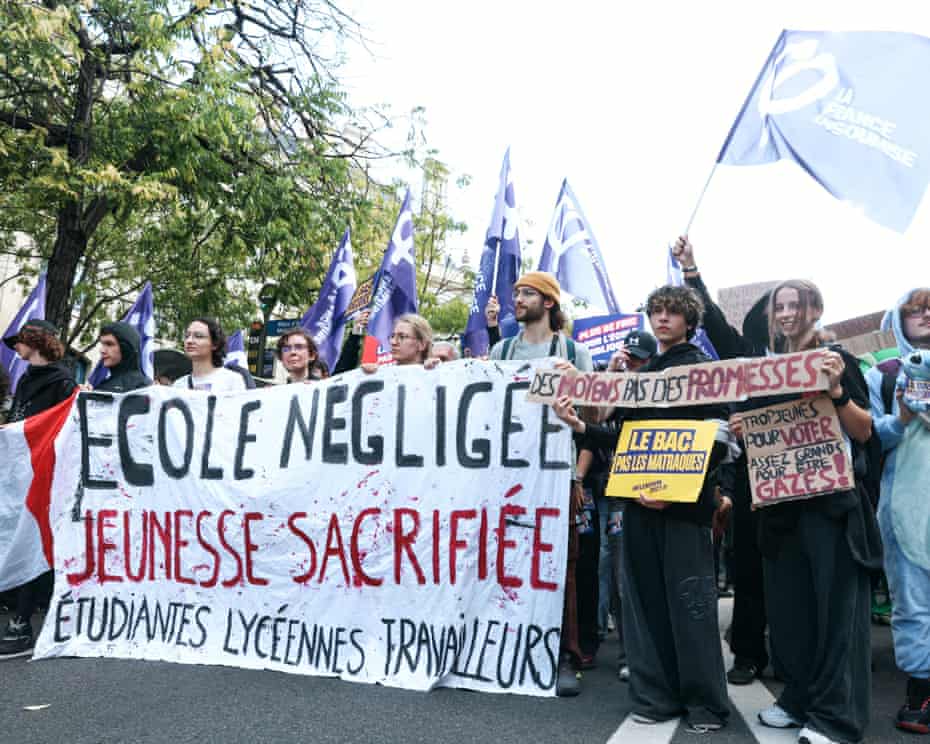
Nearly 480,000 people took part in nationwide protests across France on Tuesday, according to trade unions and student groups, as demonstrators demanded better school conditions, more teachers and increased investment in education.
The demonstrations, which included students, trade union members and supporters, saw some tensions with police on the sidelines of the main march in Paris.
Swedish climate activist, Greta Thunberg joined high school students demonstrating outside Lycée Paul Éluard in Saint-Denis, a suburb of Paris, where she criticised the lack of young people’s involvement in decisions affecting their future. “Young people are not being included in the conversation,” Thunberg, 23, told reporters.

The activist rose to international prominence as a teenager through school strikes demanding action on climate change. During her visit, she linked the students’ concerns to broader questions about public investment and opportunities for younger generations. “Our future is being stolen from us and, as we have seen here, schools are not getting the investment they need,” she added.
Thunberg’s appearance comes as the demonstrations enter their third week, with students and unions protesting chronic teacher shortages, overcrowded classrooms and deteriorating school buildings.
The movement has also resonated beyond France, prompting students in Belgium and Italy to stage their own demonstrations over the past week.
Jean-Luc Mélenchon, leader of the hard-left France Unbowed party, has also joined the protests. In a post on X on 8 October, he declared that the Bastille had been “retaken” following a large demonstration at Paris’ Place de la Bastille.
The protests have placed the French government under pressure to address complaints about the education system while managing demands to reduce the country’s growing public deficit and debt.
The Education Funding Debate
Today’s demonstrations coincided with the National Assembly’s debate on the government’s proposed 2027 budget, which includes a €1.2 billion increase in funding for the National Education Ministry.
However, critics argue that the proposed increase will not adequately address the problems facing schools.
The planned 1.6 per cent rise in education funding falls below the forecast inflation rate of 1.8 per cent, according to figures cited in the debate, raising concerns about whether the additional resources will translate into meaningful improvements.
Protesters are demanding action on chronic teacher shortages, crowded classrooms and deteriorating school infrastructure, arguing that the conditions undermine the quality of education available to students.
The government has announced measures intended to address staff shortages. On 8 October, Education Minister Édouard Geffray said that 3,000 available supply teachers would be deployed across more than 500 priority schools by today to help cover teacher absences.
However, Geffray said today that only 35 per cent of the target had been achieved, indicating that implementation remained incomplete.
The gap between the government’s announced measures and their implementation has added to frustration among demonstrators seeking more immediate improvements.
The government faces a difficult financial balancing act. France is grappling with one of the highest public deficits in the eurozone, limiting its room to increase spending across public services while meeting demands for better-funded schools.
At the same time, the country has allocated a total of €413.3 billion to its armed forces for the 2024–2030 period under its Military Programming Law.
The contrasting demands on public finances have contributed to wider debate over how the government should prioritise spending amid economic pressures and growing calls for investment in essential services.
Arrests And Police Conduct Under Scrutiny
The protests have also raised concerns about public order, arrests and the treatment of demonstrators by law enforcement.
President Emmanuel Macron called for restraint yesterday, saying that the issues raised by protesters “deserve time, consultations, discussion and respect.”
Government figures indicate that more than 6,800 people, mainly minors, have been detained during the demonstrations.
The Justice Ministry has said approximately 1,500 people are being prosecuted, while 24 allegations of police brutality against demonstrators are under investigation. More than 200 teenagers, 100 school staff members and 700 police officers have reportedly been injured during the unrest.
The figures highlight the scale of the demonstrations and the challenges facing authorities as they attempt to manage protests involving large numbers of young people.
Despite the government’s proposed increase in education funding and its efforts to deploy additional supply teachers, unions and students continue to argue that the measures do not go far enough to address the problems affecting schools.
The demonstrations have therefore become part of a broader debate over public investment, education quality and the government’s approach to managing France’s finances.
With the 2027 budget under parliamentary discussion, the government’s response will be closely watched by education workers, students and opposition groups seeking commitments that go beyond announcements and deliver improvements on the ground.
Thunberg’s participation has further drawn international attention to the protests, connecting the students’ demands to wider concerns about whether governments are investing sufficiently in the institutions and opportunities that shape younger generations’ futures.
READ ALSO: US Ambassador To Greece Denies Allegations Of Misconduct