Bank of Ghana (BoG) Governor Dr Johnson Asiama has called on the International Monetary Fund (IMF) to step up its support for Africa’s digital transformation, warning that the continent could fall further behind if it fails to address critical gaps in artificial intelligence (AI) governance, cybersecurity and digital infrastructure.
The Governor wants the IMF to provide practical assistance that will enable African countries to develop stronger systems for managing emerging technologies while securing a more influential role in shaping global digital rules.
His appeal comes at a time when artificial intelligence is rapidly changing how businesses operate, financial institutions manage risks and governments deliver public services. Although Africa has made significant progress in digital payments, financial technology and identification systems, serious challenges remain in ensuring that these advances translate into broad-based economic growth.
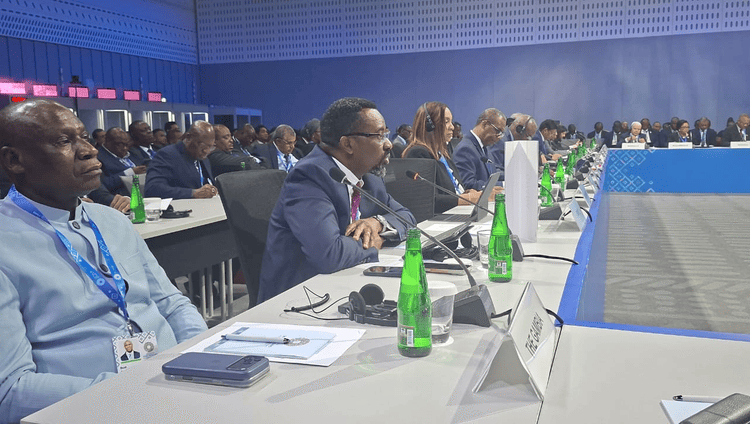
Dr Asiama made the call during the African Caucus Meeting on the sidelines of the IMF/World Bank Annual Meetings, where he participated in discussions on Africa’s digital sovereignty and the role of AI in structural transformation.
IMF Faces Growing Pressure to Support Africa’s Digital Ambitions
The BoG Governor believes the IMF must move beyond broad policy recommendations and provide practical support to help African countries build the institutional capacity needed to manage the digital revolution.
He called for assistance in developing artificial intelligence governance frameworks, supervisory technology, cybersecurity systems and digital risk management capabilities.
These areas are becoming increasingly important as financial institutions adopt AI-powered tools to improve efficiency, assess creditworthiness, detect fraud and strengthen customer services.
However, countries without adequate regulatory frameworks and technical expertise risk exposing their financial systems to new vulnerabilities.
Dr Asiama emphasised that Africa should not merely adopt technologies developed elsewhere. The continent must also develop the capacity to adapt, regulate and innovate with them to meet its own economic and development needs.
“This will allow Africa not only to harness AI, but to adapt, govern, and innovate with it for resilience and inclusive growth,” he said during the African Caucus Meeting today.
The call highlights a growing concern among policymakers that technological progress without effective oversight could deepen existing inequalities and create new risks for financial stability.
AI Could Transform Africa’s Economic Growth
Artificial intelligence is increasingly influencing productivity, competitiveness, governance and financial services across the world. Its potential applications range from automating routine business processes to improving public administration and expanding access to financial services.
Africa has already made notable advances in digital financial services, particularly through mobile money, digital identification systems and financial technology platforms.
Dr Asiama acknowledged these developments while stressing the need to build on them through stronger institutions and better digital infrastructure.
“AI is already reshaping productivity, competitiveness, governance, and finance. Africa has taken giant leaps in digital payments, ID systems, AI-enabled financial services, and fintech.”
Dr Asiama
The opportunity is significant. Businesses could use AI to reduce operating costs, improve decision-making and identify new markets, while financial institutions could deploy advanced analytical tools to strengthen risk assessment and improve service delivery.
Governments could also benefit from technology that improves public service delivery and supports more informed policy decisions.
However, these gains will depend on whether countries can build reliable infrastructure, develop relevant skills and establish rules that encourage innovation without compromising security or public trust.
Without these foundations, the benefits of AI could remain concentrated among a limited number of businesses and countries, leaving smaller economies struggling to compete.
IMF Urged to Integrate AI Risks Into Financial Surveillance
Beyond funding and technical assistance, Dr Asiama wants the IMF to deepen its analysis of the relationship between artificial intelligence, digital transformation and macro-financial stability.
He called for relevant AI issues to be incorporated into the Fund’s surveillance activities and Financial Sector Assessment Programmes (FSAPs).
Such assessments could help policymakers better understand how technological changes affect productivity, employment, financial resilience and inclusive growth.
The Governor’s proposal reflects the growing importance of digital risks to financial stability. As financial institutions become more dependent on technology, weaknesses in cybersecurity, data management and AI oversight could have consequences extending beyond individual companies.
Poorly managed AI systems could also introduce new operational risks, particularly where institutions rely on inaccurate data or automated decisions without adequate human oversight.
Integrating these concerns into international financial assessments could help countries identify vulnerabilities earlier and strengthen their regulatory responses.
Dr Asiama also called for greater international policy coordination on data governance, digital trade and cross-border AI regulation.
Such cooperation could become increasingly important as digital services expand across national borders, creating regulatory challenges that individual countries may struggle to address independently.
Funding Gaps Threaten Africa’s Digital Transformation
One of the biggest obstacles facing Africa is the cost of developing secure and reliable digital infrastructure.
Many countries continue to face constraints in financing, technical capacity and access to the infrastructure needed to support advanced digital services.
Dr Asiama therefore urged the IMF to help mobilise affordable financing for secure digital public infrastructure and initiatives aimed at narrowing the digital divide.
Improved access to affordable digital infrastructure could help businesses, governments and households participate more fully in the digital economy.
It could also create opportunities for financial institutions to extend services to underserved communities, provided that technological expansion is accompanied by adequate consumer protection and effective regulation.
However, infrastructure investment alone will not be sufficient. African countries must also strengthen cybersecurity, improve data governance and develop the expertise needed to supervise increasingly complex digital systems.
The Governor cautioned that existing gaps in regulatory capacity, cybersecurity, infrastructure and financing continued to limit the safe and inclusive use of emerging technologies.
Africa Risks Falling Behind Without Coordinated Action
Dr Asiama’s intervention comes as countries worldwide compete to harness artificial intelligence for economic growth and strategic advantage.
His warning raises an important question about Africa’s place in that competition: will the continent help shape the rules governing emerging technologies, or will it remain largely dependent on standards and systems developed elsewhere?
The Governor stressed that responsible AI adoption was essential to Africa’s structural transformation, economic resilience and long-term development.
Achieving that ambition will require coordinated action from national governments, financial regulators, development partners and international institutions.
The IMF, in particular, could play a significant role by supporting regulatory capacity, strengthening digital infrastructure financing and ensuring that the implications of AI receive greater attention in economic surveillance.
Africa’s progress in digital payments and fintech provides a foundation on which to build. The next challenge is to translate that progress into stronger institutions, safer financial systems and wider economic opportunities.
Without urgent and coordinated action, Dr Asiama warned, the continent risks falling further behind as artificial intelligence reshapes the global economy.
READ ALSO: