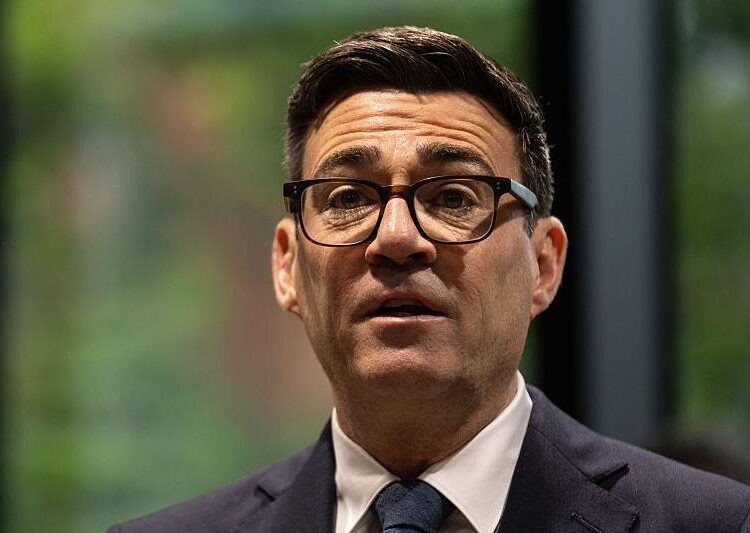
UK Prime Minister Andy Burnham is set to urge Scotland’s government to work with Westminster to devolve more decision-making powers to cities and regions, arguing that greater local control could drive reindustrialisation, create jobs and expand economic opportunities across the country.
In a speech following discussions with young people in Lanarkshire, Burnham will call on First Minister John Swinney to support a new model of regional empowerment that would give communities greater influence over decisions affecting their economic development.
The Prime Minister is expected to argue that, despite nearly three decades of devolution, Scotland’s government remains highly centralised, limiting local communities’ ability to shape policies around their needs and ambitions.
“During my first week in office, I told the First Minister that I wanted to work with him to spread opportunities to communities across Scotland’s regions and cities. “
Andy Burnham
Burnham will argue that the devolution settlement should extend beyond the transfer of powers from Westminster to the Scottish Parliament, with greater authority placed directly in the hands of communities and regional institutions.
The Prime Minister is expected to stress that local leaders and residents are better positioned to understand the economic priorities of their areas and identify opportunities for growth.
His proposal centres on a partnership between the UK and Scottish governments to develop a framework that allows communities to draw on their distinct strengths, identities and ambitions to attract investment and create employment.
The initiative would be supported through No. 10 North, UK Government’s regional engagement platform, and the Scotland Office, with the aim of ensuring that Scottish regions are included in the wider push to redistribute power and stimulate economic development.
“Through No10 North, we are rewiring the state, and I want to make sure regions in Scotland are fully part of this. This is me making an offer to the Scottish Government. With us working together, there is no limit to what we can achieve for the Scottish people.”
Andy Burnham
Scottish Secretary Douglas Alexander also backed the proposal, arguing that local communities should have a stronger voice in decisions affecting their future.
“Devolution has done a great deal, but power was never supposed to stop at the doors of the Scottish Parliament. People in North Lanarkshire, in Fife or in the Highlands know what their communities need better than any minister, whether they sit in London or Edinburgh.”
Douglas Alexander
He added that the Scotland Office is ready to work with the Scottish Government to advance the proposal, describing the shared objective as securing “good jobs and real opportunity in every corner of Scotland.”
Swinney’s Independence Push Complicates Devolution
The proposal comes as relations between Westminster and Holyrood remain shaped by disagreements over the future of Scotland’s constitutional arrangements.
Although both governments have indicated a willingness to explore greater local devolution, Swinney has cautioned Burnham against overstepping by removing powers from the Scottish Parliament.
The First Minister is also expected to renew his call for Scottish independence during his keynote address at the Scottish National Party’s conference, placing the question of Scotland’s political future firmly on the agenda.
Swinney had previously welcomed Burnham’s remarks to MPs that a border poll would be considered in Scotland and Northern Ireland if there were a clear consensus and public opinion had changed.
However, Burnham subsequently pushed back against expectations of a second Scottish independence referendum, telling Swinney during a meeting in Glasgow that the prospect remained “off limits.”
Badenoch Raises Questions Over How Devolution Works
Meanwhile, Conservative Party leader, Kemi Badenoch, has called for a more open assessment of how devolution operates across United Kingdom.
During a visit to Edinburgh, Kemi Badenoch stated that the Conservatives had no current plans to remove powers from the Scottish Parliament, while suggesting that a review of the existing arrangements could be necessary.
“Devolution is a process. It’s not a religion which we should worship. This is a process. If a process isn’t working, how can you improve the process rather than just say the process is there, there’s nothing we can do? We are about solutions.”
The Conservative leader maintained that the party’s priority is to improve living standards rather than pursue changes to devolution for their own sake.
“We don’t have any plans to take powers away. What we do have plans for are how to make people’s lives richer,” she added.
READ ALSO: Ghana’s Economy Surges 7.4% as Services Sector Leads Growth