Associate Professor of International Business and Management, Professor Kweku Adams, has called on the government to subject Ghana’s proposed BRICS partnership to “rigorous academic scrutiny and broad stakeholder consultation” before advancing the initiative.
Speaking in an exclusive interview with The Vaultz News, he posits that incorporating the perspectives of universities, industry professionals and business leaders into policy formulation would help safeguard national interests and establish a “credible framework for evaluating the partnership’s economic dividends.”
Professor Adams criticised “the emotional intensity and over-politicization” by Ghanaians with regards to public policymaking, pointing out that decisions with far-reaching national implications require evidence-based assessment. He cited Spain’s practice of incorporating research units into government departments as an example of how expert appraisal can enrich policy development, strengthen institutional decision-making and improve implementation.
“Before any government policy is released, it should be shared with academics and industry experts for thorough scrutiny and engagement. Through a conscientious, collaborative process, these ideas should be revised together so that the result is not merely a government document, but an inclusive, stakeholder-ready policy that incorporates everyone’s contributions.”
Professor Kweku Adams
Advocating for inclusive policymaking, he urged officials to gather public expectations, noting that even if not every proposal is adopted, incorporating diverse citizen ideas is essential.
Beyond the question of public participation, the academic interrogated the economic rationale underpinning Ghana’s interest in BRICS. He questioned whether the initiative is built on a coherent development strategy or driven principally by the prospect of “accessing financing on easier terms” than those associated with International Monetary Fund conditionalities. He cautioned that alternative borrowing arrangements, if pursued without addressing structural weaknesses in the economy, could perpetuate existing patterns of dependence.
To guard against such an outcome, Professor Adams called for clearly defined performance indicators against which the proposed partnership could be assessed. These, he suggested, should encompass employment creation, economic diversification, industrial development, skills acquisition and improvements in education and vocational training. Such benchmarks would enable policymakers to distinguish diplomatic achievements from substantive economic progress.
Turning to workforce development, the academic highlighted the importance of closer collaboration between universities and industry, drawing on China’s approach to practical skills training. He suggested that stronger institutional partnerships could equip young people with competencies aligned with labour-market demands, thereby narrowing the disconnect between academic qualifications and employers’ operational requirements.
While acknowledging the growing influence of emerging economies, Prof Adams cautioned against the assumption that established Western powers would relinquish their global economic influence in the immediate future. He averred that Ghana’s engagement with BRICS should be informed by a pragmatic assessment of the evolving international order, with diversification serving to expand the country’s development options rather than create new vulnerabilities.
Analyst Calls For BRICS Partnership To Deliver Industrial Growth
Complementing his call for greater expert participation in policymaking, Associate Professor of International Business and Management, Professor Kweku Adams stressed that Ghana’s proposed BRICS partnership must translate into tangible economic gains, particularly in employment creation, technology transfer and industrial development.
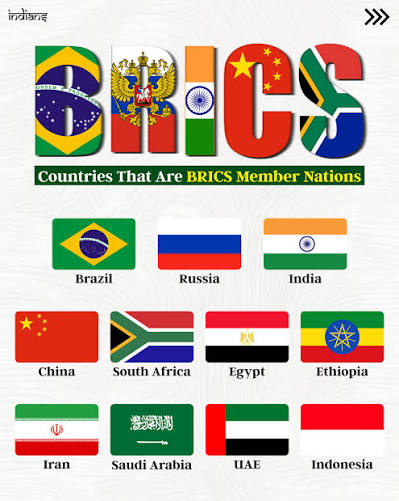
He argues that the country must establish safeguards to enable domestic enterprises to acquire technical expertise, expand productive capacity and compete internationally as the government pursues closer economic relations with Brazil, Russia, India, China and South Africa.
“The success of Ghana joining BRICS should not be measured by the number of international summits Ghana attends or by the number of Ghanaian businesses entering foreign markets. It should be measured by the jobs created and export revenue generated for Ghana.”
Professor Kweku Adams
At the heart of Professor Adams’s concerns is whether engagement with the bloc would confer greater “strategic autonomy on Ghana or merely substitute one form of economic dependence for another.” He opined that international partnerships would yield limited developmental dividends if foreign companies continue to extract resources and supply finished products without cultivating Ghana’s domestic industrial capabilities.
To avert this prospect, the academic advocated for policies requiring foreign firms entering Ghana to establish partnerships with local enterprises and facilitate meaningful technology and knowledge transfer. Such arrangements would enable domestic workers and businesses to participate in advanced manufacturing rather than remain dependent on imported technologies and finished goods.

Illustrating the potential value of these arrangements, Professor Adams referenced China’s Guanxi business networks and Japan’s Keiretsu structures as examples of relationship-based commercial systems that facilitate business development. He proposed that Ghana adapt relevant elements of these models to strengthen domestic enterprises, deepen industrial linkages and ensure that foreign investment leaves behind enduring productive capabilities.
Beyond the terms governing foreign investment, the academic questioned whether Ghana possesses the productive capacity to capitalise on opportunities that could arise from deeper engagement with BRICS economies. He identified technology, financial services and agribusiness as sectors requiring deliberate investment, coherent industrial policies and sustained support for local production. In his assessment, access to new international markets would be insufficient without the domestic capabilities needed to compete effectively within them.
He also drew attention to the environmental consequences of illegal mining, cautioning that land degradation and damage to agricultural resources could undermine efforts to expand food production, process raw materials locally and generate export revenue. He therefore highlighted the need for development strategies that connect resource utilisation with manufacturing, value addition and employment, rather than allowing the extraction of natural wealth to occur at the expense of long-term productive potential.
Cosnequently, Professor Adams called for stronger support for Ghanaian enterprises seeking to establish a presence in regional and international markets. He cited the Spa Group of Companies, KGL Group and engineering businesses as examples of enterprises that could benefit from policies facilitating cross-border expansion, improved competitiveness and access to international commercial networks.
READ ALSO: RAYE to Stage Symphonic Concerts in Ghana Next Year