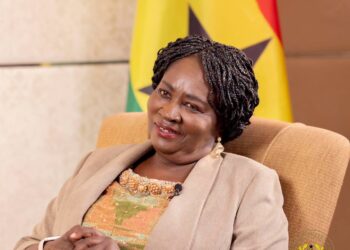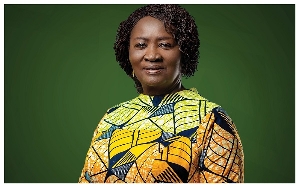
President Prof. Naana Jane Opoku-Agyemang has urged countries in the Global South to intensify efforts toward national development, stressing that political independence alone cannot guarantee progress. She called for stronger institutions, increased investment in education and infrastructure, and productive economies to turn independence into sustainable development.
Speaking at the 2026 Global South Academic Forum, she also encouraged developing nations to learn from China’s development experience without adopting its political system.
Professor Opoku-Agyemang made the call at the forum in Shanghai, China, where scholars and policymakers gathered to discuss governance and development.
“The most productive principle for South-South dialogue is that we should learn from one another without assuming that we must become one another.”
President Prof. Naana Jane Opoku-Agyemang
The Vice-President said political freedom, while essential, was insufficient on its own to deliver prosperity. Countries, she argued, must back independence with deliberate national effort, strengthening institutions, investing in education and infrastructure, and building economies capable of producing goods and services at scale.
She said cooperation among Global South countries should create room to assess which policies have succeeded, learn from those that failed, and identify mistakes that other nations could avoid.
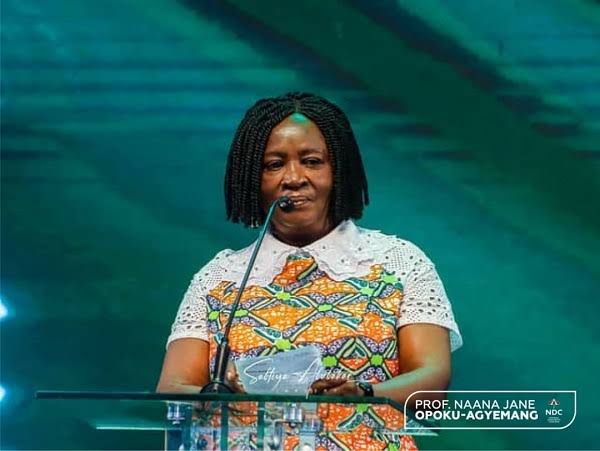
According to her, the task facing developing countries is to build the intellectual confidence to compare experiences and draw lessons. She stressed that institutions must ultimately reflect the societies they are meant to serve.
Lessons from China
Turning to the host country, the Vice-President described China’s transformation over the past several decades as one of the most consequential development stories of the modern period.
She noted that China had pursued a modernisation pathway shaped by its own history, institutions, political system and national priorities.
For scholars and policymakers across the Global South, she said, that experience invites closer examination, particularly its long-term planning, industrialisation and poverty reduction, as well as the role of the Communist Party of China in shaping the country’s development trajectory.
Professor Opoku-Agyemang urged participants to study the factors behind China’s progress. She cautioned, however, that other countries must assess that experience within the context of their own circumstances rather than treat it as a template to be copied.
“We can, however, sit across from one another with sufficient confidence and humility to compare what worked, what failed, which institutions enabled progress, and which mistakes others might avoid.”
President Prof. Naana Jane Opoku-Agyemang
Learning without replicating
The Vice-President said such exchanges were among the most important purposes of South-South cooperation. Countries, she explained, could benefit from shared experiences without having to replicate one another’s political and institutional arrangements.
She described honest comparison as one of the highest purposes of South-South cooperation, noting that it allows countries to examine which institutions enabled progress and where others stumbled.
Her remarks reflect a broader conversation among developing economies about how to pursue growth on their own terms. Many Global South countries share similar challenges, including the need to industrialise, create jobs, expand access to quality education and build the infrastructure on which modern economies depend. Sharing practical lessons, she suggested, can shorten the learning curve for nations facing those pressures.
Education and infrastructure at the centre
Central to her message was the call for sustained investment in education and infrastructure. Education, she indicated, builds the human capital needed to power productive economies, while infrastructure provides the physical foundation for trade, industry and service delivery.
Together with strong institutions, she said, these investments determine whether political independence translates into improved living standards for citizens.
The Vice-President’s address comes as African and other developing countries seek deeper partnerships beyond traditional channels. How such cooperation translates into concrete policy outcomes, including in education, infrastructure and industrial development, will be closely watched in the months ahead.
READ MORE: Ghana Records Over 5,000 Breast Cancer Cases Annually