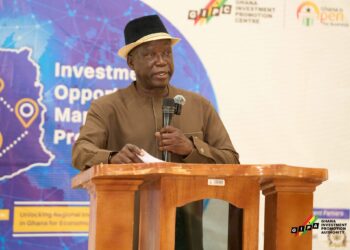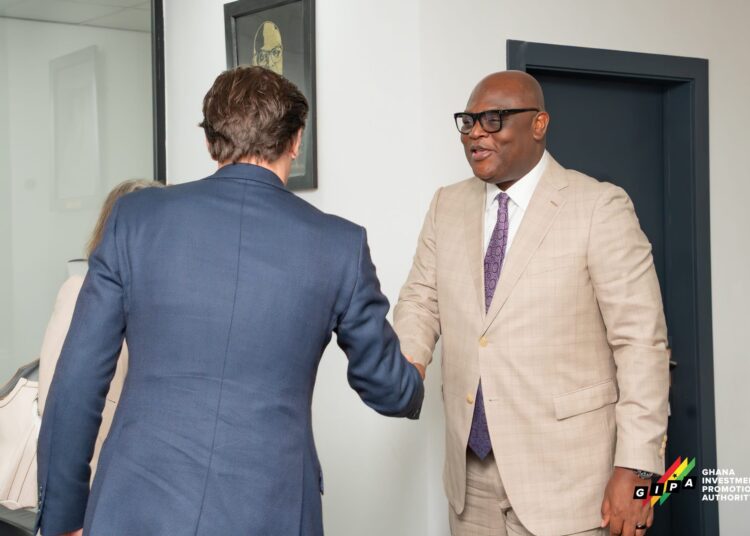
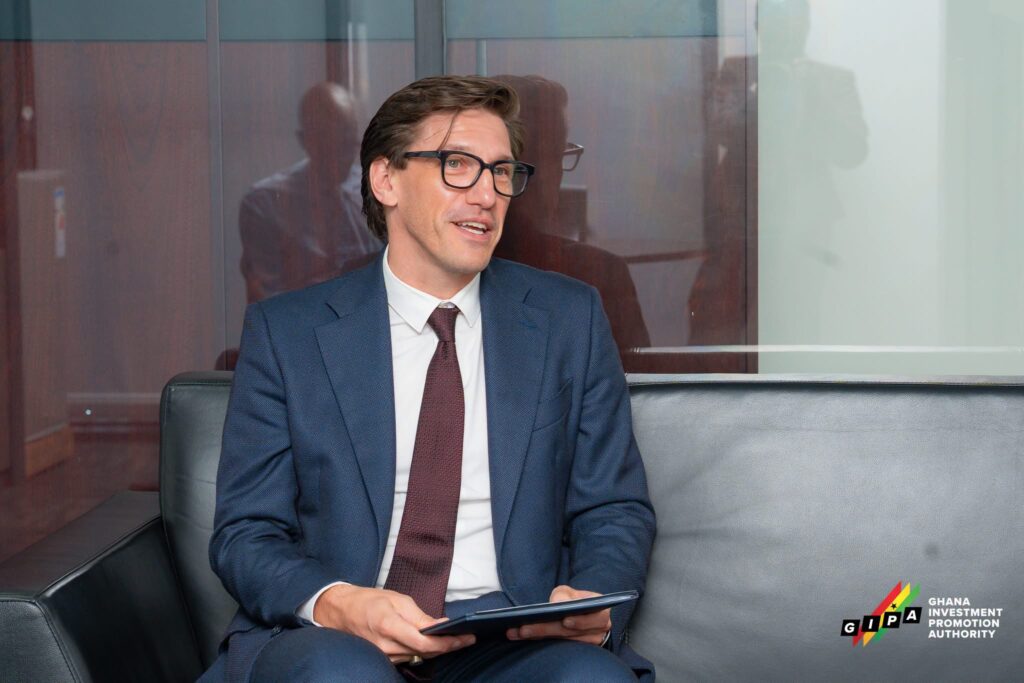
Ghana and Germany are seeking to deepen economic cooperation through increased bilateral trade, technology transfer and private-sector investment, following discussions between the Chief Executive Officer of the Ghana Investment Promotion Authority (GIPA), Mr Simon Madjie, and Germany’s Ambassador to Ghana, Mr Frederik Landshöft.
The engagement focused on expanding business partnerships and attracting German capital into strategic sectors of Ghana’s economy, including renewable energy and carbon markets.
The meeting comes as Ghana seeks to translate its investment potential into productive enterprises, employment opportunities and stronger domestic industrial capacity. It also precedes the Invest Ghana Summit, scheduled for November 16–17, 2026.
The summit is expected to showcase investment opportunities across the country and connect potential investors with businesses and relevant institutions.
The discussions highlighted the importance of converting investor interest into commercially viable projects that support local production, develop technical expertise and create skilled employment.
For Ghana, attracting foreign investment remains an important component of its broader economic development and industrialisation agenda.
”Ghana focused on business cooperation, technology transfer, job creation, and investment opportunities in renewable energy and Ghana’s carbon market.”
CEO of GIPA, Mr. Simon Madjie
Trade Relations and Investment Opportunities
The engagement builds on established economic relations between Ghana and Germany. According to Germany’s Federal Foreign Office, the two countries maintain a close partnership encompassing trade, education, scientific cooperation and development assistance. Germany also identifies Ghana as an important trading partner in West Africa.
Official German figures show that in 2025, Germany imported goods worth €290 million from Ghana and exported goods worth €274 million to the country. Ghana’s exports to Germany consist mainly of raw materials and food products, while German exports to Ghana include machinery, chemicals and food products.
However, expanding trade and investment requires more than diplomatic engagement. Investors also consider regulatory certainty, infrastructure, access to finance, workforce capabilities and the conditions under which businesses can operate profitably.
Mr Landshöft emphasised the need to turn growing business interest into tangible investments, local production and skilled employment. This places the focus on the quality and developmental impact of investment, rather than simply the number of prospective investors attending business engagements.
“The importance of translating growing business interest into tangible investments, local production, and skilled employment.”
Germany’s Ambassador to Ghana, Mr Frederik Landshöft
Renewable Energy and Carbon Markets
The renewable energy and Ghana’s carbon market emerged as important areas for potential cooperation. Both sectors present opportunities for investment while supporting the country’s transition towards more sustainable economic activities.
Ghana has established a framework for participating in international carbon markets under Article 6 of the Paris Agreement. The framework provides mechanisms for cooperation between countries and supports the mobilisation of climate finance for eligible emissions-reduction activities.
According to Ghana’s Carbon Market Office, the country has developed institutional arrangements for authorising and tracking carbon-market transactions. The office, hosted by the Environmental Protection Authority, provides administrative and technical support for implementing the national framework.
Ghana’s participation in international carbon markets is intended to support its climate commitments while attracting investment into activities that reduce or remove greenhouse-gas emissions. Potential areas include renewable energy, clean cooking, sustainable transport, forestry and other eligible mitigation activities.
The Carbon Market Office’s published 2024 progress report also documents Ghana’s cooperation with Switzerland, Sweden and Singapore on international carbon-market initiatives.
These arrangements demonstrate the country’s existing engagement with international partners on climate finance and emissions-reduction mechanisms.
An investment in renewable energy could also contribute to businesses’ efforts to manage energy costs and improve operational resilience. The commercial viability of such projects will depend on factors including financing arrangements, technology costs, regulatory requirements and the availability of suitable infrastructure.
”The meeting reaffirmed Ghana and Germany’s shared commitment to deepening economic ties and promoting sustainable investment.”
CEO of GIPA, Mr. Simon Madjie
Invest Ghana Summit to Connect Investors
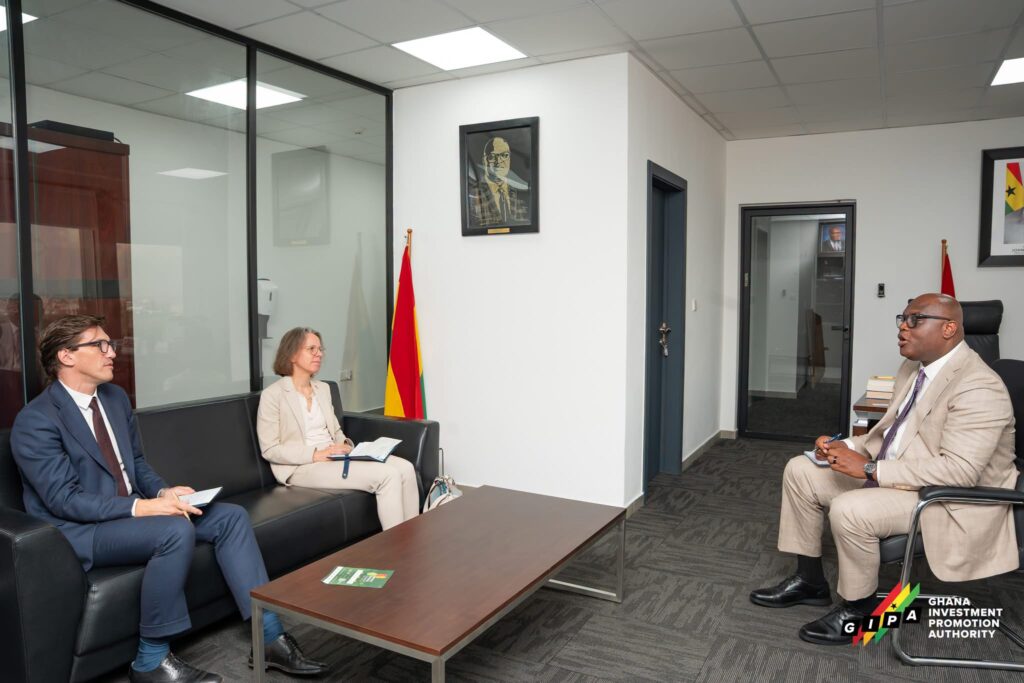
The upcoming Invest Ghana Summit on November 16–17, 2026, provides a platform for presenting investment opportunities and strengthening engagement between Ghanaian enterprises and international investors.
The summit is expected to showcase opportunities across the country, offering a setting for discussions on potential partnerships, investment proposals and areas where international expertise and capital could support local economic activity.
For GIPA, the engagement with the German ambassador aligns with its investment-promotion mandate of attracting and facilitating investment into Ghana.
Bilateral discussions can help identify areas of mutual interest, connect prospective investors with relevant stakeholders and provide a basis for further commercial engagement.
The wider economic context underscores the importance of attracting productive investment. A report in May 2026, says that provisional Ghana Investment Promotion Centre data recorded US$2.6 billion in foreign direct investment in 2025, compared with US$617.61 million in 2024.
The reported 2025 figure covered 253 new projects and existing companies, with contributions from several investment promotion and sectoral institutions.
These figures indicate an increase in recorded investment, although the reported total does not represent German investment alone.
They also do not, by themselves, establish how much capital has been realised as new productive capacity or how many jobs have been created.
For Ghana and Germany, the next step is to identify commercially sound projects capable of progressing from discussions to implementation. This includes establishing clear investment requirements, assessing technical and financial feasibility, identifying local partners and ensuring compliance with relevant regulations.
The emphasis on local production and skilled employment also highlights the importance of measuring investment by its contribution to the domestic economy. Technology transfer, workforce development and stronger participation by Ghanaian businesses will be important considerations as prospective partnerships advance.
The meeting between Mr Madjie and Mr Landshöft therefore provides a basis for continued engagement on trade, industrial development and sustainable investment.
READ MORE:Mahama: New Economy Programme Targets Jobs With $10 Billion