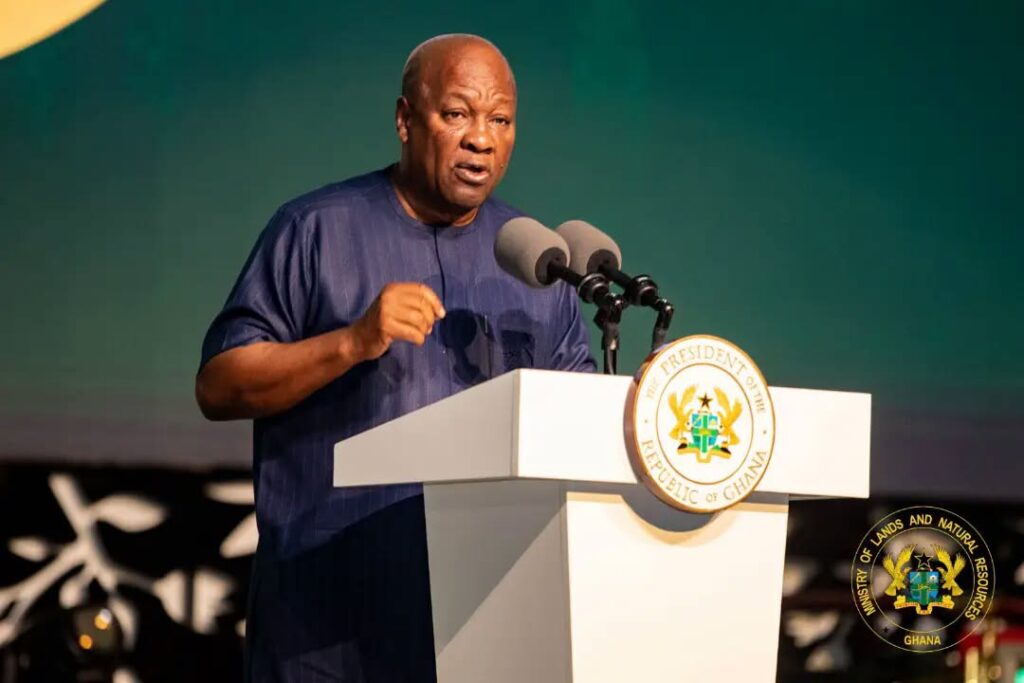
President John Dramani Mahama has set an ambitious target for Ghana to end the export of unprocessed mineral ores by 2030, challenging African leaders to turn the continent’s vast mineral wealth into domestic industries, sustainable jobs, and lasting economic prosperity for its people.
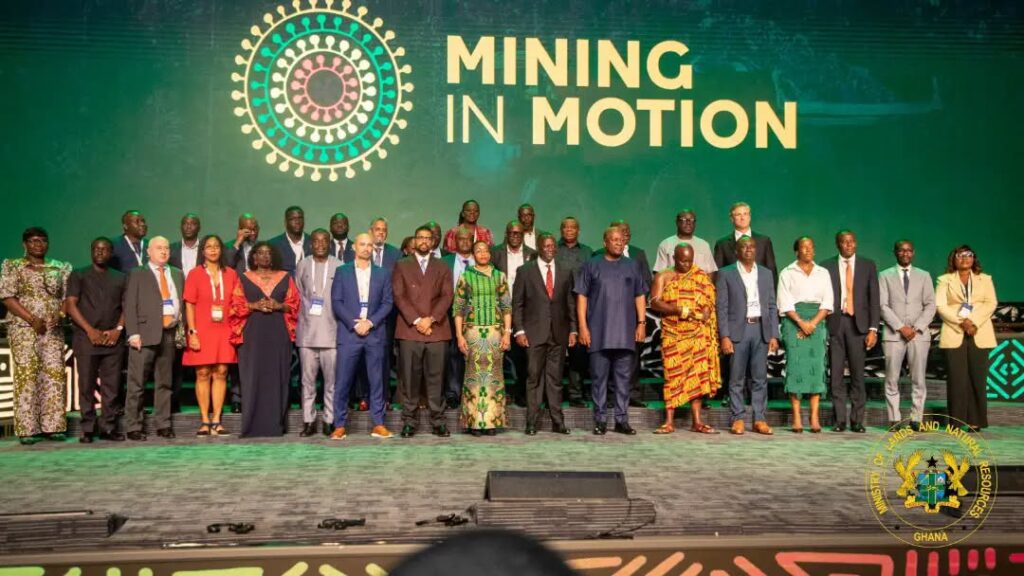
Addressing delegates at the Mining in Motion Summit in Accra, President Mahama outlined a decisive vision to halt decades of resource capital flight, insisting that Africa’s mineral resources must drive homegrown industrial transformation rather than feeding overseas factories while local economies remain underdeveloped.
“President argued that Africa could no longer afford to supply the raw materials powering the world’s industries while importing finished products made from its own resources.”
Lands and Natural Resources Ministry
Expanding on this mandate, the President stressed that the proposed timeline serves as a strategic catalyst to systematically transform Ghana’s extractive sector from a primary export model into an integrated value-addition powerhouse.
Under this national agenda, Ghana will enforce a phased legal prohibition on raw mineral ore exports, supported by clear regulatory enforcement frameworks and binding implementation milestones.
This strategic shift aims to directly align local mineral extraction with domestic manufacturing capabilities, ensuring that key commodities including bauxite, iron ore, manganese, and gold are fully refined and processed within national borders prior to exportation.
“Will our copper bring electricity to African homes? Will our bauxite power African factories?” he asked, challenging delegates to rethink how mineral agreements are negotiated and how the benefits of extraction are shared.
Breaking the Historic Cycle of Raw Resource Exploitation
Ghana’s bold policy posture addresses a historic structural vulnerability that has long plagued resource-rich African nations: exporting raw ores at low market prices only to re-import expensive finished goods manufactured abroad.
For decades, Ghana has exported massive volumes of untreated bauxite and manganese through its maritime ports, forfeiting vast revenues, technical knowledge transfer, and high-skilled employment opportunities.
To reverse this structural imbalance, the government’s initiative dubbed The Accra Reset aims to establish fully integrated domestic industrial chains, such as linking local bauxite to domestic aluminum production, processing raw iron ore into structural steel, and upgrading gold and manganese refining capacity to retain maximum economic value within the country.
Harmonizing Regional Trade and Policy Frameworks
Building robust domestic processing plants requires substantial capital expenditure, technological capabilities, and expansive market scale that individual nations often struggle to maintain independently.
Emphasizing regional integration, President Mahama noted that “Africa’s mineral ambitions would be stronger if countries worked together rather than competed against one another for investment on unfavourable terms,” calling for cross-border industrial corridors where minerals mined in one sovereign territory are processed in another and supplied to manufacturing hubs across the continent.
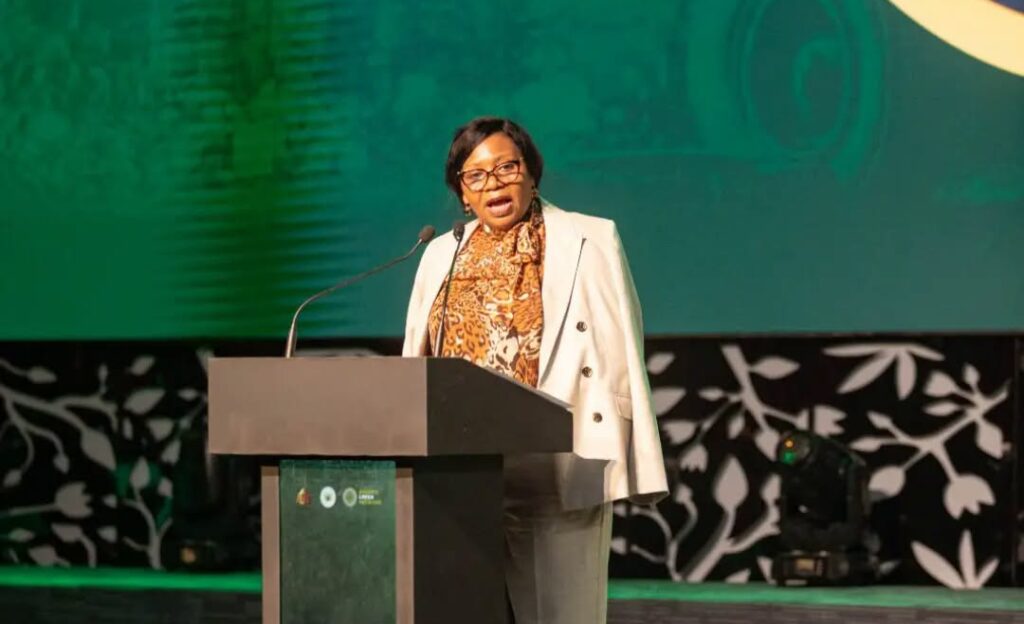
Supporting this unified direction, Liberia’s Vice President, H.E. Jeremiah Kpan Koung Sr., urged continental leaders in his keynote address to transition beyond primary resource extraction by establishing shared frameworks for fair financial returns, regulatory transparency, institutional strengthening, and competitive cross-border manufacturing.
Vice President Koung further highlighted the necessity of upgrading regional transport and energy networks, supporting responsible artisanal and small-scale mining, and implementing regular policy reviews to turn existing continental frameworks into measurable industrial outcomes.
Protecting Host Communities and Securing Environmental Sustainability
Beyond macroeconomic metrics and industrial expansion, the 2030 target fundamentally prioritizes environmental stewardship and socio-economic equity for local extractive communities.
Historically, mining enclave communities have borne the severe ecological burdens of resource extraction suffering contaminated water bodies, degraded agricultural lands, and severe socio-economic neglect.
Reaffirming the human element of resource governance, President Mahama maintained that “mineral development could not be considered successful if communities were left with polluted rivers, damaged farmland and few lasting benefits,” signaling that future licensing agreements will enforce strict environmental safeguards, mandatory community development allocations, and local procurement mandates.
Ultimately, the policy seeks to leverage skyrocketing global demand for critical minerals to build resilient domestic industries, insulate the economy against volatile international commodity prices, and guarantee sustainable economic prosperity for future generations.
READ ALSO: SMEGA Awards Spotlight Ghana’s SME Growth Potential