
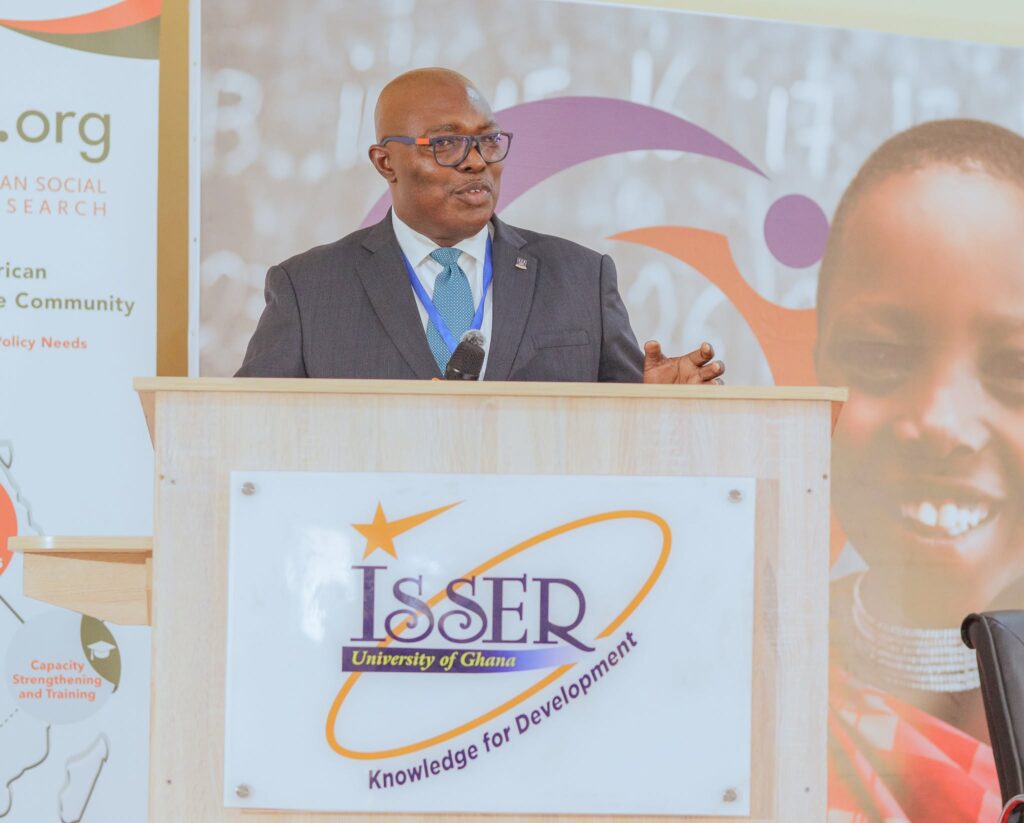
Prof. Fred Dzanku, Head of the Economics Division at the Institute of Statistical, Social and Economic Research (ISSER), has called for an urgent reform of Ghana’s mineral fiscal regime to maximize domestic revenue retainment and optimize developmental impacts.
Speaking during the launch of the ISSER State of the Ghanaian Economy report, he emphasized that despite the extractive sector generating upwards of $23 billion in mineral receipts and accounting for nearly 19% of the nation’s Gross Domestic Product (GDP), these vast sums fail to seamlessly deliver tangible national development.
According to him, because the bulk of state receipts from extractives is derived from corporate taxes rather than fixed royalties, the overarching framework governing taxation directly dictates the actual gains realized by the state.
“As I highlighted previously, that the revenues that we generate from mining, it’s mainly from taxes, rose from around 66% in 2015 to almost 80% of the revenues from the sector is coming from taxes.”
Prof. Fred Dzanku
Expanding on the imperative for policy restructuring, Prof. Dzanku highlighted that statutory royalty allocations currently linger at approximately 20%, leaving non-royalty fiscal measures as the primary driver of mining-derived state income.
Historical data demonstrates a stark structural shift: mineral tax revenues rose dramatically from around 66% of total sector receipts in 2015 to almost 80% in recent years.
This heavy reliance on tax regimes means that unfavorable tax mechanisms severely restrict national revenue accrual, preventing the country from converting its rich endowment into sustained socio-economic transformation.
“So, minerals generate a lot in export earnings and revenues, but it does not mean that they directly will translate automatically into the social development and the kind of infrastructure that you would expect them to.”
Prof. Fred Dzanku
Divergence Between Resource Wealth and Social Spending
A major justification for ISSER’s call for immediate fiscal policy evaluation lies in the persistent disconnect between surging mineral returns and long-term public asset building.
Descriptive empirical evidence from recent economic evaluations shows that rising mineral tax revenues move in the opposite direction of essential capital spending and social investments.

While treasury collections from gold and other extractives have expanded significantly, corresponding state allocations toward vital social services specifically public health and national education have declined or stagnated relative to overall economic growth.
This widening gap underlines the reality that current administrative mechanisms do not automatically channel resource-based revenues into foundational assets like schools, healthcare facilities, and roads.
Consequently, without targeted institutional frameworks and explicit statutory linkages, resource booms will continue to pass through national financial statements without altering the socioeconomic trajectory of local populations or addressing chronic infrastructure deficits across mining districts.
Maximizing Domestic Gains Through Fiscal Policy Design
The need to re-evaluate the mining fiscal architecture is further heightened by gold’s accelerating dominance within Ghana’s macroeconomic account.
As global market demand and valuation for precious metals escalate, gold has reinforced its position as the bedrock of export receipts; yet, the current fiscal capture setup leaves public funds vulnerable to corporate accounting treatments and aggressive tax planning.
Because royalties represent a reliable revenue stream anchored directly to physical production, relying predominantly on variable income tax regimes weakens state earnings whenever corporations claim high operational expenditures or tax deferrals.
To ensure that mineral wealth translates into sustainable national development, policy formulators must craft tax structures that balance investor attractiveness with optimal revenue capture.
Strengthening non-royalty taxation enforcement while reconsidering the balance between fixed production royalties and profits-based levies is critical.
ISSER’s initiative serves as a decisive prompt for policymakers to align fiscal design with national expenditure priorities, guaranteeing that the extractives sector actively funds public capital formation and socio-economic resilience for current and future generations.
READ ALSO: US, Iran Peace Deal Hindered By Mistrust- US Envoy