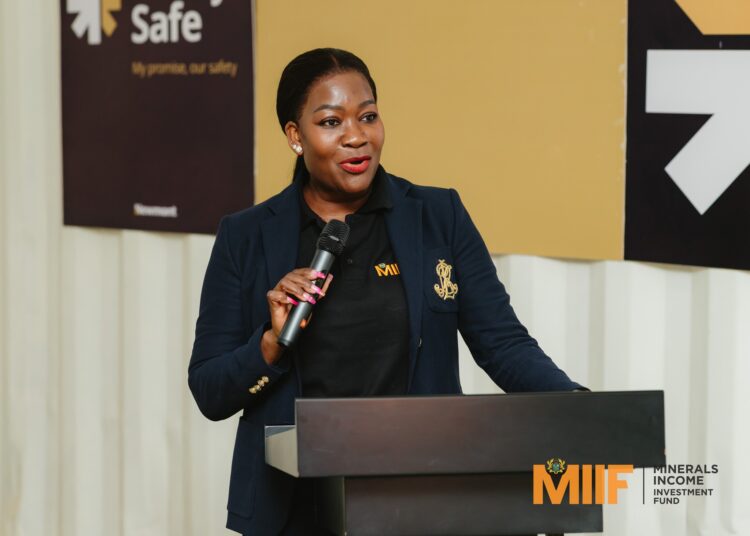
The Minerals Income Investment Fund (MIIF) recorded GH¢7.82 billion in mineral royalty receipts between January and September of 2026, reflecting strong performance in revenue mobilisation from Ghana’s mineral resources.
This financial milestone highlights the country’s capacity to capture maximum value from its precious metals and bulk mineral operations during the specified period.
“For the first nine months of this year, MIIF recorded GH¢7.82 billion in mineral royalties between January and September of 2026, reflecting strong performance in revenue mobilisation from Ghana’s mineral resources.”
MIIF
Expanding on the preliminary financial disclosures, the GH¢7.82 billion collection represents an increase of approximately 106 percent when compared to the GH¢3.79 billion recorded during the same period of 2025.
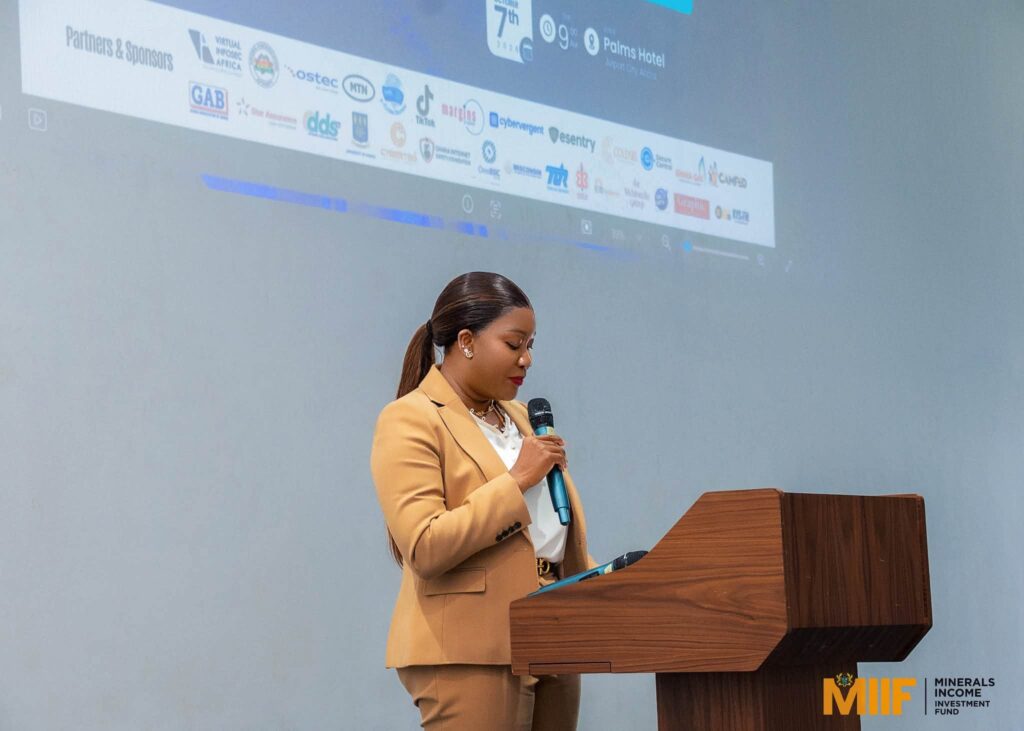
The Fund is targeting approximately GH¢9 billion in mineral royalty receipts by the end of 2026, driven by continuous monitoring and optimization across large and small-scale operations.
The Fund recorded GH¢7.82 billion in mineral royalty receipts from January to September 2026. This represents an increase of approximately 106% from the GH¢3.79 billion recorded the same period of 2025.
The Fund is targeting approximately GH¢9 billion in mineral royalty receipts by the end of 2026.
Catalysts Driving Fiscal Growth in Ghana’s Extractive Sector
The unprecedented surge in royalty revenue stems from a combination of strategic macroeconomic interventions, market tailwinds, and stringent monitoring of mining leases across the nation.
Gold continues to serve as the dominant anchor of Ghana’s mining portfolio, generating the majority of total royalty collections.
As global spot prices for gold reached historic highs throughout 2026, domestic output from both multinational leaseholders and formalized artisanal miners saw substantial growth.
Furthermore, industry observers emphasize that “enhanced digital tracking and inter-agency coordination between MIIF and the Ghana Revenue Authority (GRA) have plugged leakage points that previously undermined state collections.”
Beyond gold, increased contribution from bulk commodities such as manganese, bauxite, and industrial quarry materials has diversified the Fund’s overall revenue architecture.
By ensuring compliance across non-traditional mineral sectors, MIIF has succeeded in broadening its fiscal base beyond historical baselines.
Strategic Imperatives and the Need for Sovereign Value Creation
Understanding the fundamental need for this initiative requires evaluating Ghana’s long-standing effort to curate long-term sovereign wealth from finite natural assets.
Established under the Minerals Income Investment Fund Act (Act 978), the agency was created to manage and invest the state’s mineral income effectively.
Historically, mineral royalties were absorbed directly into the national consolidated fund, exposing resource revenues to short-term budgetary consumption rather than strategic, generational investment.
The initiative addresses critical structural gaps in Ghana’s extractive governance framework by retaining capital and acquiring equity stakes in high-yielding mining projects to keep wealth within the national economy.
Additionally, by building a resilient sovereign reserve fund, Ghana insulates its broader economy from cyclical global commodity price shocks.
Revenue mobilization also enables strategic investments in domestic gold refineries, lithium processing plants, and small-scale mining support programs, transitioning Ghana from a raw material exporter to a processed value provider.
Projections and Long-Term Extractive Outlook
Looking toward the final quarter of 2026, MIIF remains poised to comfortably surpass its full-year performance benchmarks.
The projected GH¢9 billion milestone will provide unprecedented capital flexibility for state-backed investments in transformative domestic industries.
As Ghana solidifies its posture as Africa’s top gold producer, MIIF’s disciplined fiscal trajectory ensures that current mineral exploitation translates directly into sustainable economic infrastructure for future generations.
READ ALSO: Ato Forson Lands €323m for Northern Ghana Water Project