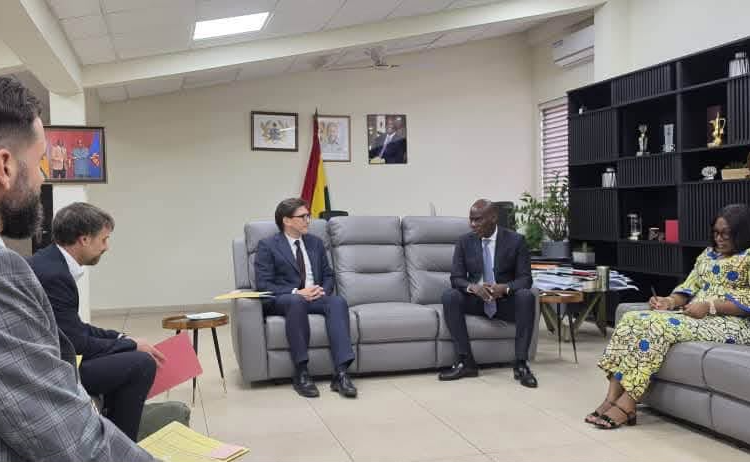
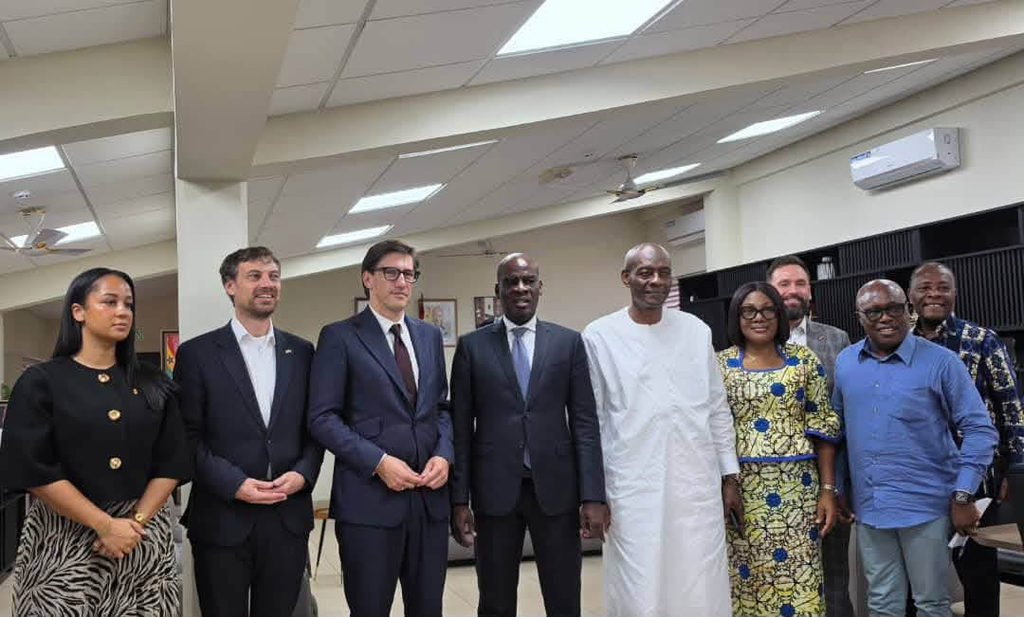
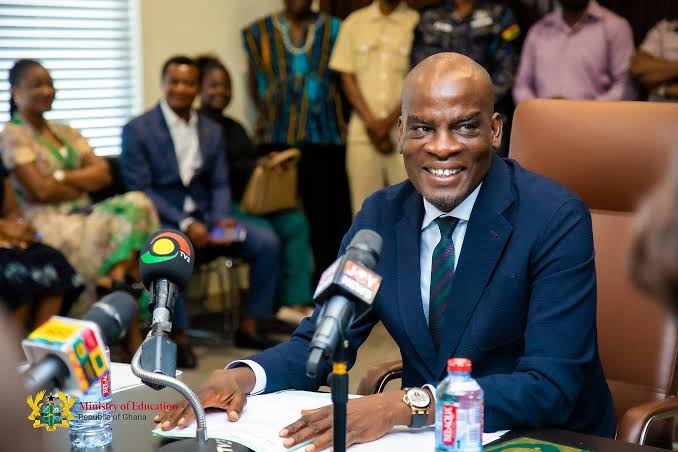
The Minister for Education, Hon. Haruna Iddrisu, has held discussions with the German Ambassador to Ghana, Frederik Landshöft, on strengthening cooperation between the two countries in education, with a particular focus on Technical and Vocational Education and Training (TVET).
The talks centred on how international partnerships can strengthen TVET, equip young people with practical skills and prepare them for an evolving labour market, according to a statement from the Ministry of Education.
Hon. Iddrisu and Landshöft exchanged views on potential areas of cooperation, building on previous discussions between the two sides. The Ambassador was accompanied by the Deputy Head of Cooperation, Daniel Böhme, the Policy Advisor, Chantel Lahmer, and the Cultural Attaché, Manuel Ruben.
The discussions focused on the role of international cooperation in technical and vocational training, and on how that training can prepare young people with skills the world of work requires.
Partnerships and the Education Agenda
Hon. Iddrisu highlighted the role of strategic collaborations in advancing Ghana’s education agenda and improving educational outcomes. He stressed that TVET gives young people practical skills, improves their employability and responds to the needs of industry.
For the Ministry, the point of such partnerships is practical. Skills that match what employers need are more likely to lead to jobs, and international partners can help bring the expertise and resources to build them.
“This engagement reaffirms Ghana’s commitment to working with international partners, including Germany, to explore opportunities for advancing education and skills development.”
Minister for Education, Hon. Haruna Iddrisu
A Partnership Already at Work
Germany is no newcomer to Ghana’s TVET sector. A programme implemented by the German development agency GIZ, titled Supporting the Transformation of Vocational Education and Training in Ghana, runs from January 2023 to December 2026 in partnership with the Ministry of Education.
It is commissioned by Germany’s Federal Ministry for Economic Cooperation and Development and has a commitment of €16 million, with the European Union co-financing it. It follows the Ghana Skills Development Initiative, which ended in late 2022.
According to GIZ, the programme aims to build a TVET system aligned with labour-market needs, with a focus on green and digital issues and greater private-sector involvement. It works on strengthening the structures for TVET reform and system management, developing the practical skills of TVET staff and expanding private-sector participation, green training and digital transformation.
The German connection runs much deeper than project funding. Eduwatch’s Executive Director, Kofi Asare, said at the National TVET Week 2026 policy dialogue that Ghana’s TVET system is modelled significantly on those of Germany and Austria, which blend workplace experience with school-based learning.
Mr. Asare said countries with strong systems spend more on a TVET learner than on a pupil in general secondary education. Germany, he said, spends 25 per cent more on every TVET learner, while Ghana spends about 11 per cent more, according to Ministry of Education data.
Gaps That Cooperation Could Address
The same dialogue showed the scale of the work ahead. Mr. Asare said only 3.8 per cent of TVET schools have access to the internet, even though digital competencies are now part of the curriculum, he also pointed to deficits in workshops, dormitories and classrooms, and said some schools run only two trades because they have no workshop in which to mount a third.
He said training a learner in the most expensive trades, catering and welding, costs about GH¢9,000 a year, against the GH¢413 that free TVET provides. Without funding for practical work, he said, learners leave school with weaker skills even after three years. He said the Ministry of Education has indicated that 30 per cent of second-cycle infrastructure investment will go to TVET schools.
Shared Aims
The Ministry said both countries seek to support initiatives that give young people relevant competencies and help build a skilled, productive workforce.
“Through continued collaboration, both countries seek to support initiatives that empower young people with relevant competencies and contribute to a skilled, productive workforce for national development.”
Minister for Education, Hon. Haruna Iddrisu
Attention now turns to what follows the exchange of views. The GIZ programme is due to end in December 2026, which makes the shape of any successor arrangement an immediate question.
The Ministry has said it will keep working with Germany and other international partners to explore opportunities for advancing education and skills development, and it is that follow-through, in workshops, trainers and connectivity for TVET schools, that learners and employers will be watching.
READ MORE: NARM-GH Calls on Government to Establish Separate Salary Structure for Midwives