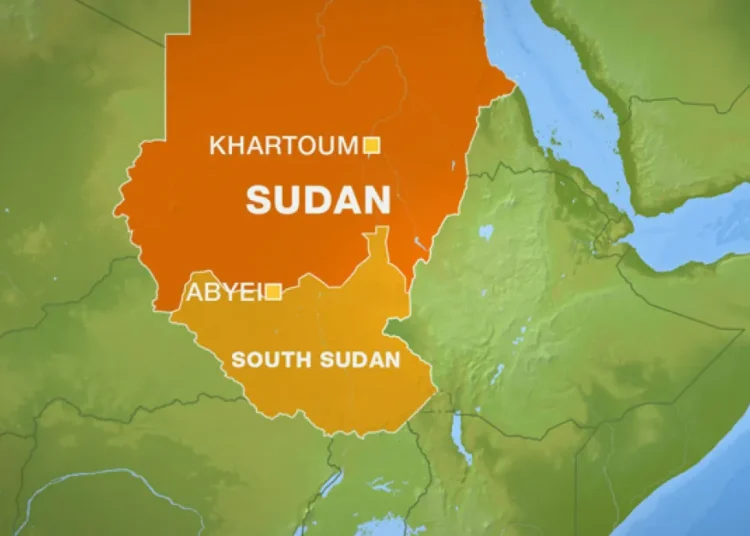
A drone strike in Abyei, a disputed region along the Sudan–South Sudan border, has killed dozens of people and injured several others.
Yohana Akol Ngor, the caretaker Information Minister for the jointly administered region, provided the casualty figure, but did not present evidence to substantiate the allegation that Sudan’s military was responsible.
“Around 73 people have been killed and 19 have been wounded; a number of drones were shot yesterday by the Sudanese armed forces.”
Yohana Akol Ngor
South Sudan’s government separately confirmed that drones had struck a marketplace at Abyei but did not specify the number of civilians killed or injured. The government summoned Sudan’s Ambassador to convey its protest over the incident and express concern about the implications for civilian security and stability in Abyei.
The Ministry described its position as a “strong protest and deep concern regarding the attack and its implications for the security of civilians and the stability of the Abyei Area.”
The medical charity Médecins Sans Frontières (MSF), meanwhile, confirmed that its medical team at Ameth Bek Hospital, near the affected area, is treating more than 20 wounded people, including patients in critical condition and people suffering from burns.
Abyei’s Oil Wealth and Unresolved Status Fuel Longstanding Tensions
Abyei’s strategic importance and contested political status have made it a persistent source of tension between Sudan and South Sudan.
The territory is rich in oil resources and is claimed by both countries, which have yet to resolve its final status. Although the two states have made arrangements for the area’s joint administration, disagreements over sovereignty and security have contributed to prolonged instability.
The United Nations established the United Nations Interim Security Force for Abyei (UNISFA) in June 2011 following renewed violence, escalating tensions and population displacement in the territory. The Security Council authorised the mission to help monitor the withdrawal of Sudanese and South Sudanese forces, support the demilitarisation of the area and facilitate efforts to reach a political settlement.
According to the UN mission, Abyei had experienced deadly clashes and displacement before South Sudan formally declared independence. More than 100,000 people were driven from their homes in violence preceding the Security Council’s decision to establish the peacekeeping force.
UNISFA’s responsibilities include protecting civilians facing imminent threats of violence, supporting stability and facilitating humanitarian assistance. Despite these arrangements, the region continues to experience violence, including clashes involving rival ethnic groups and armed militias. The unresolved territorial dispute has also complicated efforts to establish lasting security and predictable governance.
The latest attack highlights the vulnerability of communities living in a territory where the political settlement remains incomplete and armed violence continues to pose a threat.
Humanitarian Needs Grow
The reported attack in Abyei comes against the backdrop of a Sudanese conflict that has caused widespread civilian suffering and placed extraordinary pressure on humanitarian organisations.
Since the fighting began in April 2023, hostilities between the Sudanese Armed Forces and the Rapid Support Forces have spread across large parts of the country, involving local militias and drawing attention from foreign powers.
The conflict has disrupted healthcare, displaced millions of people and left communities struggling to access food, water, shelter and other necessities.
This has led people to seek refuge in neighbouring countries, and insecurity places additional demands on already stretched humanitarian services.
Humanitarian organisations operating in conflict-affected areas also contend with insecurity, limited infrastructure and difficulties reaching people in need.
Meanwhile, South Sudan remains highly vulnerable to climate-related disasters, with recurrent floods and prolonged dry spells undermining livelihoods and worsening humanitarian needs. The effects are becoming increasingly severe as climate shocks combine with conflict, displacement and economic instability.
According to the Food and Agriculture Organization (FAO), below-average and erratic rainfall associated with the developing El Niño event has damaged crops and raised concerns over the country’s 2026 cereal production. The agency also warned that further rainfall deficits could deepen agricultural losses in several regions.
The crisis is already taking a heavy toll on communities. According to the World Food Programme, 7.8 million people in South Sudan face acute food insecurity, while crop losses caused by drought and reduced access to water are worsening conditions for vulnerable families.
Also, the developing 2026–27 El Niño event is expected to intensify, with global forecasts pointing to heightened risks of extreme weather and food insecurity in vulnerable regions.
Although South Sudan has endured devastating environmental catastrophes in recent years, the current condition is putting its resilience to another test, as it grapples with a different set of climate-related challenges.
READ ALSO: IMF Warns Ghana to Rebuild Enough Investor Confidence Before Eurobond Market Comeback