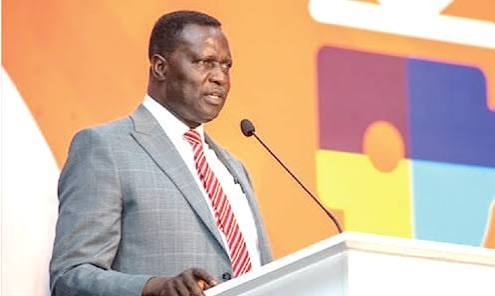
Former Education Minister Dr Yaw Osei Adutwum has called on successive governments to make education Ghana’s “big push”, arguing that sustained investment in learning, science, technology, engineering and mathematics (STEM), and foundational skills is essential to transforming the country and improving its global competitiveness.
Dr. Adutwum criticised what he described as politically driven interpretations of examination results, insisting that policymakers should examine the causes of improvement or decline before drawing conclusions.
“However, I happen to believe that to totally transform Ghana and move us to the first world, education must be your big push.”
Former Education Minister Dr Yaw Osei Adutwum
Dr. Adutwum argued that education should receive the urgency and political commitment needed to reshape the economy. He explained that when leaders treat education as a central national priority, they can mobilise resources for laboratories, STEM schools and other interventions that improve learning and prepare young people for a technology-driven world.
He maintained that catching up with countries such as Singapore and South Korea depends on education-led transformation. Governments may prioritise roads, he acknowledged, but education must remain central to lasting economic change.
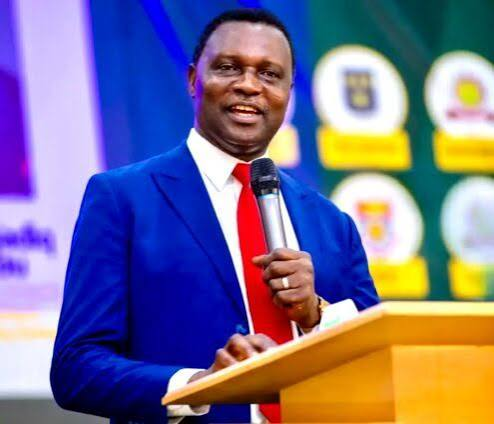
“If it is my big push, I will do STEM, I will do Free Senior High School, and I will do many other things that I did not even promise Ghanaians,” he stated, describing education as the route through which he believed Ghana could move from the developing world towards advanced economies.
Adutwum Questions Interpretation of Examination Results
The former minister cautioned against dismissing improved examination performance as cheating without examining the circumstances. He cited mathematics results in which 220,000 students reportedly scored between D7 and F in 2025, while 183,000 failed the following year.
He contrasted those figures with social studies, where students performed much better, and questioned whether critics would also attribute that performance to cheating. He argued that assumptions made during political campaigns should not replace careful analysis once leaders assume office.
“When you come to office, get people to do serious analysis for you so that when you are making a comment, you are making it from the proper perspective, not from the campaign perspective,”
Former Education Minister Dr Yaw Osei Adutwum
Earlier Reforms and School Improvement Plans
Dr. Adutwum recalled that criticism of examination results occurred between 2015 and 2018, although he attributed some improvement to reforms continued by his government, including mathematics teacher training under the World Bank-funded Secondary Education Improvement Project.
He cited Free Senior High School, science laboratories, textbook procurement and extra classes provided at no cost to students as measures that supported performance.
He explained that headteachers submitted annual improvement plans identifying weaknesses and proposing interventions. He argued that abandoning such measures because earlier gains were attributed to cheating could undermine progress. He credited alignment between the presidency, Cabinet and Finance Ministry with helping advance STEM education and other reforms.
He defended national standardised assessments for identifying learning gaps. The tests for Classes Two, Four and Six measured performance, informed schools about challenges and helped authorities assess interventions the following year.
Adutwum Disputes Claims on Education Funding
The former minister challenged the suggestion that secondary education absorbed too much funding and left limited room for other levels. He argued that assessments based only on the national budget could overlook external support for basic education.
He recalled receiving close to US$200 million annually from the World Bank for basic education and grants totalling about US$180 million from organisations supporting primary schools. He also referenced Big Win and the Mastercard Foundation.
Dr. Adutwum urges policymakers to consider these sources when comparing allocations across education levels, rather than concluding that secondary education consumed all available resources.
He challenged the current minister’s reported concern that secondary education spending leaves little room for other priorities, arguing that the national budget alone does not capture all education funding. In his view, officials must account for external grants and partner contributions before making comparisons or setting priorities. He urged careful analysis.
Evidence-Based Planning for Better Results
Dr. Adutwum cited his background as a teacher, education manager and school builder, arguing that policy should draw on local and international practices and respond to measurable gaps.
He urged observers to compare administrations’ records and judge policies by their results, arguing that Ghana needs urgency, investment and evidence-led decisions.
For Dr. Adutwum, making education the country’s “big push” means prioritising the foundations of learning while expanding STEM opportunities, strengthening schools and preparing students to think critically and compete in a world increasingly shaped by artificial intelligence.
READ MORE: Karpowership Ghana Awards GH¢210,550 Scholarships to TTU Students