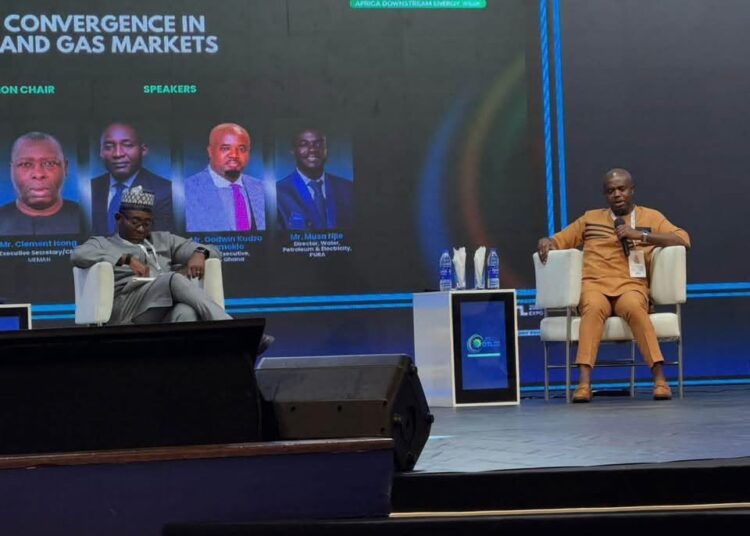
Africa’s ambition to capture more value from its petroleum resources will depend on more than expanding refining infrastructure. It will also require the transfer of technology, stronger technical expertise and a workforce capable of sustaining complex industrial operations, according to National Petroleum Authority (NPA) Chief Executive Godwin Kudzo Tameklo.
Speaking at the 20th OTL Africa Downstream Energy Week in Lagos, Nigeria, Tameklo highlighted technology, refining infrastructure, storage and human capital as critical investment priorities for Africa’s downstream petroleum industry.
His intervention draws attention to a central industrial development question: whether investment in petroleum infrastructure can translate into lasting domestic capabilities, rather than leaving countries dependent on imported expertise and external technical services.
The NPA chief identified technology transfer as an important part of efforts to reduce dependence on imported petroleum products, improve energy security and create employment across the continent.
In the statement outlining his remarks, the NPA said the objective was to “maximise value addition within Africa’s petroleum industry.”
That objective requires countries to look beyond the physical construction of refineries and consider the technical, commercial and human capabilities needed to operate them competitively.
Refinery Investment Needs Domestic Technical Capacity
Refineries are capital-intensive facilities whose performance depends on reliable operations, maintenance, engineering expertise and the ability to manage complex processing systems.
Building capacity in these areas can determine how much of the economic activity associated with refining remains within the domestic economy.
Tameklo highlighted the need for strategic investment in refining infrastructure, technology, storage and human capital.

The emphasis on these areas suggests that infrastructure development and skills acquisition must advance together if African countries are to deepen their participation in the petroleum value chain.
“Strengthening domestic refining capacity and promoting technology transfer are critical steps towards reducing dependence on imported petroleum products, improving energy security, and creating sustainable employment opportunities across the continent.”
The statement identifies three related objectives: reducing reliance on imported products, improving supply security and expanding employment opportunities.
Achieving them, however, requires more than increasing refining capacity. Facilities must operate reliably, secure feedstock and produce products that can compete commercially.
Technology transfer also needs to extend beyond acquiring equipment. The ability to maintain machinery, troubleshoot operational problems, improve efficiency and develop local engineering expertise is central to building lasting industrial competence.
Storage And Skills Form Part Of The Same Investment Challenge
Tameklo’s emphasis on storage infrastructure also places attention on the systems needed to support petroleum supply beyond the refinery gate.
Storage facilities can help manage inventories and support the movement of petroleum products through supply chains. Their effectiveness, however, depends on how they connect with processing facilities, transport networks and distribution markets.

The NPA’s statement places storage alongside refining, technology and workforce development as areas requiring strategic investment.
Together, these priorities reflect the different capabilities needed to support a functioning downstream industry.
A refinery without adequate supporting infrastructure may struggle to move products efficiently, while facilities that depend heavily on external technical services may find it harder to build domestic expertise.
Investment planning must therefore consider the relationships between infrastructure, operations and workforce development.
Regional Cooperation Can Support Skills And Knowledge Sharing
Tameklo also called for stronger collaboration among regulators, governments and industry stakeholders to support cross-border energy projects and facilitate knowledge sharing.
The NPA said he advocated cooperation to “establish common standards that advance regional integration.”
For the downstream industry, collaboration can provide opportunities to share technical knowledge and coordinate approaches across markets.

However, the benefits depend on the practical arrangements established and the ability of institutions and businesses to turn cooperation into improved operational capabilities.
Tameklo also stressed the importance of capable institutions and a skilled workforce in positioning Africa’s energy sector for long-term competitiveness and resilience.
That emphasis makes workforce development an important part of the industrial agenda. The value of new infrastructure depends partly on whether countries can develop the people and institutions needed to operate, maintain and regulate it effectively.
Measuring Progress Beyond Infrastructure
The NPA chief’s remarks place domestic technical capability alongside physical investment as a measure of progress in Africa’s petroleum industry.
The NPA said Tameklo viewed regulatory convergence as “a strategic tool to unlock investment, stimulate innovation, and accelerate the development of a more integrated and prosperous African energy market.”
For the downstream sector, the broader test is whether investment and cooperation can support a more capable industrial base, including stronger technical skills, effective infrastructure and greater domestic participation in petroleum processing and related services.
The statement does not identify specific projects, investment commitments or implementation targets arising from Tameklo’s remarks. The focus remains on the priorities he outlined for developing the industry.
For African petroleum-producing countries, the long-term opportunity lies in ensuring that investment creates capabilities that endure beyond individual projects.
Refining infrastructure can expand processing capacity, but technology transfer, workforce development and operational expertise will help determine how much lasting value that capacity generates.
READ ALSO: Ghana’s Banking Sector Bounces Back as All 23 Banks Meet Capital Rules