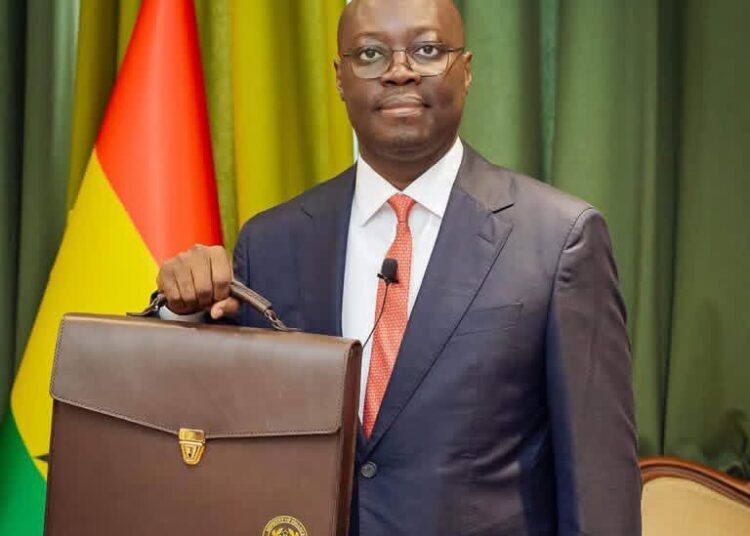
Finance Minister Dr Cassiel Ato Forson is set to present Ghana’s 2027 Budget to Parliament on November 12, with job creation, economic transformation and growth-focused spending expected to dominate the government’s next major economic policy statement.
Deputy Finance Minister Thomas Nyarko Ampem announced the date during the release of the Ghana Statistical Service’s Ghana in Numbers report in Accra, setting the stage for what could become a defining moment in the government’s efforts to move the economy beyond stabilisation and towards more sustainable growth.
The upcoming budget is expected to outline the government’s New Economy agenda, which seeks to expand employment opportunities, strengthen domestic production and improve the country’s economic prospects while maintaining fiscal discipline.
With expectations rising around the government’s next phase of economic management, attention is shifting towards how Dr Forson intends to balance spending on development priorities with the need to protect recent gains in macroeconomic stability.
November 12 Budget Presentation Sets Stage for Major Policy Decisions
The November 12 presentation will provide the government with an opportunity to explain how it intends to translate recent economic improvements into tangible benefits for households, businesses and job seekers.
Mr Ampem described the release of the Ghana in Numbers report as timely, particularly as preparations for the budget continue. He also called on the Ghana Statistical Service to ensure that every Member of Parliament has access to its data dashboard to support informed debate in the House.
The Deputy Finance Minister said the report would strengthen transparency in economic data and provide a useful foundation for planning and policy decisions.
Access to reliable economic statistics is particularly important as Parliament prepares to scrutinise the assumptions, revenue projections and expenditure priorities underpinning the 2027 Budget.
The presentation is expected to attract considerable attention from businesses, investors and households looking for clarity on the government’s plans for economic expansion, employment and the cost of living.
Jobs and Economic Transformation Take Centre Stage
Job creation is expected to be one of the defining priorities of the 2027 Budget, reflecting the government’s intention to place employment and productive economic activity at the centre of its development strategy.
Sources familiar with the preparations indicate that Dr Forson is likely to outline measures designed to move Ghana beyond the current stabilisation phase towards sustained growth and employment.
The proposed theme is “New Economy, New Ghana: Jobs and Prosperity”, although this has yet to be confirmed.
The proposed direction suggests a stronger emphasis on activities that create jobs, increase domestic production and enable Ghanaian businesses to capture greater value from the country’s resources.
Local value addition is expected to receive particular attention, with the government seeking to strengthen production capacity, increase export earnings and create employment opportunities across priority sectors.
Such an approach could have important implications for agriculture, manufacturing and agro-processing, where expanding local production and industrial capacity could help connect economic growth more directly to job creation.
However, the effectiveness of the strategy will depend on how the proposed priorities are translated into funded programmes, completed projects and measurable economic outcomes.
Infrastructure Spending and Fiscal Discipline in Focus
Infrastructure development is also expected to feature prominently, with the government considering significant allocations to complete ongoing projects.
Despite these priorities, overall expenditure is not expected to depart substantially from the estimates outlined in the 2026 Budget, according to sources familiar with the preparations.
The government is expected to keep planned spending within its fiscal and debt framework, limiting the risk of excessive deficits and expenditure overruns.
This presents a delicate balancing act. While investment in infrastructure and productive sectors can support growth, excessive borrowing and poorly controlled spending could undermine the economic stability the government has been working to preserve.
Dr Forson may also outline plans to lower the primary surplus target, potentially creating additional room for priority expenditure.
Any adjustment, however, would need to be carefully managed to ensure that additional spending does not weaken debt sustainability or reverse progress under the ongoing fiscal adjustment programme.
The proposed approach reflects the government’s intention to enter a new phase of economic policy in which development spending supports growth without abandoning fiscal responsibility.
Ghana Targets 5% Growth and 8% Inflation
The 2027 Budget could target economic growth of about 5% and inflation of 8%, with a two-percentage-point tolerance band.
These projections would establish important benchmarks against which the government’s economic performance could be assessed over the coming year.
Achieving the growth target will require more than favourable economic conditions. It will also depend on investment, productivity, business confidence and the capacity of key industries to expand output and employment.
The inflation target will equally matter to households and businesses, as price stability influences purchasing power, production costs and investment decisions.
The government is expected to pursue these objectives while safeguarding macroeconomic stability, strengthening economic resilience and protecting poor and vulnerable households.
The challenge will be ensuring that growth translates into broader economic opportunities rather than remaining concentrated in a limited number of sectors.
New Economy Programme to Drive Government Priorities
The New Economy Programme is expected to serve as the central framework for the government’s growth ambitions, combining continued fiscal discipline with increased attention to productive investment and employment.
The priority areas identified in the blueprint include macroeconomic stability, commercial agriculture, agro-industry and agribusiness, energy sector reforms and investment, critical minerals and value addition, cotton, textiles and garments, as well as tourism, culture and the creative arts.
These sectors offer different opportunities to expand production, attract investment and create jobs. Agriculture and agro-processing could strengthen domestic supply chains, while textiles and garments could support manufacturing and employment.
Critical minerals and value addition could also help Ghana capture more economic benefits from its natural resources instead of relying predominantly on the export of raw materials.
Meanwhile, tourism and the creative arts could provide additional opportunities for entrepreneurs, small businesses and young people seeking employment outside traditional industries.
The energy sector will remain important to the broader agenda, given its influence on industrial production, business operating costs and the reliability of electricity supply.
The government is expected to emphasise continued discipline as it pursues these priorities, seeking to sustain recent economic gains while expanding opportunities for growth.
Expectations Rise Ahead of November 12
The November 12 presentation will provide a clearer picture of how the government intends to finance its ambitions, allocate resources among competing priorities and measure progress towards its economic targets.
The critical test will be whether the proposed measures can generate jobs, strengthen local industries and improve living standards without placing renewed pressure on public finances.
As Parliament prepares to examine the budget, attention will turn to the details behind the government’s New Economy agenda, particularly the funding commitments, implementation timelines and safeguards needed to deliver lasting results.
Dr Forson’s 2027 Budget is therefore expected to go beyond setting economic targets. It will need to demonstrate how the government intends to turn stabilisation into productive growth and translate national economic progress into opportunities that ordinary Ghanaians can feel in their daily lives.
READ ALSO: Ghana’s Trade Minister to Promote Handicrafts at Burkina Faso Fair