Nearly 14,000 new HIV infections were recorded in Ghana in 2025, with the Ghana AIDS Commission intensifying efforts to reduce transmission and achieve the national goal of ending AIDS as a public health threat by 2030.
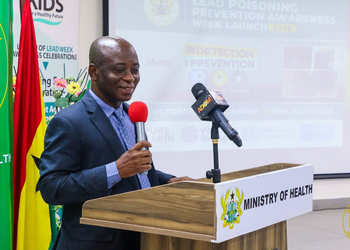
Speaking about the data, the Acting Director of the Ghana AIDS Commission, Mr John Eliasu Mahama, explained that the Commission has introduced a 2026 to 2028 prevention action plan to direct interventions towards populations and geographical areas with the highest infection rates.
“The reduction is not steep enough for us to declare success. We also are not meeting the indicators that we set thus, the triple 95. But at the same time, it is still progress and it will not be termed a failure, because the Ghana AIDS Commission has been able to mobilize society.”
John Mahama Eliasu
The 2025 national estimates recorded “13,951 new infections, with women accounting for 8,900 cases, representing 63.8 percent of the total.” Although the figures indicate a reduction from the 16,189 infections recorded in 2024, Mr Mahama cautioned that the pace of improvement remains insufficient to secure the country’s targets.

The Acting Director identified the global 95-95-95 targets as “a key measure of progress, requiring 95 percent of people living with HIV to know their status, 95 per cent of those diagnosed to receive sustained treatment and 95 per cent of those on treatment to achieve viral suppression.”
He explained that the Commission’s prevention strategy prioritises young people, particularly adolescent girls and young women, as well as adolescent boys and young men. These interventions, he elucidated, are being tailored to the needs of specific population groups and locations.
Mr Mahama also cautioned that Ghana’s relatively low HIV prevalence of 1.4 percent could encourage complacency and undermine efforts to mobilise resources. He emphasised that the objective is to reduce infections and prevent further transmission.
In addition, he highlighted the Commission’s efforts to mobilise government ministries, religious institutions, workplaces and community organisations around the national response. The Ghana AIDS Commission, he noted, is pursuing a society-wide approach because HIV prevention requires participation beyond the health sector.
The Acting Director therefore underscored the need for sustained collective action, explaining that the 2030 ambition depends on stronger prevention, testing and treatment interventions.
GAC Calls For Stronger HIV Prevention And Male Testing
The Ghana AIDS Commission also called for stronger HIV prevention measures, with particular attention to male testing and condom accessibility, as women accounted for 63.8 percent of the 13,951 new infections recorded in Ghana in 2025.

Addressing the factors behind the disparity, the Acting Director of the Commission, John Eliasu Mahama identified biological and structural vulnerabilities, including unequal power in sexual relationships and the difficulty some women face in negotiating condom use.
“But our analysis also to show, if you look at male-to-female transmission compared to female-to-male transmission, as I already mentioned, because of these two factors, males are more like three times more likely to transmit HIV to women than it is from women to males.”
John Eliasu Mahama
Mr Mahama explained that economic vulnerability and circumstances in which women exchange sex for financial or other forms of support can further heighten their exposure to infection. He therefore proposed interventions that address the circumstances surrounding transmission while strengthening prevention services for both sexes.
The Ghana Aids Commission identified male testing as a critical intervention, observing that “women are more likely to access health facilities” particularly through antenatal services. Consequently, the Commission is developing mobile testing initiatives that will take services to workplaces, markets and other locations where men can be reached.
He also emphasised the importance of early diagnosis and treatment, explaining that people living with HIV who take antiretroviral medication can achieve viral suppression. When the virus becomes undetectable, it cannot be sexually transmitted, a principle commonly expressed as “undetectable equals untransmittable.”

Turning to condom use, Mr Mahama characterised the declining uptake as a significant concern, given the protection condoms offer against HIV, other sexually transmitted infections and unintended pregnancies. He acknowledged that the country could do more to make them accessible, proposing condom vending machines in workplaces, drinking bars and hotels.
In addition to condom promotion, the Commission is working with community partners and media organisations to increase awareness of pre-exposure prophylaxis (PrEP) and post-exposure prophylaxis (PEP). He explained that both preventive options are available through health facilities, subject to clinical assessment and testing.
The Acting Director consequently called for wider participation from employers and other institutions, arguing that HIV prevention cannot rest solely on the Commission. He identified a society-wide response as essential to expanding access to information, testing and preventive services.
READ ALSO: Musk Announces Neuralink ‘Blindsight’ Device Ready for Approval