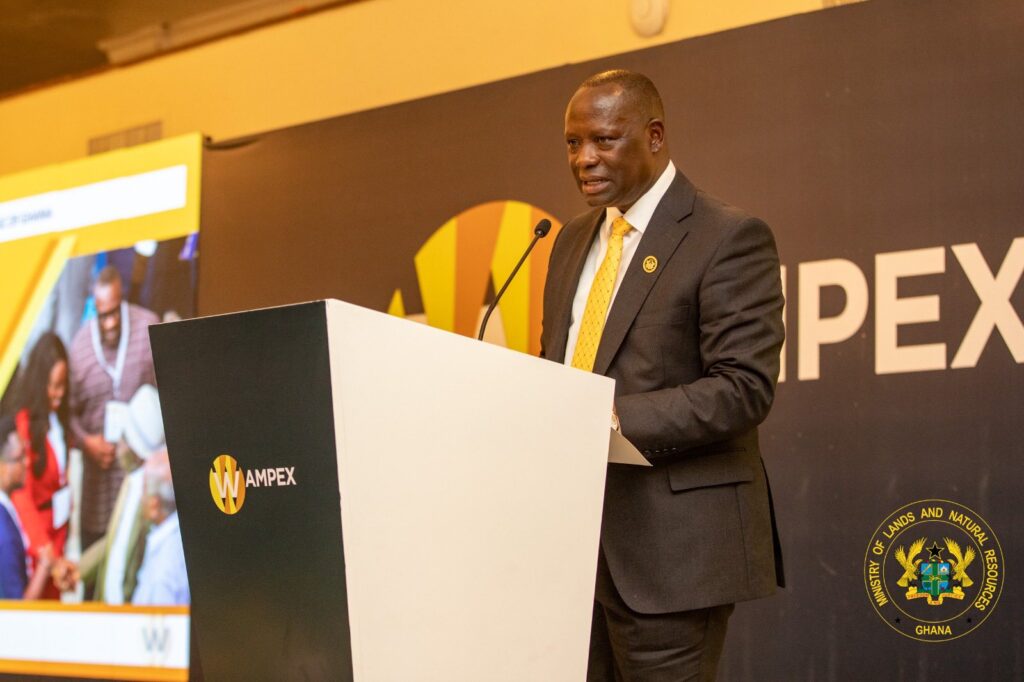
Mr. Samuel Gyamfi., the Chief Executive Officer of the Ghana Gold Board (GoldBod), has called for unified bi-partisan political backing and broad stakeholder collaboration to drive ongoing artisanal and small-scale mining (ASM) regulatory reforms across the country.
While expanding on the imperative for multi-sectoral collaboration, the GoldBod head highlighted that lasting transformation within Ghana’s extractive industry depends on cross-party consensus, public policy alignment, and full participation from traditional authorities, civil society organizations, industry operators, and local communities.
He noted that integrating these diverse perspectives is crucial to executing the Responsible Cooperative Mining and Skills Development Programme (rCOMSDEP) alongside enforcement operations by the National Anti-Illegal Mining Operations Secretariat (NAIMOS).
“With bi-partisan support and inputs from industry stakeholders, civil society, religious organizations, opinion leaders and Ghanaians as a whole, the rCOMSDEP coupled with the enforcement efforts of the NAIMOS, will be instrumental in enhancing sustainability in the minerals and mining ecosystem of our beloved country, Ghana. I hold the view that, properly organized artisanal and small-scale mining offers one of the clearest pathways from mineral ownership in law to indigenous ownership in practice.”
Mr. Samuel Gyamfi
Comparative Lessons and Legislative Context
The CEO’s appeal follows comparative assessments of international ASM formalization frameworks in jurisdictions such as Colombia, Peru, Mongolia, and Tanzania. In those countries, structured registration, legal protection, and technical assistance were deployed to transition informal operators into legal mining entities.
Drawing from these global precedents, the GoldBod leadership maintains that formalizing eligible small-scale operators through legal channels provides a more effective route to sector governance than relying solely on security-led interventions.

The rCOMSDEP framework, backed by Cabinet approval and incorporated into legislative amendments before Parliament, is designed to structure eligible operators into registered cooperatives. Under this framework, cooperatives receive targeted training in mercury-free mineral processing, land reclamation, and environmental management.
Operational Framework and Environmental Guardrails
To protect ecological zones, the formalization drive operates alongside strict eligibility criteria and firm enforcement.
Miners operating in forest reserves, within buffer zones of major water bodies, or near critical public infrastructure are excluded from cooperative registration. For these non-compliant and ecologically destructive activities, NAIMOS continues direct field enforcement operations to protect river basins and forest reserves from unauthorized mining.
This policy mechanism establishes a structural distinction between environmentally disruptive operations and operators capable of transitioning into regulated, environmentally compliant cooperative units.
Long-Term Capital and National Value Retention
Beyond immediate registration protocols, the reform roadmap incorporates technical and financial support mechanisms aimed at increasing domestic value capture.
Through the ASM Formalization and Financing Support Programme (FFSP), GoldBod, in partnership with tertiary institutions such as the University of Mines and Technology, plans to provide licensed cooperatives with geological assessments, equipment financing, and access to modern processing technologies.
By optimizing recovery rates and expanding legal trade channels, the initiative aims to increase foreign exchange earnings, boost national gold reserves, and foster sustainable indigenous enterprise across Ghana’s mineral resource value chain.
READ ALSO: Ghana Secures Six Russian Commitments After Mahama-Putin Talks