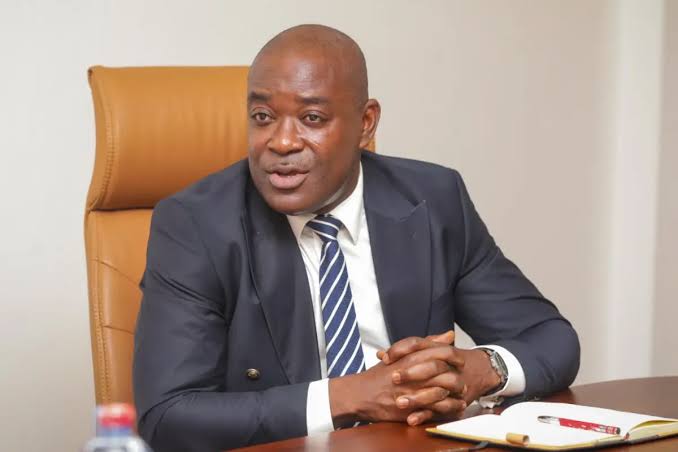
The Ghana Tertiary Education Commission (GTEC) has cautioned universities against admitting more PhD students than their institutional capacity can support, warning that excessive enrolment could weaken doctoral training and undermine the credibility of qualifications awarded in Ghana.
Director-General of GTEC, Professor Ahmed Abdulai Jinapor, delivered the warning at the graduation ceremony of the African University of Communication and Business, where 350 students graduated, including 206 undergraduates and 144 postgraduate students.
He urged universities to align doctoral admissions with the availability of qualified supervisors, research facilities, library resources and funding to protect academic standards.
“Universities must ensure that the number of doctoral students they admit is supported by adequate qualified supervisors, research facilities, library resources and funding to maintain the quality and credibility of PhD programmes.”
Director-General of GTEC, Professor Ahmed Abdulai Jinapor,
Professor Jinapor stressed that doctoral education plays an important role in preparing future researchers, university lecturers and policy thinkers. However, he maintained that institutions must not allow the pursuit of higher enrolment figures to compromise the quality of supervision and research.
He explained that PhD qualifications demand years of rigorous study, original research and examination, and should not be treated as commercial products. Universities, particularly newly chartered institutions, must therefore assess their capacity before opening places to prospective doctoral candidates.
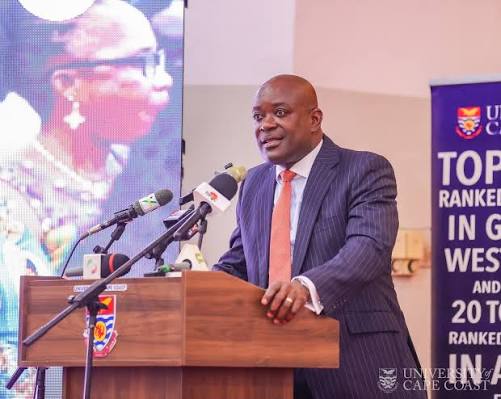
The Director-General emphasised that the number of students admitted must reflect the institution’s ability to provide meaningful academic guidance and the resources required to complete research. Without those foundations, expansion could place pressure on supervisors and weaken the standards expected of doctoral programmes.
He warned that admitting candidates without sufficient supervisory support could affect the depth and originality of their work. Doctoral students require sustained guidance, research facilities and access to resources that enable them to investigate their subjects properly. Universities must therefore consider not only how many applicants they can attract, but whether they can support each candidate to the required academic standard.
Technology Must Shape Higher Education
Turning to the changing demands of the economy, Professor Jinapor urged universities to adapt their teaching and research approaches to prepare graduates for an increasingly technology-driven world.
He identified artificial intelligence, automation, big data, digital platforms and cybersecurity as areas reshaping professional practice and economic activity. Institutions, he stated, must equip students with relevant knowledge and skills to participate effectively in these emerging fields.
He also encouraged graduates to embrace lifelong learning and develop the ability to work with new technologies while retaining independent thought, integrity and sound judgement.
“Do not compete with technology. Learn to work intelligently with technology,”
Director-General of GTEC, Professor Ahmed Abdulai Jinapor

Digital Learning Must Maintain Academic Standards
Professor Jinapor acknowledged that online, blended and distance learning could widen access to tertiary education, particularly for learners who may not be able to attend conventional campus-based programmes.
However, he cautioned institutions against using digital delivery as a route to lower academic requirements. Online degrees, he insisted, must carry the same value as qualifications earned through traditional face-to-face learning.
He explained that maintaining equivalent standards would require accredited programmes, qualified faculty, reliable digital platforms, credible assessment systems and adequate support for learners.
Professor Jinapor linked expanding access with preserving the value of qualifications, whether students study on campus or through digital platforms. He urged graduates to remain adaptable as technology reshapes the workplace while maintaining professional judgement and integrity.
GTEC Intensifies Checks on Unaccredited Institutions
The GTEC Director-General further disclosed that the Commission had intensified public education on recognised institutions and accredited learning centres to protect prospective students from enrolling in unaccredited programmes.
He referenced a notice published by the Commission in July 2026 concerning 15 unaccredited learning centres and institutions whose institutional accreditation had expired. GTEC subsequently issued an updated list of 110 unrecognised institutions in September 2026.
The notices form part of the Commission’s efforts to inform the public about institutions and learning centres whose status does not meet its recognition requirements. Prospective students are therefore being urged to establish the accreditation status of institutions and programmes before committing to enrolment.

The Commission’s notices are intended to help the public distinguish recognised providers from institutions without the required accreditation before making their enrolment decisions.
Universities Urged to Protect the Value of Degrees
Professor Jinapor’s address brought together concerns about doctoral capacity, technological change and the integrity of tertiary qualifications. While universities are expected to expand access and respond to changing educational needs, he maintained that growth must be guided by the standards that give academic awards their value.
For graduates, he urged continued learning and responsible engagement with emerging technologies. For institutions, the message was that expansion must be matched by qualified personnel, appropriate facilities and effective quality assurance.
READ MORE: Ghana Launches CareFlight’s First Mobile Stroke Unit