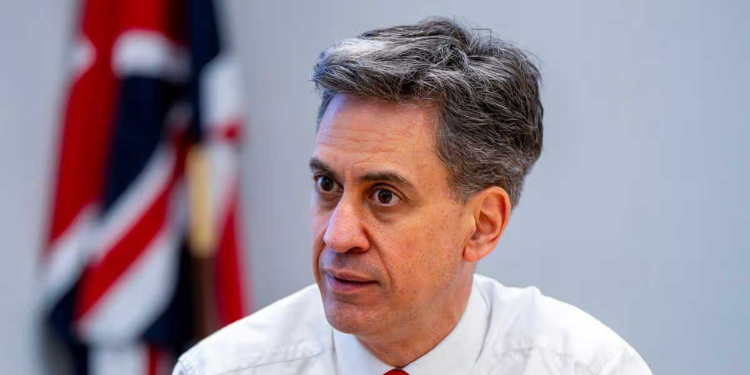
Foreign Secretary Ed Miliband has insisted that UK government’s willingness to consider a formal apology for its role in the transatlantic slave trade will not result in additional costs for British taxpayers.
According to Ed Miliband, successive British governments had avoided confronting the historical consequences of slavery, allowing the issue to remain unresolved within the Commonwealth for decades.
He described the previous approach as an attempt to “sweep it under the carpet,” arguing that addressing the country’s past was necessary to build stronger relationships with affected nations.
The Foreign Secretary pointed to former Prime Minister Sir Tony Blair’s response to Britain’s involvement in the slave trade.
In 2007, Tony Blair expressed “deep sorrow and regret” over Britain’s involvement in the slave trade but stopped short of issuing a formal apology.
“Tony Blair did sort of do a kind of sorry not sorry situation. He kind of expressed sorrow, and then said sorry, and then it was walked back by Number 10.”
Ed Miliband
He noted that Blair’s response continued to feature in discussions about slavery, including a recent conversation involving Andy Burnham and Barbados Prime Minister Mia Mottley.
Miliband Defends Britain’s Decision to Confront Its Slavery Past
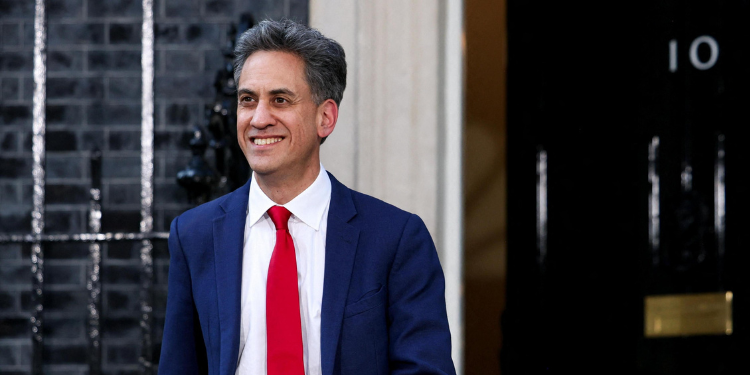
Ed Miliband also recalled the tensions surrounding the 2024 Commonwealth Heads of Government Meeting (CHOGM) in Samoa, which he stated exposed longstanding disagreements over Britain’s historical involvement in slavery.
“On the second day as my time as foreign secretary, I was told, ‘look, one of your tasks is CHOGM 2024, which happened in Samoa, didn’t go well.’ To use sort of diplomatic speak, it ended up in a sort of punch up, a sort of verbal punch up about this whole issue.”
Ed Miliband
He added that the matter had remained unresolved within the Commonwealth for approximately two decades, with demands for historical acknowledgement and accountability growing over time.
“Given that, we thought it was right to confront this issue and not to just try and sort of pretend that it didn’t exist,” Miliband stated.
The Foreign Secretary further noted that he had requested a historical account of Britain’s involvement in the transatlantic slave trade to better understand the scale of the country’s role and the suffering inflicted on enslaved Africans.
He revealed, “Over three million people shipped, really with the British state’s complicity, over a long period of time, a couple of centuries actually; hundreds of thousands of them didn’t make it and died.”
Ed Miliband described the conditions endured by enslaved Africans during transportation and after they arrived in the Caribbean and the Americas as harrowing.
Also, Ed Miliband defended the government’s willingness to confront Britain’s historical involvement in slavery, arguing that acknowledging past wrongdoing should not be interpreted.
“Is it weak to do this? I think it’s the opposite of weak. I think fragile, weak countries can’t face up to their past. I’m really proud of Britain, but being proud of your country is also being willing to face up to things you didn’t do, right?”
Ed Miliband
Burnham Opens Dialogue, Rules Out Reparations
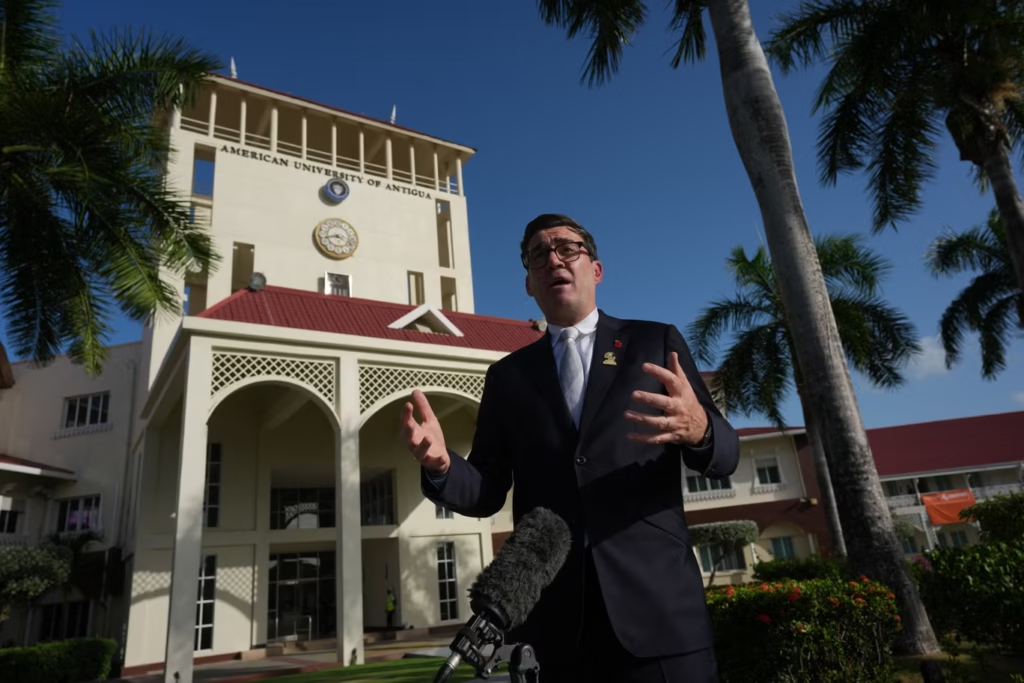
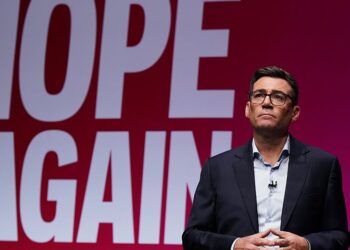
Meanwhile, Prime Minister, Andy Burnham has maintained that Britain will not pay financial reparations for its role in the transatlantic slave trade, despite expressing openness to a formal apology on behalf of the British state.
At the Commonwealth summit in Antigua and Barbuda, the Prime Minister indicated that previous British governments had not provided sufficient opportunities for affected countries to discuss the legacy of slavery, prompting his administration to pursue a different approach.
Asked whether he can guarantee that no additional taxpayer money will go to Commonwealth countries, Burnham stated: “I’ve been very clear that we do not support reparations, and I made that quite abundantly clear in the piece that I wrote in advance of coming here.”
“But it’s not the case that we don’t support countries in the Commonwealth around development and helping them with debt issues that they’ve got, green finance. That’s what we’ve done under all governments, and in my view, we should continue to do as part of being a Commonwealth.”
Ed Miliband
Pressed on whether the government’s new approach could involve additional financial contributions from taxpayers, Burnham declined to provide a direct commitment, arguing that discussions with affected countries should take priority.
He also emphasised the economic importance of Commonwealth relations, pointing to increased trade between Britain and member states.
The Prime Minister mentioned that the proposed dialogue would allow affected countries to express their concerns and help shape discussions about a possible apology rather than having Britain determine its form unilaterally.
READ ALSO: ECG’s Transformer Replacements Expose Deeper Reliability Challenge