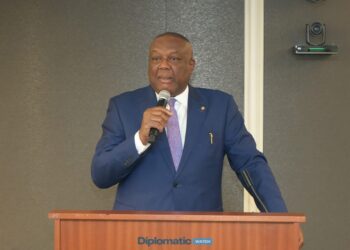
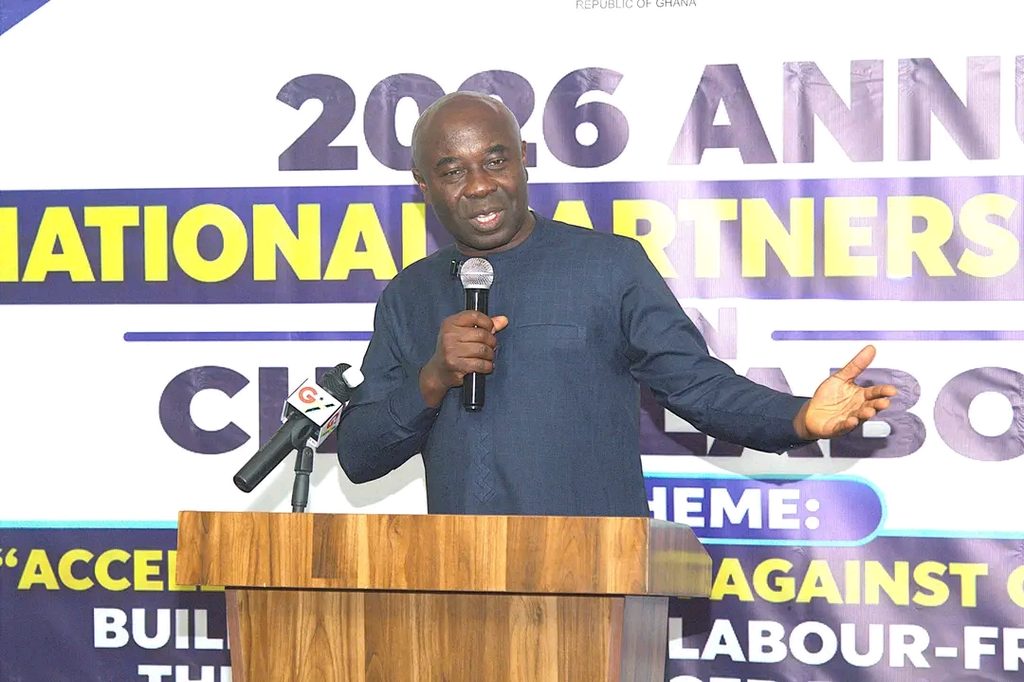
The Minister for Labour, Jobs and Employment, Hon. Emmanuel Kwadwo Agyekum, has called for stronger collaboration and practical interventions to speed up efforts to eliminate child labour in Ghana.
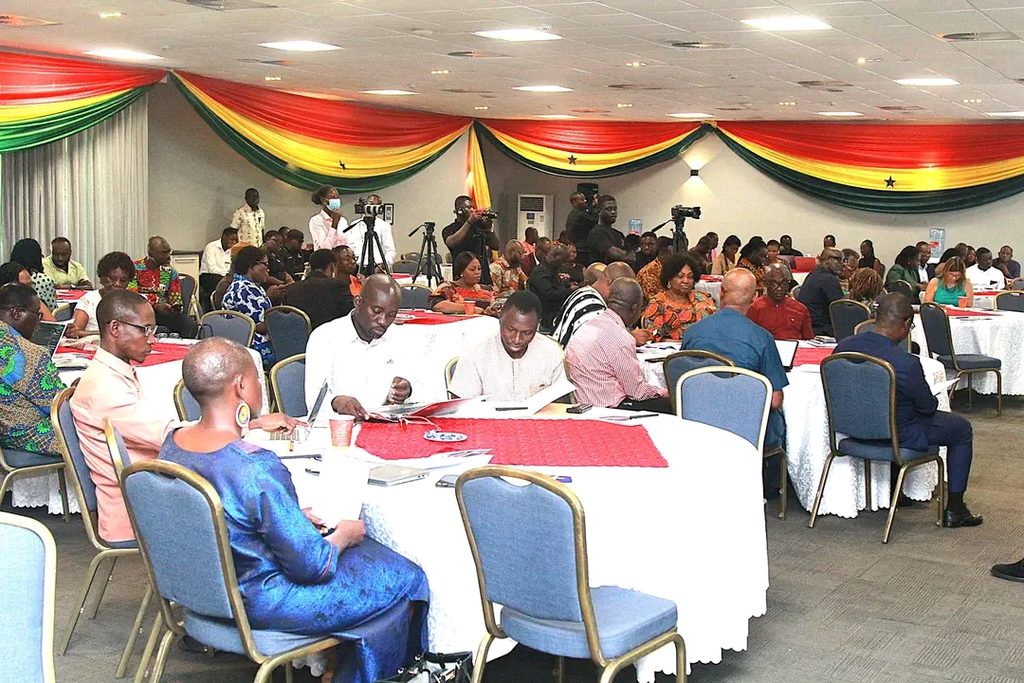
He made the call at the 2026 National Partners Forum on Child Labour, held under the theme “Accelerating Action Against Child Labour: Building a Child Labour-Free Ghana through Strong Partnerships.” The forum let stakeholders review the 2025 annual report, assess progress, identify implementation gaps and agree on coordinated actions.
Agyekum wants outcomes, not committees
The Minister stressed that the fight must move beyond meetings, declarations and institutional arrangements to deliver measurable results. He singled out cocoa-growing, fishing, mining and other informal communities.
“What we are looking for is the results. It is not about forming committees or going through processes; we want to see real changes in our communities and the lives of children,” he declared.
Honourable Emmanuel Kwadwo Agyeman
He urged stakeholders to ensure that declarations translate into sustained protection for children.The report of his remarks did not cite figures on child labour in these sectors or say how progress would be measured. It also did not name the declarations he had in mind.
Minister links child labour to poverty and joblessness
Mr Agyekum underscored the importance of decent employment and sustainable livelihoods for adults. He noted that household poverty and a lack of economic opportunities often push children into exploitative work.
To address this, he announced plans to start a national dialogue on job creation, bringing together government, organised labour and employers. The aim is to explore practical ways of expanding employment and tackling some of the root causes of child labour.
He also called for stronger institutional coordination, better social protection, effective enforcement of labour laws and more investment in community-based child protection systems.
Surveys show the scale of the problem
The Minister’s emphasis on cocoa, fishing and mining follows a long record of data. The Ghana Statistical Service’s report on the sixth Ghana Living Standards Survey, conducted in 2012 and 2013, found that 21.8% of children aged 5 to 17 were engaged in child labour, with more rural children affected than urban ones. It also found that 14.2% of children covered by the survey were in hazardous forms of child labour.
More recently, the US Department of Labor’s 2023 review found that Ghana made moderate advancement in efforts against the worst forms of child labour, and that it launched the Ghana Accelerated Action Plan Against Child Labour. The same review noted that children in Ghana are subjected to the worst forms of child labour in cocoa, fishing and gold. It also pointed out that children living around Lake Volta face a higher risk of forced labour in fishing.
In October 2025, Ghanaian agencies and partners produced a Compendium of Statistics on Child Labour in Ghana, to give stakeholders a single reference point for measuring and reporting child labour consistently. The figures above come from older surveys and an outside review, so check them against the Statistical Service’s latest data before publishing.
Minister highlights monitoring tools and Child Labour Free Zones
The Minister pointed to two mechanisms for identifying, referring and tracking cases: the Child Labour Free Zone initiative and the redevelopment of the Ghana Child Labour Monitoring System.
The Ministry, then named the Ministry of Employment and Labour Relations, has published protocols and guidelines for establishing Child Labour Free Zones, framed as a step towards Sustainable Development Goal Target 8.7.
The monitoring system is part of a national coordination mechanism led by the Ministry’s Child Labour Unit, with representatives from other ministries, employers’ and workers’ organisations, and civil society. The forum report did not describe where the zones operate or when the redeveloped monitoring system will be ready.
Partners pledge support for livelihoods and monitoring
The Country Coordinator of GIZ’s Sustainable Cocoa Programme, Claudia Mayer, highlighted the importance of improving household livelihoods, strengthening public institutions and sharing data to support effective monitoring and remediation.
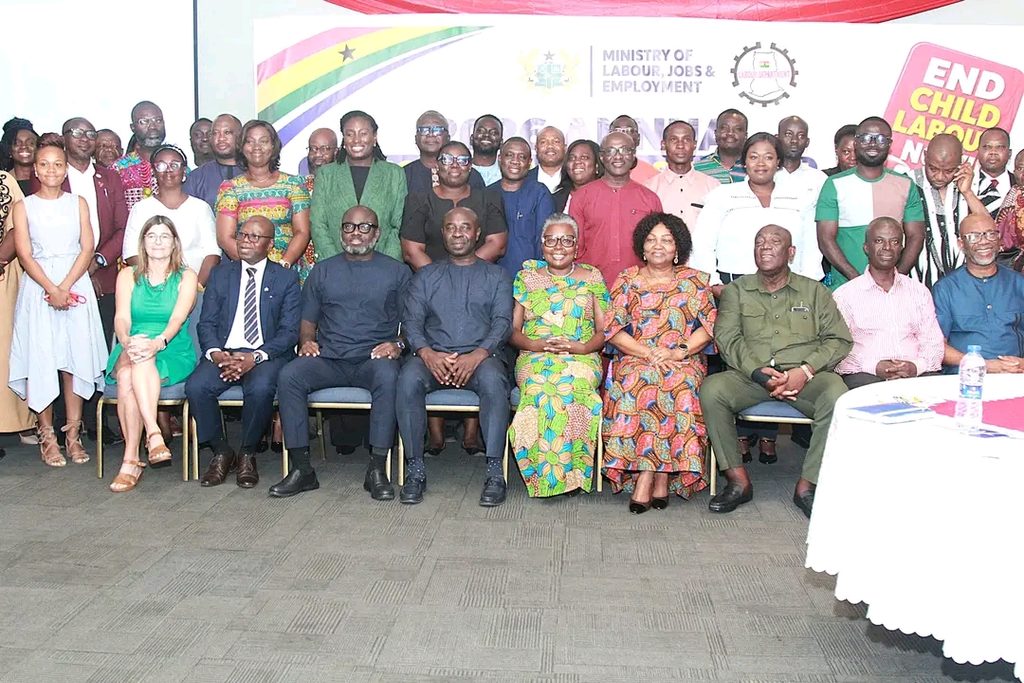
The Country Director of the World Cocoa Foundation Ghana Office, Dr Mawuli Coffie, reaffirmed the commitment of its member companies to child protection. He cited investments in education, community sensitisation, household livelihood improvement and community-based child protection mechanisms.
The Trades Union Congress (TUC), the Ghana Employers’ Association, the Local Government Service and other partners delivered solidarity messages and reaffirmed their commitment to closer collaboration.
Attention will turn to whether the national dialogue on job creation is convened, and whether the monitoring system and Child Labour Free Zones produce results that communities can see.
.
READ ALSO: Italian Foreign Minister’s Personal Data Exposed On Dark Web