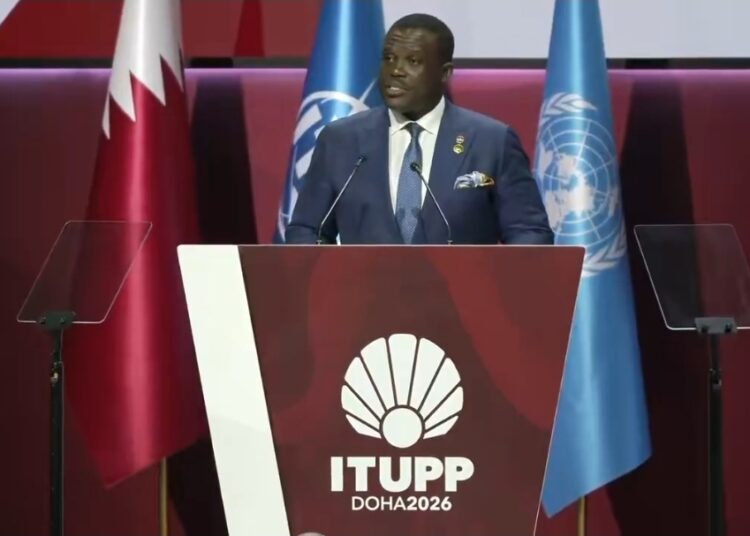
Ghana has called for a more inclusive approach to digital transformation, insisting that expanding telecommunications infrastructure must translate into affordable connectivity, meaningful internet usage and improved livelihoods for citizens.
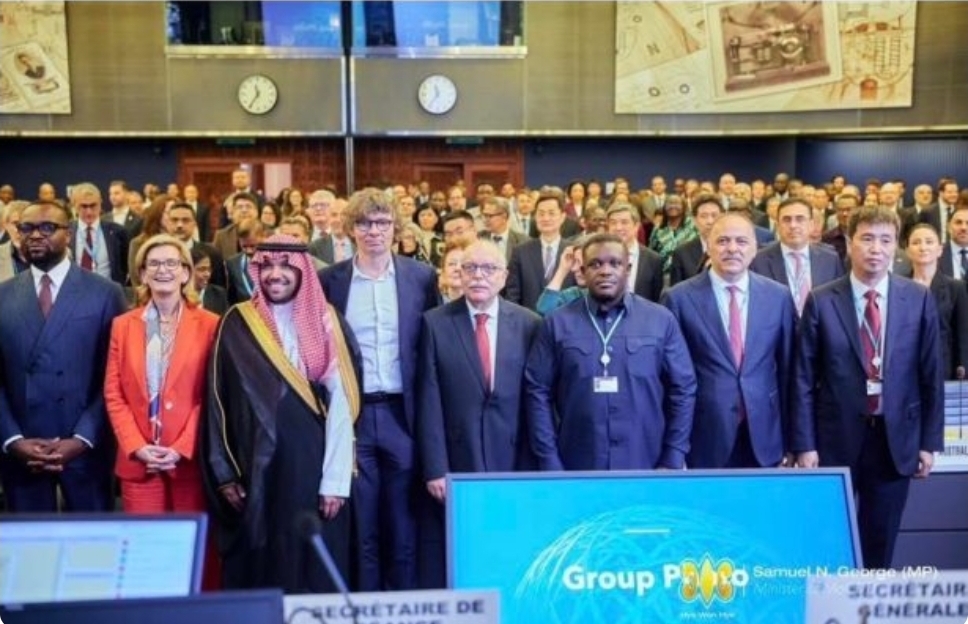
The Minister for Communication, Digital Technology and Innovations, Hon. Samuel Nartey George (MP), made the call at the 2026 International Telecommunication Union (ITU) Plenipotentiary Conference (PP-26) in Doha, Qatar, where he outlined Ghana’s investments in rural connectivity, next-generation networks and digital innovation.
He highlighted the government’s efforts to complete 2,016 rural telephony sites, upgrade ageing 2G and 3G infrastructure and open up 5G spectrum licensing to support the country’s digital transformation agenda.
A Signal Must Translate into Meaningful Access
Emphasising the need to measure digital progress by its impact on people’s lives, Mr George declared that “a signal is not a connection and a tower does not represent transformation.” He argued that network coverage alone was insufficient if citizens could not afford internet services, trust digital platforms or use technology to improve their daily activities.
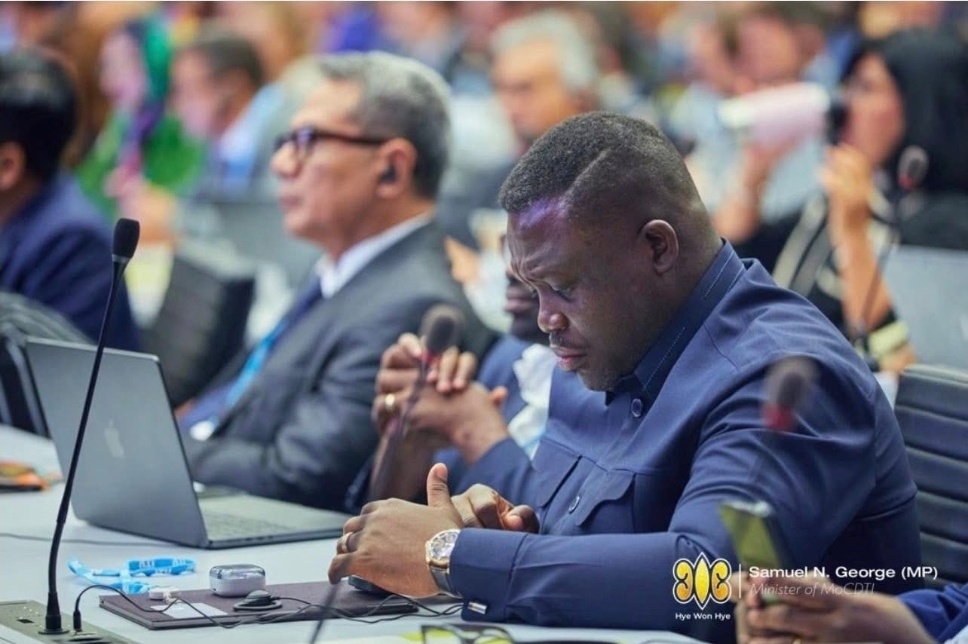
“Coverage means little if people cannot afford it, cannot trust it and cannot use it,” he told delegates, outlining the government’s ambition to move beyond infrastructure expansion towards meaningful digital participation.
The Minister disclosed that Ghana was working towards completing 2,016 sites under the Rural Telephony and Digital Inclusion Project, which seeks to extend voice and data services to underserved communities.
Figures reported by the Ghana News Agency in September indicated that approximately 1,400 rural telephony sites were actively carrying network traffic, while another 300 completed sites were awaiting connection to donor sites. About 300 additional sites remained under construction.
Rural Networks Set for 4G and 5G Upgrade
Mr George also highlighted plans to modernise existing rural telecommunications infrastructure, much of which relies on older 2G and 3G technologies, to support at least 4G connectivity and future 5G services. The upgrade is expected to improve network quality and provide rural communities with better access to digital services, including mobile banking, online education, agricultural information and telemedicine.
In September, the Minister announced that the government intended to upgrade all Rural Telephony Project sites to a minimum of 4G capability, arguing that rural communities should not be left behind as telecommunications technology advances. He further noted that Ghana had opened up 5G spectrum licensing to encourage investment in next-generation connectivity.
The National Communications Authority (NCA) has been overseeing the assignment of spectrum in the 700 MHz, 2.3 GHz and 3 GHz bands. In September, the Authority confirmed that the 700 MHz assignment had been concluded, with the remaining processes for the other bands still underway. Ghana is targeting 5G population coverage of more than 70 per cent by March 2027, coinciding with the country’s 70th independence anniversary.
Digital Skills and Innovation Drive Transformation
Beyond telecommunications infrastructure, the Minister outlined other initiatives intended to strengthen Ghana’s position in the digital economy. He disclosed that the government was building a National Artificial Intelligence Compute Centre to support research, innovation and enterprise while promoting responsible, ethical and inclusive artificial intelligence.
The One Million Coders initiative was also highlighted as a key component of the country’s digital skills development agenda, with the objective of equipping citizens to participate in an increasingly technology-driven economy.
On cybersecurity, Mr George cited Ghana’s Tier 1 status in the ITU’s Global Cybersecurity Index and expressed the country’s readiness to share its experience in establishing Computer Emergency Response Teams and child online protection protocols with other member states. He maintained that building trust in digital systems was essential to expanding internet usage and ensuring that more citizens benefited from technological advancement.
Ghana Advocates Results-Driven Digital Agenda for Africa
The Minister extended his remarks to Africa’s wider connectivity challenges, observing that more than half of the continent’s population remained offline in 2026. Speaking as Chair of the African Union’s Specialised Technical Committee on Communications and ICT, he urged the ITU to prioritise measurable outcomes in its 2027–2030 strategic plan.
He called for greater investment in last-mile connectivity and equitable access to spectrum and satellite orbits, stressing that digital development must extend to underserved communities and countries with limited infrastructure.
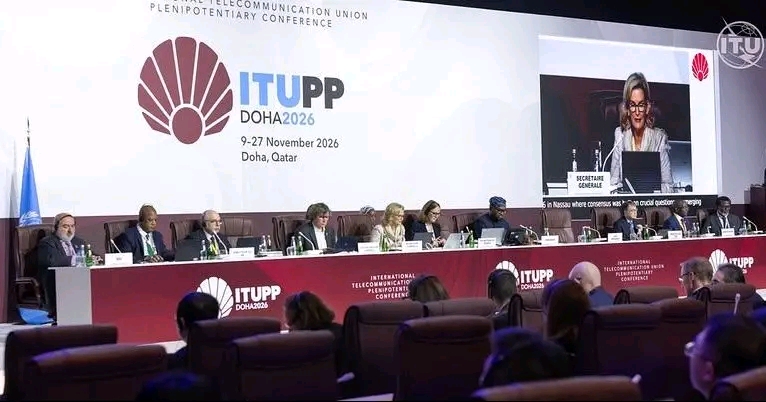
The PP-26 conference, which runs from November 9 to 27, 2026, brings together ITU member states to determine the organisation’s policies, strategic direction and financial plans for the next four years.
Ghana’s position at the conference underscores a broader argument: digital transformation should not be measured solely by the reach of telecommunications networks, but by the opportunities they create and the lives they improve.