Ghana has called for stronger international partnerships, increased investment in digital infrastructure and equitable access to emerging technologies to prevent developing countries from being left behind in the rapidly evolving global digital economy.
The Minister for Communication, Digital Technology and Innovations, Samuel Nartey George, made the appeal at the Doha Ministerial Roundtable in Qatar, where he emphasised the need for international cooperation to ensure that technological advancement creates opportunities for countries at every stage of development.
The Minister cautioned that an emerging digital divide, driven by unequal access to computing power, quality data and advanced technological resources, could deepen existing inequalities between developed and developing economies.
He maintained that although talent and innovative ideas exist across the world, inadequate infrastructure and financing continue to prevent many innovators in developing countries from competing effectively.
Ghana Highlights Growing Inequality in AI Development
Illustrating the challenge, Honourable Sam George presented the example of a young Ghanaian innovator in Accra with a promising artificial intelligence (AI) idea but limited access to the computing resources and financial support required to develop it.
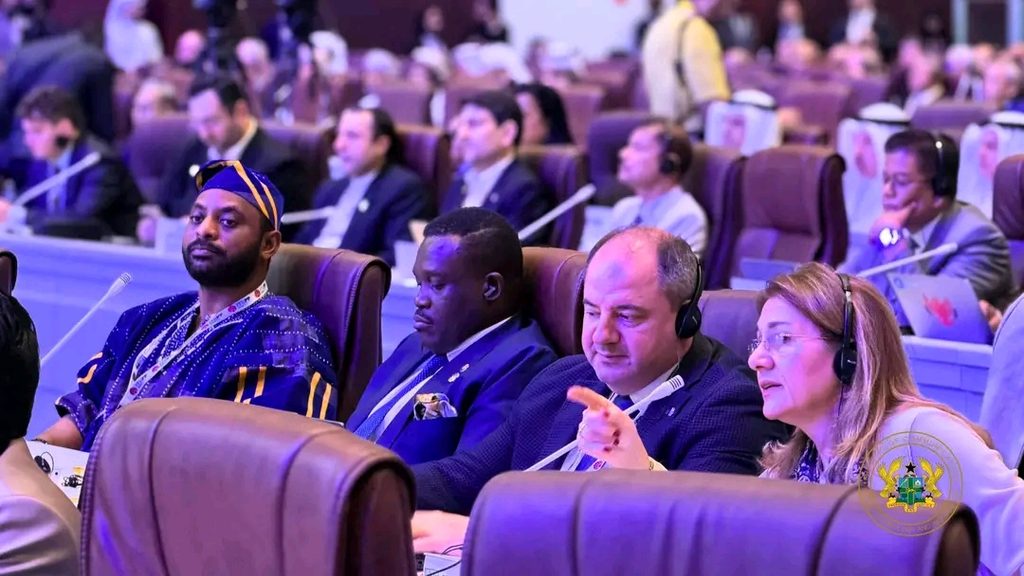
He argued that such limitations reflect a broader structural problem in the global technology ecosystem, where the ability to develop advanced solutions is increasingly determined by access to resources rather than the availability of talent.
“Talent is everywhere. Opportunity is not.”
Honourable Samuel Nartey George
His remarks draw attention to the growing importance of computational infrastructure in AI development. Training and deploying sophisticated AI systems require substantial computing capacity, reliable data infrastructure and specialised expertise, resources that remain unevenly distributed across countries.
Without deliberate interventions, developing economies risk becoming primarily consumers of technologies developed elsewhere, with limited opportunities to build competitive local industries or influence the systems shaping their digital futures.
The Minister Calls for Investment Beyond Traditional Aid
Honourable Sam George urged international partners to move beyond conventional development assistance towards practical collaborations that address the infrastructure, financing and skills gaps confronting developing countries.
He identified investment in digital infrastructure, technology transfer, skills development and fair access to emerging technologies as essential components of a more inclusive global digital economy.
The Minister further stressed that governments, development institutions and private-sector organisations must work together to mobilise resources and create opportunities for local innovators. His position reflects Ghana’s broader efforts to strengthen its domestic AI ecosystem.
On April 24, 2026, President John Dramani Mahama launched Ghana’s National Artificial Intelligence Strategy, which provides a framework for responsible AI adoption, infrastructure expansion, data governance, skills development and innovation.
The strategy also seeks to position Ghana as a competitive AI hub in West Africa while promoting the use of artificial intelligence across critical sectors, including education, healthcare, agriculture and public service delivery.
The Ministry of Communication, Digital Technology and Innovations has identified international partnerships as important to implementing the strategy, with organisations including GIZ, UNDP, UNESCO and the KNUST Responsible AI Lab expected to contribute to its implementation.
Doha Declaration Must Deliver Practical Outcomes
The Minister’s appeal comes as participating countries consider the Doha Declaration, an initiative intended to guide international cooperation on digital transformation and emerging technologies.
The Doha Ministerial Roundtable, hosted by Qatar’s Ministry of Communications and Information Technology on November 8, brought together ministers and senior officials from member states of the International Telecommunication Union (ITU).
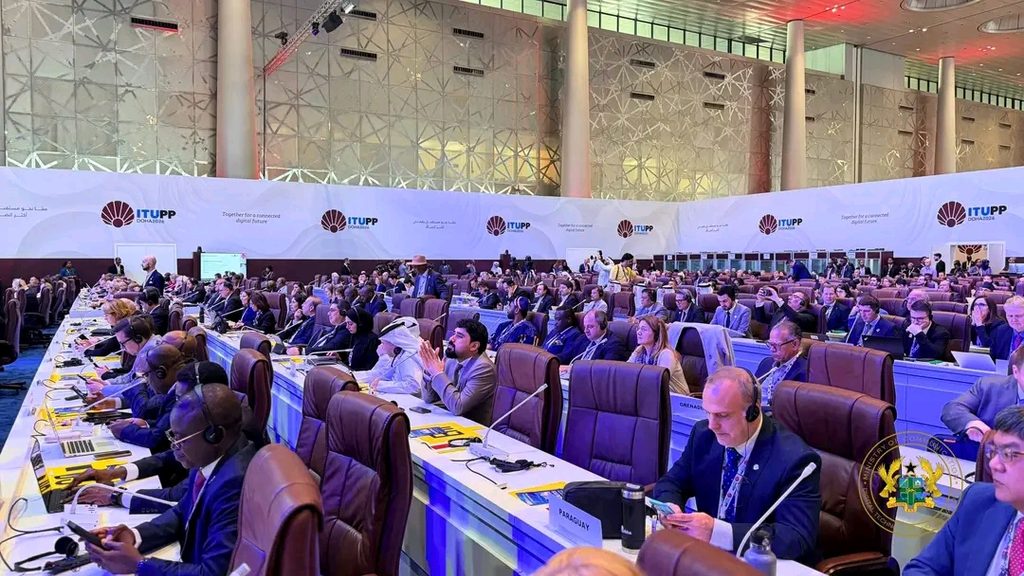
Discussions covered meaningful and universal connectivity, the development of digital networks and services, infrastructure resilience, artificial intelligence and satellite communications.The roundtable also provided an opportunity for participating countries to exchange perspectives on shared digital priorities and identify areas requiring stronger international coordination.
Mr George urged participating countries to ensure that the proposed declaration produces measurable improvements rather than becoming another international commitment without practical implementation.
“Let this one be different. Let it be the basis for practical partnerships that meet the real infrastructure, financing and capacity needs of developing countries,” he appealed.
Honourable Samuel Nartey George appealed to the Board
He emphasised that the success of international digital agreements should ultimately be measured by their ability to address the challenges faced by countries with limited technological and financial resources.
Ghana Reaffirms Commitment to Global Digital Cooperation
Ghana’s participation in the discussions forms part of its broader engagement in international efforts to shape digital governance, expand connectivity and promote responsible technological development.
The ITU Plenipotentiary Conference 2026, which begins in Doha on November 9 and runs until November 27, provides a major platform for member states to determine the organisation’s strategic direction and priorities for the coming years.
For Ghana, stronger international cooperation presents an opportunity to attract investment, strengthen technical capacity and ensure that its digital transformation ambitions align with broader global developments. The Minister reaffirmed Ghana’s willingness to collaborate with other member states and international partners to advance shared digital development priorities.
He maintained that building an inclusive digital future would require more than technological innovation. It would also demand deliberate investment, accessible infrastructure and partnerships that allow developing economies to participate meaningfully in the global digital revolution.
READ ALSO: NAIMOS Demands MMDCE’s Involvement In Galamsey Fight