Ghana has been re-elected to the Council of the International Telecommunication Union (ITU) for the 2027–2030 term, securing continued representation in the global body responsible for shaping international telecommunications and digital technology policies.
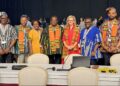
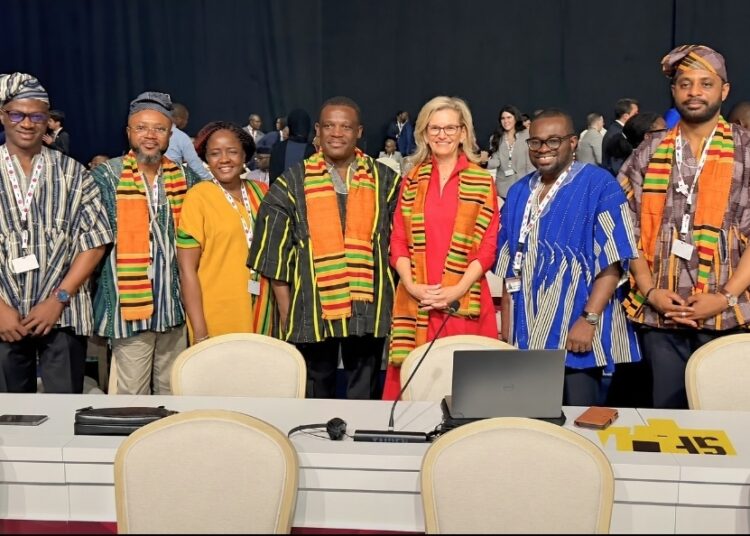
The election took place on November 16, 2026, during the ongoing ITU Plenipotentiary Conference (PP-26) in Doha, Qatar, where Ghana secured 121 votes to win one of the 13 seats allocated to African countries. The outcome reinforces Ghana’s participation in international digital policy discussions at a time when countries are increasingly competing to expand their technological capabilities, strengthen artificial intelligence infrastructure and close persistent connectivity gaps.
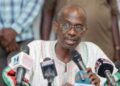
The Minister for Communication, Digital Technology and Innovations, Samuel Nartey George, welcomed the outcome, expressing appreciation to ITU member states for renewing their confidence in Ghana. He described the re-election as both recognition of the country’s contributions and an opportunity to assume greater responsibility in advancing inclusive digital development.
Ghana Secures Another Four Years on ITU Council
Ghana was elected alongside Kenya, Côte d’Ivoire, Senegal, Tanzania, Egypt, Rwanda, Algeria, Morocco, Nigeria, Tunisia, Mauritius and South Africa, giving Africa representation in the 48-member ITU Council. Kenya topped the African results with 136 votes, followed by Côte d’Ivoire with 135 and Senegal with 134. Ghana and Nigeria each secured 121 votes. Ghana Wins ITU Council Seat for 2027–2030 Term in Doha
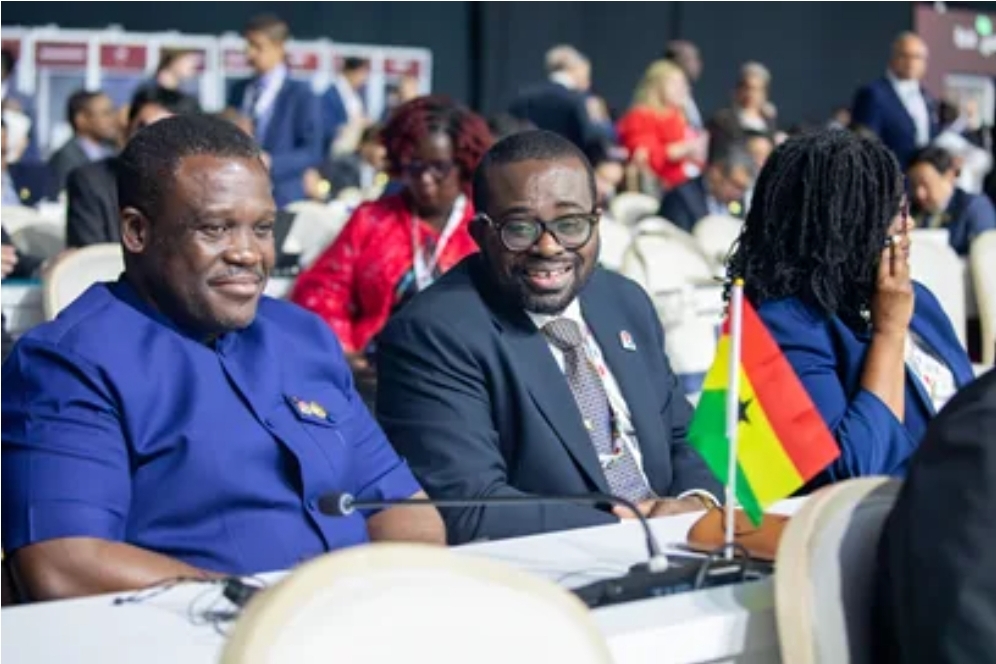
The Plenipotentiary Conference, which runs from November 9 to 27, brings together representatives of the ITU’s 194 member states to determine the organisation’s strategic direction and elect representatives to its governing bodies.
Ghana’s continued representation is particularly significant as the country seeks to influence international decisions on telecommunications regulation, spectrum management, cybersecurity and emerging technologies. The ITU Council oversees the organisation’s activities between Plenipotentiary Conferences, supervising the implementation of its policies, programmes, strategic priorities and financial decisions.
Ghana Pushes for Equitable Access to Digital Technology
Reacting to the election, Mr George reaffirmed Ghana’s commitment to international cooperation and a digital transformation agenda that accommodates developing economies. He maintained that access to emerging technologies must not become another source of inequality, particularly as artificial intelligence and computing power increasingly influence economic competitiveness.
“Ghana is grateful to the ITU and all Member States for the confidence reposed in our country through this re-election.”
Hon. Samuel Nartey George, Minister of Communications, Digital Technology and Innovations
The Minister further emphasised the need for practical partnerships to make technological opportunities accessible beyond advanced economies .“As we have emphasised throughout this Conference, talent is everywhere, but opportunity is not.”
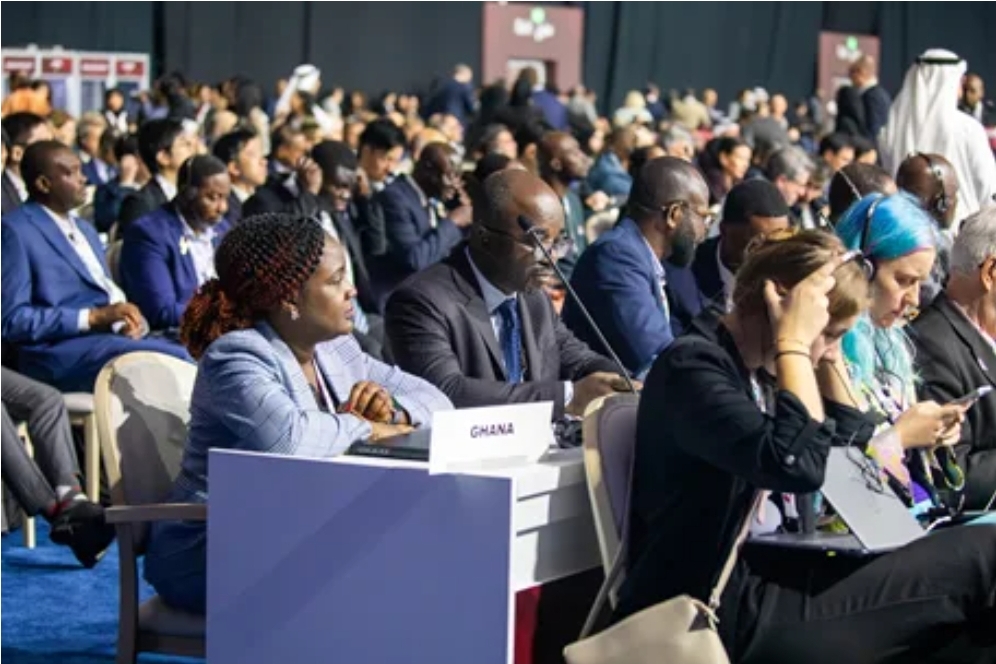
He called for stronger international collaboration to mobilise investment, facilitate technology transfer, develop digital skills and improve access to sustainable financing. His position reflects concerns about the widening global digital divide, particularly in Africa, where more than half of the population remained offline in 2026, according to statements presented by the Minister at the conference.
Ghana has also advocated a results-driven ITU agenda for 2027–2030, with greater attention to last-mile connectivity, equitable access to spectrum and satellite resources, and investment in digital infrastructure.
Ghana Advances Domestic Connectivity Ambitions
The re-election comes as Ghana pursues an ambitious expansion of its telecommunications infrastructure under President John Dramani Mahama’s New Economy Policy. Mr George has disclosed that government is targeting more than 70 per cent 5G population coverage by March 2027, coinciding with the country’s 70th Independence Anniversary.
The initiative includes completing 2,016 rural telephony sites and upgrading existing second-generation (2G) and third-generation (3G) infrastructure to 4G- and 5G-ready facilities. Government has also opened up 5G spectrum licensing to encourage network expansion and improve access to advanced mobile services.
However, the Minister has stressed that expanding network coverage alone would not guarantee meaningful digital inclusion. He has maintained that connectivity must be affordable, accessible and capable of improving livelihoods, business opportunities and public service delivery.
Ghana is also pursuing broader digital initiatives, including the establishment of a National Artificial Intelligence Compute Centre and the One Million Coders Programme, which seeks to strengthen the country’s technological skills base.
Ghana Secures Additional Representation on ITU Board
Beyond its Council re-election, Ghana has secured another significant position within the ITU’s governance structure.The Director-General of the National Communications Authority (NCA), Rev. Ing. Edmund Yirenkyi Fianko, has been re-elected to the Radio Regulations Board (RRB) for a second four-year term.Mr Fianko obtained 173 votes out of 177, securing one of the three positions allocated to Africa on the board.
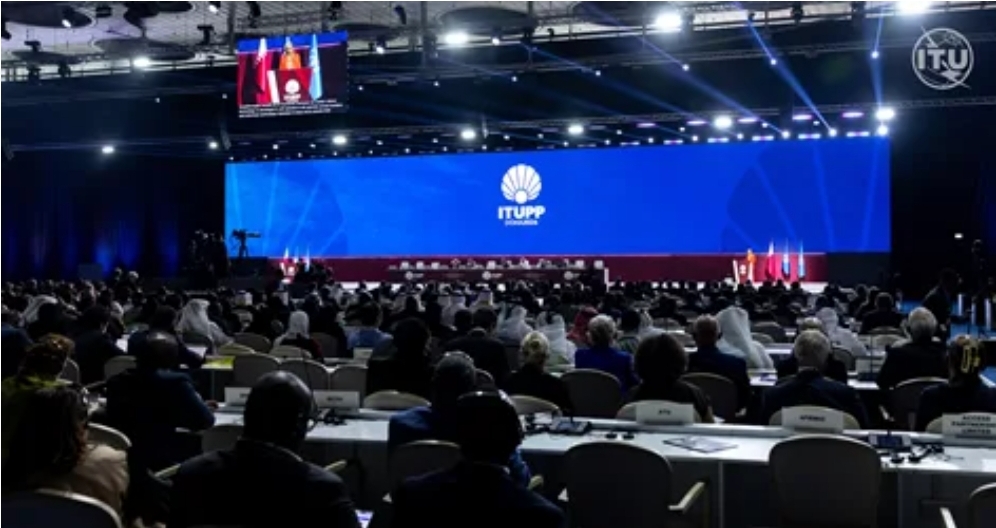
The two electoral victories strengthen Ghana’s representation in international telecommunications governance and provide opportunities to contribute to decisions affecting radio-frequency spectrum and satellite orbit resources. As the country prepares for the 2027–2030 term, the government is expected to work with fellow member states and ITU leadership to advance digital inclusion, technological cooperation and sustainable connectivity.
The challenge will be translating its renewed international influence into practical outcomes that expand access to technology and create opportunities for communities across Ghana and the wider African continent.
READ ASLO: EU Sanctions Nearly 50 Russian Banks