United Nations has revealed that more than 1.1 billion people across Asia and the Pacific are living in poverty, urging governments to adopt innovative and inclusive approaches to address growing economic, social and environmental vulnerabilities.
According to the newly released Social Outlook for Asia and the Pacific 2026: Eradicating Poverty and Empowering People, poverty extends beyond a lack of income to include multiple deprivations in education, health, nutrition, housing and access to essential services.
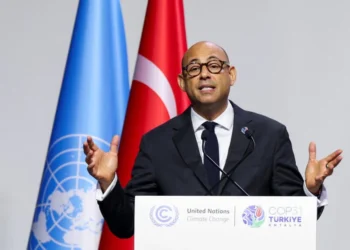
United Nations Under-Secretary-General and Executive Secretary of the Economic and Social Commission for Asia and the Pacific (ESCAP), Armida Salsiah Alisjahbana, stated that, “the nature of poverty and vulnerability is evolving as climate change, demographic change, digital transformation and recurring economic shocks reshape who is poor, how people experience deprivation and their exposure to future risks.”
Also, the report highlights significant progress in poverty reduction across Asia and the Pacific over the past three decades. However, it emphasises that poverty cannot be measured solely by income, as millions of people continue to experience overlapping disadvantages in education, healthcare, nutrition, housing and access to essential services.
Under this broader measure, more than 1.1 billion people were living in poverty across the region in 2026, including approximately 310 million facing extreme poverty.
An additional 1.2 billion people, although not classified as poor, remain vulnerable to falling into poverty, highlighting the fragile economic circumstances confronting a substantial proportion of the population.
These findings point to the limitations of conventional income-based poverty assessments, particularly as climate-related disruptions, demographic changes and recurring economic shocks increasingly affect people’s livelihoods and access to essential services.
As a result, the United Nations is calling for an extensive understanding of poverty that considers people’s overall well-being, their exposure to economic risks and their ability to withstand future crises.
UN Urges Stronger Social Protection and Comprehensive Care Systems
Against the backdrop of persistent poverty and growing vulnerabilities, the report identifies universal social protection, inclusive healthcare and comprehensive care systems as essential investments in building resilient societies.
Countries across Asia and the Pacific are increasingly recognising the importance of adapting their social policies to changing economic conditions, ageing populations and the effects of climate change.
Among the interventions highlighted are universal health coverage, targeted employment policies and stronger public-private partnerships to expand job opportunities for persons with disabilities.
The report also identifies vocational training in renewable energy as an important response to employment challenges, particularly in areas where fossil fuel costs are high.
Other recommended interventions include parental education, improved maternal nutrition and strengthened newborn healthcare to reduce childhood stunting and improve long-term health outcomes.
United Nations Under-Secretary-General and Executive Secretary of the Economic and Social Commission for Asia and the Pacific (ESCAP) maintained that the region has considerable potential to advance these interventions.
“The region is well positioned to lead this transformation by strengthening social protection and health care, aligning employment policies with demographic realities, expanding skills and labour market opportunities.”
Armida Salsiah Alisjahbana
These measures are expected to support more inclusive economic participation, advance gender equality and ensure vulnerable populations are better equipped to navigate economic and environmental transitions.
Bangkok Meeting Reviews Regional Commitments on Poverty Eradication
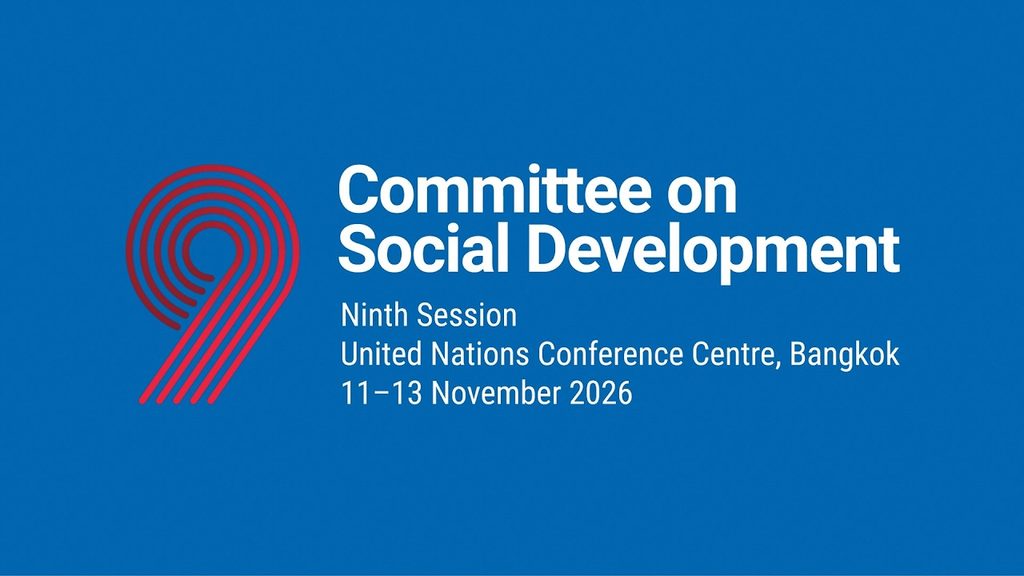
In view of that, the ninth session of the Committee on Social Development which kicks off today is set to bring together ministers, senior policymakers and civil society representatives to examine policy options for addressing persistent poverty and strengthening social development across the region.
The meeting is also providing an opportunity to assess progress, identify gaps in implementation and accelerate action on existing regional commitments, while addressing emerging social and economic challenges.
Key frameworks under consideration include the Jakarta Declaration on the Asian and Pacific Decade of Persons with Disabilities (2023–2032), the Madrid International Plan of Action on Ageing and the Action Plan to Strengthen Regional Cooperation on Social Protection.
These regional commitments seek to strengthen social protection systems, promote the inclusion of persons with disabilities and improve responses to the needs of ageing populations.
Through the discussions, participating countries are expected to explore stronger regional cooperation and more coordinated policy approaches to address the interconnected challenges of poverty, inequality, demographic change and economic vulnerability.
READ ALSO: Ghana Targets 60% Ownership in Medium-Scale Mining