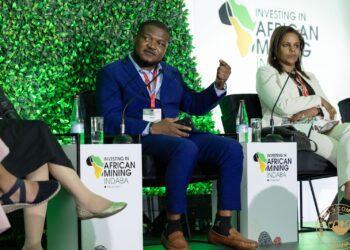
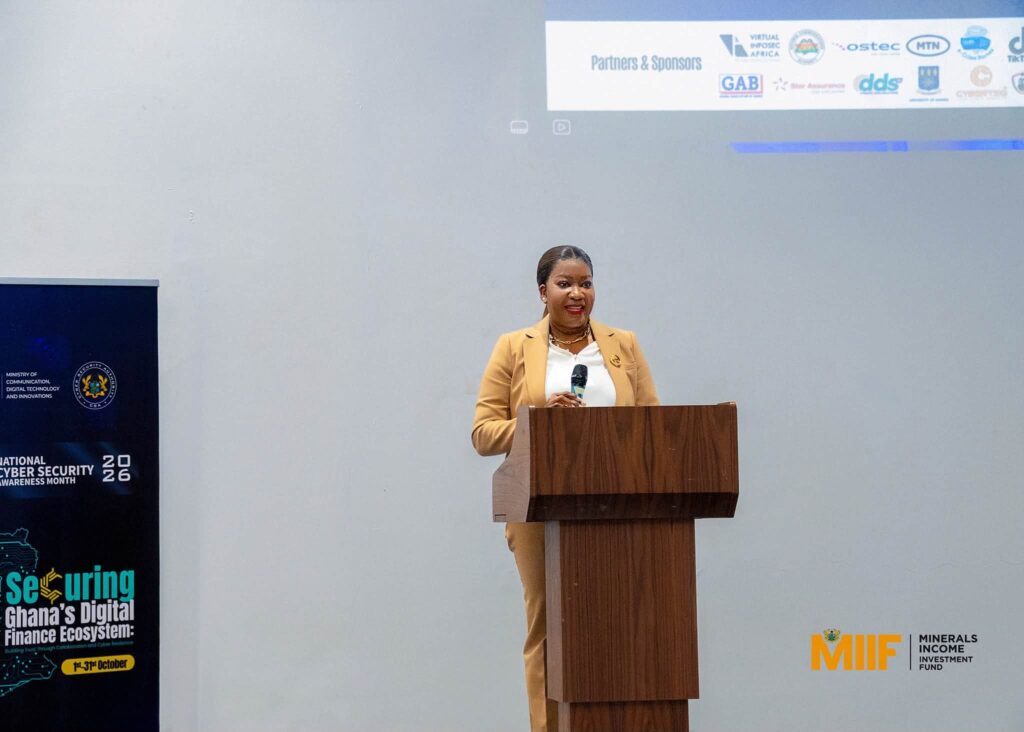
Justina Nelson, Chief Executive Officer of the Minerals Income Investment Fund (MIIF), has initiated a strategic international capital drive to unlock Ghana’s domestic mineral processing capacity and replace an estimated US$528 million in annual iron and steel imports.
Addressing global mining executives and financiers, MIIF Boss pitched an integrated mine-to-steel industrial framework designed to curb foreign exchange outflows and keep mineral value within the Ghanaian economy.
The appeal forms the centerpiece of Accra’s broader transition away from exporting unprocessed raw ores toward establishing local smelting, refining, and manufacturing hubs.
Based on 2023 trade benchmarks, establishing a fully integrated domestic steel value chain would allow local producers to supply the country’s expanding construction, engineering, and manufacturing sectors, directly offsetting the heavy fiscal burden of imported industrial metals while creating high-skilled employment across ancillary service industries.
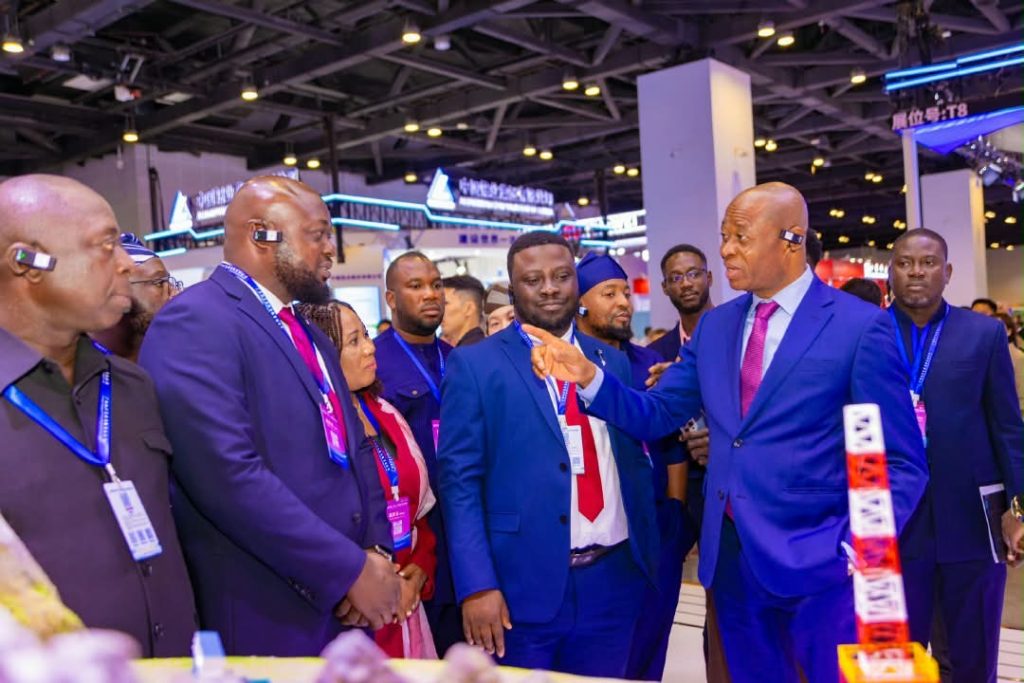
“The conference, held under the theme, ‘Empowering China-ASEAN Mining Cooperation, Innovation and Development,’ brought together government officials, mining industry leaders, investors and other stakeholders to explore investment opportunities and partnerships across the mining value chain.”
Minerals Income Investment Fund (MIIF),
Mineral Reserves Anchor Industrial Import Substitution
For decades, Ghana’s extractive economy has exhibited a striking structural paradox: despite possessing vast geological wealth, the country remains heavily dependent on foreign-processed industrial inputs.
Rapid urbanization, major port expansions, and ongoing infrastructure rehabilitation have steadily inflated national demand for structural steel, reinforcement bars, and industrial alloys.
Importing US$528 million worth of these materials annually exerts persistent pressure on the cedi and drains scarce foreign currency reserves that could otherwise finance domestic capital expenditure.
To reverse this trend, MIIF is leveraging Ghana’s substantial verified geological endowments as a foundation for large-scale industrial partnerships.
At the forefront is the Sheini Hills iron ore deposit in the Northern Region, which holds estimated reserves exceeding 1.7 billion tonnes an asset base capable of sustaining decades of commercial extraction and domestic steel production.
Developing these deposits in tandem with complementary regulatory bodies such as the Ghana Integrated Iron and Steel Development Corporation (GIISDEC) provides foreign investors with the scale required to justify capital-intensive blast furnaces, pelletizing plants, and smelting infrastructure.
Diversifying Beyond Gold Into Battery and Base Metals
Beyond iron and steel, the investment pitch underscores Ghana’s ambition to emerge as a competitive supplier in the global energy transition and industrial manufacturing supply chains.
While gold has historically dominated national export receipts, MIIF is actively de-risking and packaging underexploited base and critical minerals to attract specialized technical partners.
Key resource pillars presented to international financiers include estimated bauxite reserves of 920 million tonnes positioned to feed integrated alumina refining and aluminum smelting operations.
Furthermore, a 560-square-kilometre portfolio across the Cape Coast lithium belt contains an estimated 30.1 million tonnes of resources grading 1.26% lithium oxide, tailored for electric vehicle battery production.
These are complemented by approximately 5.2 million tonnes of proven manganese resources alongside promising graphite exploration targets essential for battery-grade anode and cathode manufacturing.
Nelson outlined specific commercial entry points for prospective partners, noting that opportunities span greenfield and brownfield mining developments, joint ventures between foreign operators and Ghanaian contract miners, and the local fabrication of mining consumables.
By anchoring alumina refineries and battery-grade manganese processing plants locally, Ghana aims to capture downstream margins that are routinely lost when raw concentrates are shipped abroad for processing.
Institutional Guarantees and Sovereign Backing for Investors
Securing multi-billion-dollar commitments for heavy industrial infrastructure requires more than geological abundance; it demands regulatory predictability and institutional co-investment.
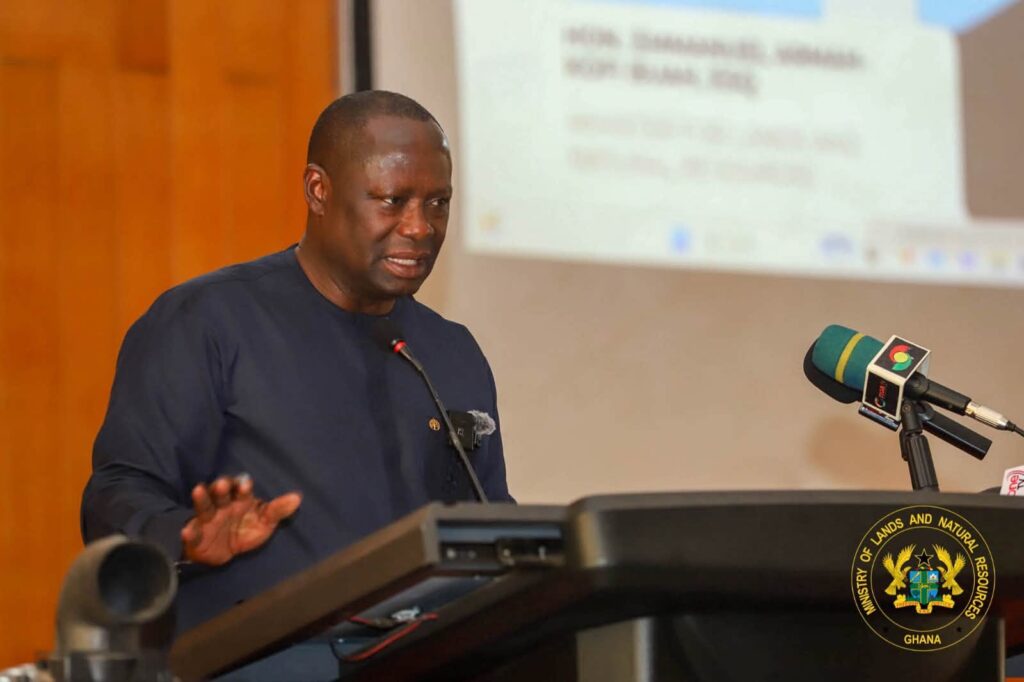
Representing the Government of Ghana at the forum, Deputy Minister of Lands and Natural Resources, Alhaji Yusif Sulemana reinforced the state’s commitment to protecting foreign capital through transparent governance and policy consistency.
Sulemana emphasized that the sector ministry and allied state agencies are actively streamlining administrative processes to facilitate mutually beneficial partnerships across the extractive value chain.
For international financiers weighing emerging-market risks, MIIF’s involvement provides an added layer of sovereign alignment, acting as a domestic equity co-investor that bridges local content requirements with global technical expertise.
Ultimately, converting Ghana’s 1.7 billion tonnes of iron ore and 920 million tonnes of bauxite into finished industrial goods will depend on pairing foreign capital with reliable energy infrastructure and efficient transport corridors.
If executed effectively, however, MIIF’s current investment offensive could mark a decisive shift transforming Ghana from a price-taking exporter of raw earth into a self-sustaining West African manufacturing and metallurgical hub.
READ ALSO: Climate Finance: An Obligation, Not Charity — Somalia’s President