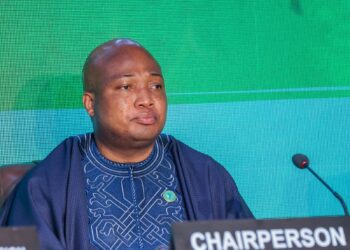
Professor of Finance at Andrews University, Professor Williams Kwasi Peprah has identified reliable and affordable electricity, cheaper credit, increased agricultural production and a shift towards a production-driven economy as essential conditions for Ghana to translate its recent economic stabilisation into sustainable economic transformation.
Speaking in an exclusive interview with The Vaultz News Network on the Government’s 2027 Budget, he believes that the country must “prioritise domestic production, strengthen its productive sectors and create an enabling environment for businesses to expand and generate employment.”
Under the theme New Economy, New Ghana: Jobs and Prosperity, the 2027 Budget outlines the Government’s ambition to move beyond economic stabilisation towards structural transformation and sustainable job creation.
“The budget is in line with government’s policy that we should always have a medium-term strategy. So, this new four-year plan of government is to fulfill that agenda for Ghana to ensure economic stability where we will be able to resist most of the economic uncertainties and global pressures.”
Williams Kwasi Peprah, PhD
Elucidating the fundamental changes required to sustain Ghana’s economic recovery, the Professor identified energy affordability as a critical determinant of the country’s productive capacity. He explained that businesses require consistent and reasonably priced electricity to operate efficiently, expand their activities and contribute meaningfully to national economic growth.

Beyond energy supply, Professor Peprah highlighted the importance of maintaining stable macroeconomic indicators, particularly inflation, to reduce borrowing costs and improve access to credit for businesses. He observed that curbing inflation could translate into lower interest rates and cheaper financing to “propel the economy, so that businesses can find cheaper source of funds to be able to expand production.”
In addition, he proposed a production-oriented economic structure that would reduce Ghana’s dependence on imported goods while strengthening domestic manufacturing and agricultural activities. According to him, the country must develop the capacity to produce “a substantial proportion of the goods consumed locally, with exports serving as an additional avenue for economic expansion.”
Professor Peprah stressed that Ghana should aim to produce and consume approximately 70 percent of the goods it requires while exporting the remaining 30 percent. Nevertheless, he cautioned that, “the production agenda of government must be able to meet local demand and not focus on export.”
He emphasised that expanding domestic production would generate employment opportunities and help alleviate unemployment, particularly if the country successfully redirects investment and economic activity towards sectors with greater labour-absorbing capacity.
While acknowledging the importance of services to Ghana’s existing economic structure, the scholar identified agriculture as “a sector with considerable potential to facilitate structural change.” He noted that the country’s extensive arable land presents an opportunity to expand agricultural activities, strengthen agro-processing and create employment on a larger scale.
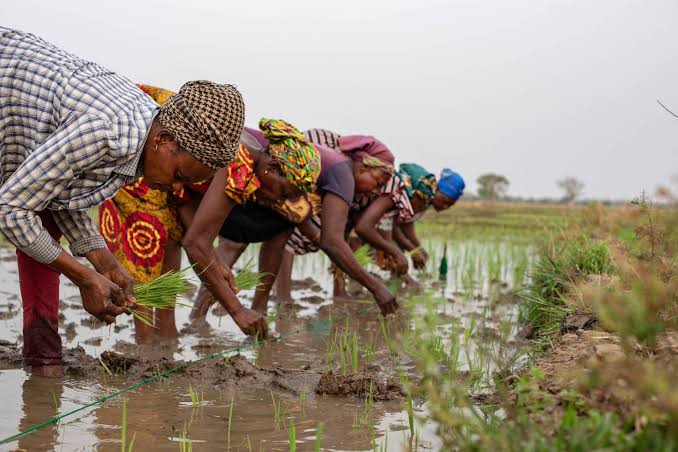
However, he cautioned that achieving this transition would require “considerable effort to attract young people into agriculture.” Consequently, he called on the Government to make the sector “more appealing through policies and interventions” that encourage greater participation and demonstrate its economic prospects.
2027 GDP Growth Target Depends On Key Economic Conditions
Turning to the Government’s projected 5.2 percent GDP growth rate for 2027 and the anticipated 5.7 percent growth in non-oil GDP, Professor Peprah considers the targets “achievable, given the country’s recent economic performance.”
Drawing attention to Ghana’s economic performance in the second quarter of 2026, he observed that the Government’s 2027 projections are not substantially removed from the growth figures already recorded, although their attainment would depend on sustaining the economic conditions that supported the previous performance.
In identifying agriculture as one of the principal contributors to growth, the economist pointed to the increased availability of food products and relatively lower food prices in 2026. He acknowledged, however, that the decline in agricultural commodity prices created difficulties for farmers, who expressed dissatisfaction with the prices they received for their produce.
Despite these challenges, Professor Peprah proposed sustaining the agricultural production strategy in 2027 while strengthening the connection between farming and industrial activity. He emphasised that increased agricultural output must be accompanied by functional factories capable of processing produce and creating additional value within the domestic economy.
“And if government is focused on Ghana, through this private-led initiative, then you have to see our farms producing for 24 hours. All the services businesses will still need to be expanded.”
Williams Kwasi Peprah, PhD
Beyond agricultural productivity and industrial expansion, Professor Peprah identified exchange rate stability as another essential condition for achieving the 2027 growth projections. He cautioned that excessive depreciation of the cedi could undermine the country’s economic ambitions by creating additional pressures on businesses and increasing the cost of imported inputs.

Accordingly, he called on the Government to monitor developments in the foreign exchange market and pursue measures that would strengthen the local currency. He reiterated that reliable electricity, affordable credit and a stable exchange rate must work together to create the conditions necessary for businesses to increase their productive capacity.
More importantly, the Professor of Finance cautioned against assessing economic progress exclusively through GDP figures without examining the corresponding employment outcomes. He observed that, “when your GDP is growing, it must also be backed by employment creation.”
READ ALSO: Dr Adam: NPP Began Economic Recovery Before This Government