

GCB Bank PLC has delivered a striking financial performance, recording GH¢2.87 billion in profit before tax for the nine months to September 2026, as a sharp decline in bad loans strengthens its position in Ghana’s banking industry.
The bank’s profit before tax increased by 42.6 per cent compared with the corresponding period in 2025, bringing it within reach of an ambitious full-year earnings target of at least GH¢3.7 billion.
But beyond the impressive profit figures, another development is attracting attention. GCB Bank has reduced its non-performing loans (NPLs) ratio to just 4.8 per cent, down significantly from 10.8 per cent a year earlier and 15.06 per cent at the end of 2024.
The combination of stronger earnings, expanding credit and improving loan quality places Ghana’s largest indigenous bank in a stronger position as competition intensifies across the financial sector.
GCB Bank’s Profits Surge as Lending Expands
The GH¢2.87 billion profit before tax represents 91 per cent of the bank’s full-year profit before tax for 2025, highlighting the pace at which its earnings have grown.
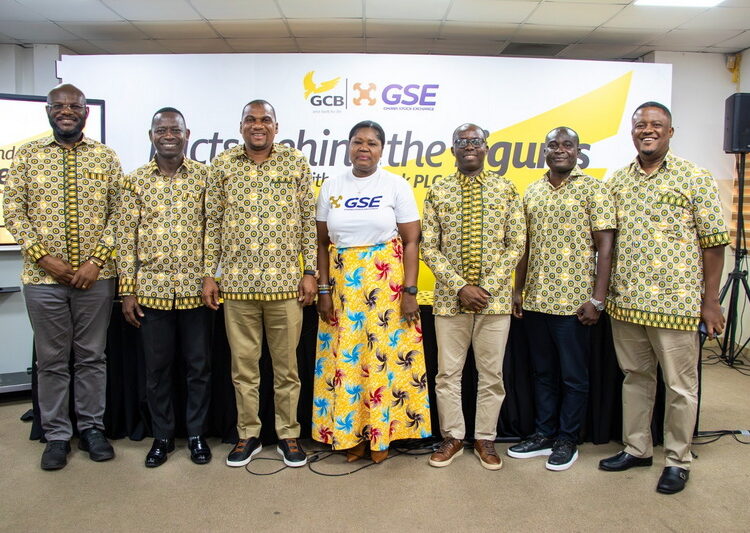
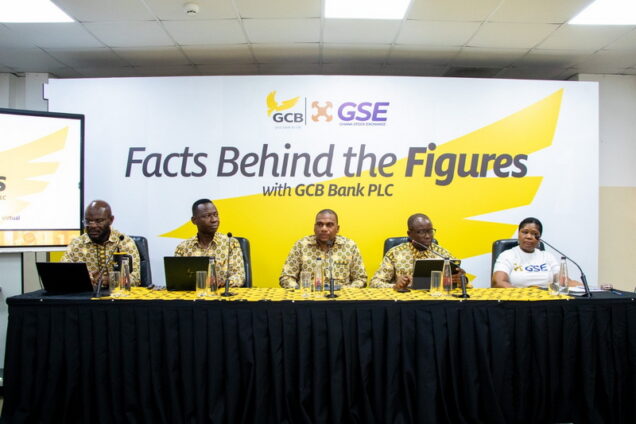
Presenting its Facts Behind the Figures to investors and analysts, management attributed the performance to increased lending, stronger non-funded income and improved operational efficiency.
The results also reflect a strategic shift in the bank’s business model as it moves away from excessive reliance on Treasury-related income towards greater lending to businesses and households.
This adjustment comes at a time when declining interest rates are putting pressure on lending margins across Ghana’s banking industry.
Rather than allowing the changing interest rate environment to weigh heavily on its earnings, GCB has pursued opportunities in customer lending, fees, trading and foreign exchange transactions.
Managing Director of GCB Bank PLC, Mr Farihan Alhassan, said the results reflected the bank’s deliberate decision to expand lending while diversifying its revenue sources and maintaining strict cost controls. “These results show what disciplined execution can do,” he said.
He further explained the thinking behind the bank’s strategy, pointing to the changing realities of Ghana’s financial markets.
“The easy Treasury era is over, and we saw it coming. We chose to lend more to Ghanaian businesses, to earn more from serving customers well, and to spend every cedi with care. The outcome is a bank that is larger, more productive, more diversified, and cleaner. Our customers trust us with their deposits, and we are putting that trust to work for Ghana’s growth.”
Mr Farihan Alhassan
Bad Loans Drop to 4.8% as Credit Quality Improves
One of the most significant developments in the latest results is the dramatic improvement in GCB Bank’s loan portfolio.
The bank’s non-performing loans ratio declined to 4.8 per cent in September 2026, compared with 10.8 per cent in September 2025 and 15.06 per cent in December 2024.
This represents a substantial improvement in the bank’s ability to manage credit risks and recover loans.
The decline is particularly important given the rapid expansion of its lending activities. When banks increase lending, the risk of borrowers failing to meet repayment obligations can also rise.
GCB’s ability to expand its loan portfolio while reducing its NPL ratio suggests that stronger credit growth has been accompanied by improvements in loan quality.
The improvement was recorded across all three business divisions, providing evidence that the progress was not restricted to a single segment of the bank’s operations.
A lower NPL ratio also matters beyond the bank’s balance sheet. When financial institutions experience fewer loan defaults, they have greater capacity to support businesses, households and productive economic activities.
GH¢26.33bn Loan Portfolio Strengthens Ghana’s Credit Market
GCB’s lending expansion has been supported by a significant increase in customer deposits.
Customer deposits rose by 22.9 per cent to GH¢50.78 billion, with Current and Savings Accounts (CASA) accounting for 93.2 per cent of the bank’s total funding mix.
This strong deposit base has provided the resources needed to expand lending without placing excessive pressure on funding costs.
Gross loans increased by 47.7 per cent to GH¢26.33 billion, representing a 120.6 per cent increase since December 2024.
The expansion has also changed the composition of the bank’s earning assets. Loans now account for 47.4 per cent of earning assets, compared with 40.6 per cent at the end of 2024.
Meanwhile, total assets increased by 29 per cent year-to-date to GH¢67.62 billion.
These developments underline GCB’s growing role in Ghana’s credit market, particularly as businesses seek financing to expand operations, manage working capital and pursue new investment opportunities.
Non-Funded Income Emerges as Another Profit Engine
Beyond lending, GCB is increasingly generating revenue from services and market-related activities.
Non-funded income, comprising fees, trading and foreign exchange earnings, increased by an impressive 81.7 per cent to GH¢2.13 billion.
It accounted for 37.4 per cent of operating income, representing an increase of 10.1 percentage points over the previous year.
Total operating income consequently rose by 32.4 per cent to GH¢5.70 billion.
This performance is significant because declining interest rates have created pressure on traditional interest income. Greater reliance on fees, foreign exchange and trading activities provides the bank with additional revenue streams.
The bank also demonstrated improved cost management. Although operating costs increased by 21.3 per cent, income growth outpaced expenditure growth, producing a positive operating jaws of 11.1 percentage points.
Its cost-to-income ratio improved to 45.1 per cent, compared with 47.9 per cent at the end of 2024.
GCB’s annualised return on equity stood at 36.3 per cent, while return on assets reached 4.1 per cent. Earnings per share also increased by 43.3 per cent to GH¢9.38.
The bank further disclosed that its shares had nearly doubled in value on the stock market year-to-date, reflecting growing investor interest in its financial performance.
GH¢3.7bn Profit Target Raises Expectations
With nine months of strong financial performance behind it, GCB is now targeting a minimum profit before tax of GH¢3.7 billion for the 2026 financial year.
Achieving this target would represent another major milestone for the bank and reinforce its position in Ghana’s banking industry.
However, management acknowledges that the outlook remains dependent on prevailing economic and financial conditions, including interest rates, credit conditions and market activity.
The remaining months of 2026 will therefore be important in determining whether the bank can translate its strong nine-month performance into another record financial year.
What is already evident is that GCB’s earnings growth is increasingly being supported by lending, customer deposits and diversified income rather than an overwhelming dependence on Treasury investments.
READ ALSO: BoG Warns Ghana’s Economic Recovery and Inflation Gains Could Reverse in 2027