The National Petroleum Authority (NPA) has urged boarding schools across Ghana to replace firewood and charcoal with liquefied petroleum gas (LPG), warning that continued dependence on traditional cooking fuels is exposing kitchen workers and students to avoidable health risks.
The appeal raises a wider concern about Ghana’s clean-cooking agenda: while attention is often directed towards household fuel choices, large institutional kitchens remain an important source of prolonged exposure to smoke and harmful air pollutants.
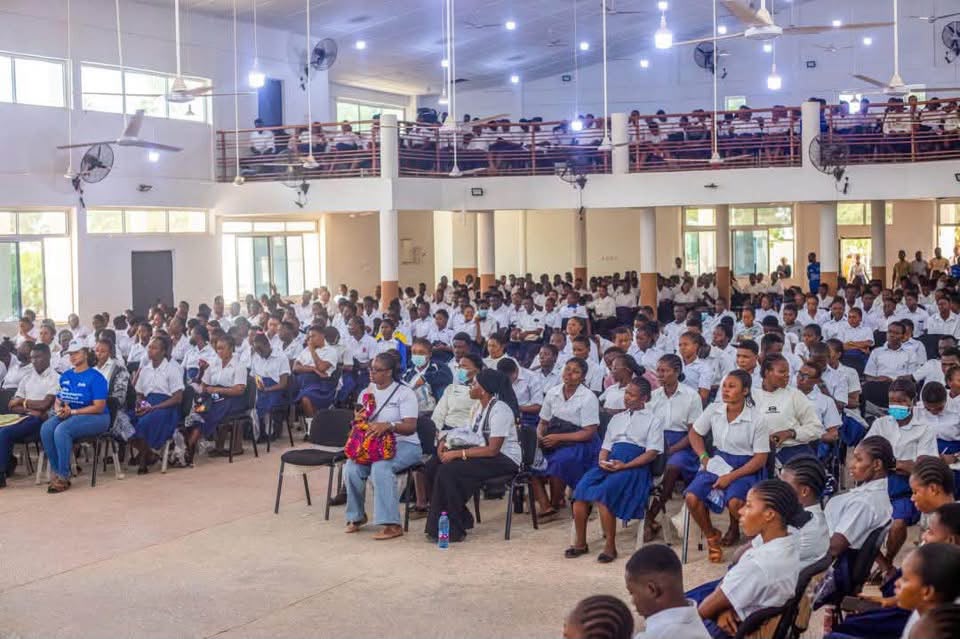
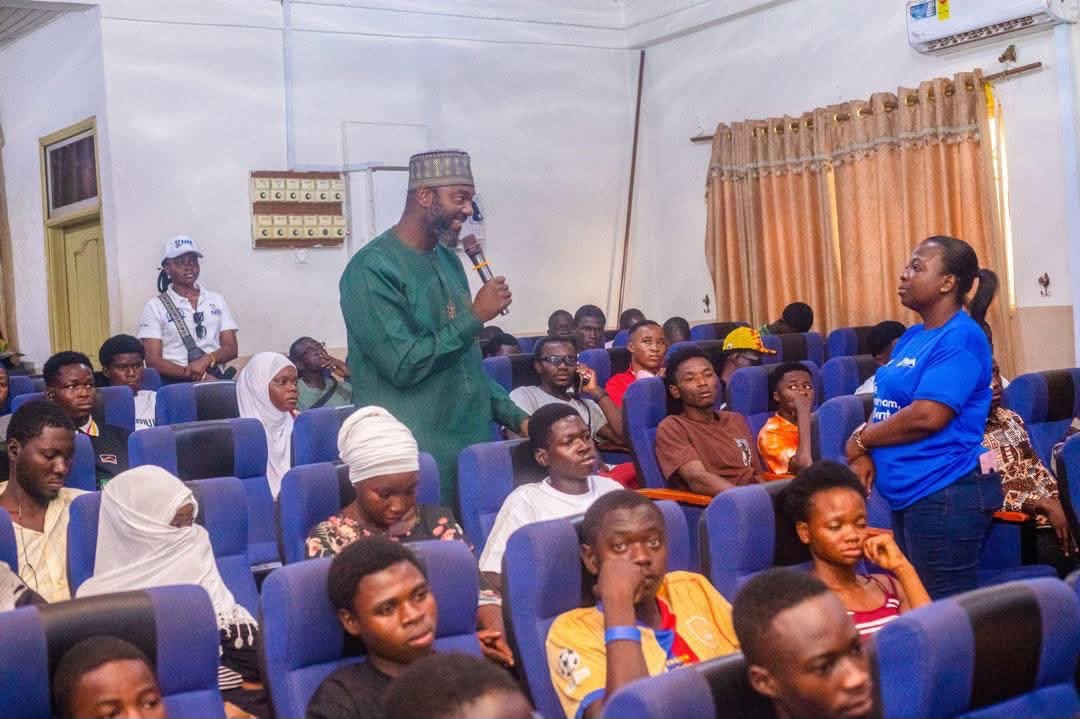
At a sensitisation exercise at Tamale College of Education, the NPA’s Director of Consumer Services, Eunice Budu Nyarko, said cooks, students and pregnant women bear a disproportionate share of the health consequences associated with traditional cooking fuels.
Her call followed an account by Mohammed Mansur Hussein, a lecturer and Academic Counsellor at the institution’s Pre-Vocational Skills Department, who recounted the case of a woman who worked in a boarding school kitchen and reportedly died from bronchitis after years of exposure to smoke from firewood and charcoal.
The account highlights the human cost of a cooking system often assessed primarily through fuel availability and expenditure, rather than the health of the people who prepare meals.
But the concern extends beyond individual cases. Research conducted by the Kwame Nkrumah University of Science and Technology (KNUST) has found that cooking fuels used in senior high school kitchens can expose large numbers of people to unhealthy levels of air pollution.
For the NPA, the transition to LPG is therefore not simply an energy-efficiency intervention. It is also a public health and institutional responsibility issue.
School Kitchens Are A Public Health Concern
A KNUST study presented in October 2025 estimated that cooking fuels used in senior high school kitchens could adversely affect about half a million people in high-school settings.
The research examined air quality in selected public senior high school kitchens in the Kumasi Metropolis, assessing particulate matter and gaseous pollutants, including carbon monoxide, nitrogen dioxide and sulphur dioxide.
The researchers found that pollutant levels in the sampled kitchen environments exceeded World Health Organisation thresholds in several instances.
The study examined traditional cookstoves, biomass, briquette and LPG technologies, highlighting the importance of both fuel choice and cooking conditions.
Professor Marian Asantewah Nkansah, the lead researcher and an environmental chemistry professor at KNUST, warned that exposure to these pollutants could have serious consequences.
“All the four cook stoves had levels above the threshold and people exposed to these pollutants will suffer from non-carcinogenic effects. WHO has a standard level for every pollutant the body can tolerate. So when it goes beyond that level it means the person in that space is likely to suffer some health effects.”
The findings challenge the assumption that cooking smoke is an unavoidable feature of institutional food preparation.
Boarding school kitchens prepare meals for hundreds, and sometimes thousands, of people every day.
Workers can spend several hours around cooking equipment, while students may also be exposed depending on the location of the kitchen, its ventilation and its operating conditions.
Professor Nkansah further explained that the effects of exposure extend beyond respiratory irritation.
“Exposure to smoke and the emissions results in eye irritation, respiratory illnesses and breathing-related diseases and cardiovascular diseases,”
The implications are particularly significant for women, who make up a large proportion of kitchen workers and may spend extended periods preparing meals in environments where pollutants accumulate.
LPG Adoption Must Be Economically Sustainable
The NPA’s appeal, however, must confront a practical challenge: replacing firewood and charcoal requires more than instructing school authorities to stop purchasing them.
Institutional kitchens consume considerably more fuel than ordinary households. The cost of LPG refills, suitable burners, equipment maintenance and reliable supply can become substantial, particularly for schools operating under constrained budgets.

This matters because the economic attractiveness of firewood and charcoal has historically contributed to their continued use, even where their health and environmental costs are considerable.
Ghana’s clean-cooking transition already faces a significant access gap. The 2022 Ghana Demographic and Health Survey found that only about 23% of the household population primarily relied on clean cooking fuels and technologies, while the majority continued to depend on solid fuels.
The National Development Planning Commission’s 2025 Voluntary National Review also reported that clean-fuel use increased from 7.3% in 2003 to 22.5% in 2022.
These figures show that the transition is not simply a matter of awareness. Affordability, access and the ability to sustain cleaner cooking practices remain major obstacles.
For schools, the Government and relevant institutions must consider whether existing feeding and operational budgets adequately account for the cost of LPG.
If switching fuels increases kitchen expenditure without corresponding financial support, some institutions could struggle to maintain the change or revert to cheaper traditional fuels.
A credible national programme would therefore need to establish how many schools still depend on biomass, their daily cooking requirements, the cost of converting their kitchens and the recurring expenditure required to sustain LPG use.
Cleaner Fuel Must Come With Safer Kitchens
There is another issue the NPA cannot overlook: LPG adoption must be accompanied by appropriate safety standards and improvements in kitchen infrastructure.
Although LPG generally produces substantially fewer harmful combustion emissions than firewood and charcoal, it does not eliminate every indoor-air-quality risk.
Equipment condition, ventilation, installation and maintenance all influence the safety of the cooking environment.
Professor Nkansah cautioned against assuming that the adoption of gas alone resolves the problem.
“So even with the LPG, it’s not as safe as we may expect in terms of the use in the kitchen spaces.”
Her observation is important because the KNUST research found that an isolated LPG case met the WHO threshold for particulate matter, but the broader findings showed that kitchen air quality still required attention.
The transition must therefore include properly designed cooking spaces, adequate ventilation, suitable burners and regular equipment inspections.
The NPA also has a responsibility to ensure that kitchen workers receive practical training in LPG handling, cylinder inspection, leak detection and emergency response.
These measures are particularly important in boarding schools, where kitchens operate daily and serve large populations.
The Authority has previously promoted LPG safety education in tertiary institutions, including demonstrations on proper cylinder installation, handling and maintenance, as well as the Cylinder Recirculation Model.
The challenge is to translate those safety campaigns into a consistent institutional standard for school kitchens.
From Sensitisation To A National Conversion Programme
The NPA’s appeal should also be considered within Ghana’s wider clean-cooking ambitions. The country has sought to expand LPG access and reduce dependence on traditional biomass fuels, but progress will remain incomplete if large public institutions continue relying on firewood and charcoal.
The scale of institutional cooking makes schools a particularly important target for intervention. A conversion programme could begin by identifying institutions with the highest exposure risks, prioritising kitchens where workers spend long hours preparing meals with traditional fuels.
The Government could then support phased conversion through appropriate cooking equipment, dedicated financing, reliable fuel supply arrangements and mandatory safety inspections.
Importantly, progress should be measured beyond the number of schools that receive LPG equipment.
Authorities must establish whether those schools can afford to keep using the fuel, whether the equipment is properly maintained and whether exposure to harmful pollutants actually declines.
Professor Nkansah has also called for a coordinated response involving school management, parent-teacher associations, the Ghana Education Service, local communities, energy suppliers, health professionals and kitchen staff.
She said:
“It is solely through these that the destructive cycle of poor kitchen air quality can be broken and a path towards healthy and sustainable school kitchen environments can be achieved.”
That coordination is essential because the responsibility cannot rest with the NPA alone. The Authority can promote LPG and enforce downstream safety requirements, but school authorities and education-sector institutions must address the operational and financial conditions that determine whether the transition is sustainable.
Ghana’s clean-cooking ambitions will remain incomplete if households are encouraged to adopt cleaner fuels while public institutions continue exposing workers and students to harmful smoke.
The real measure of progress will not be the number of sensitisation exercises conducted, but how many school kitchens are converted, how consistently they use cleaner fuels and whether the people working and studying in those institutions experience safer cooking environments.
READ ALSO: Theresa May Urges Burnham to Accept Brexit and Move On