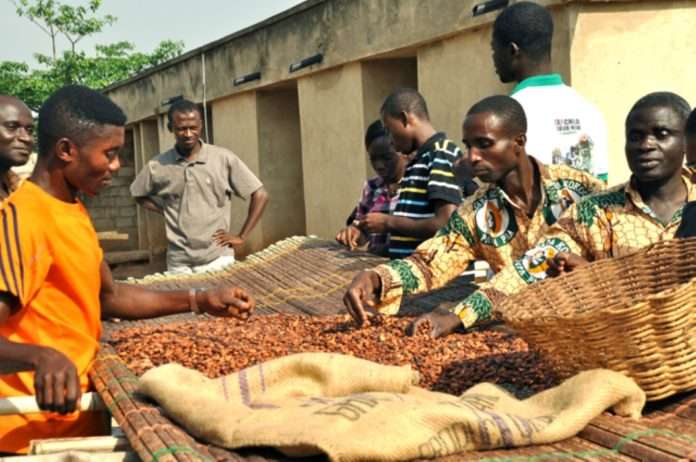
Ghana’s cocoa sector, once a cornerstone of the nation’s economy, is in deep crisis. Cocoa export revenues have experienced a dramatic collapse, plummeting by nearly $700 million in the first half of 2024 alone.
This significant downturn is driven by the compounding effects of illegal mining (galamsey), smuggling, crop diseases, and other challenges that have crippled cocoa production.
According to data from the Bank of Ghana, cocoa export revenues fell sharply from $1.45 billion in the first half of 2023 to a mere $760 million in the same period in 2024. This represents a staggering 47.7% decline, highlighting the sector’s worsening situation. The impact of this sharp drop has sent shockwaves through the economy, which depends heavily on cocoa as one of its top export commodities.
This isn’t a sudden dip. The cocoa sector has been under pressure for several years, and the COVID-19 pandemic only exacerbated the situation. Since 2021, Ghana’s cocoa sector has lost over $1 billion in revenue, and the half-year performance for 2024 is a painful continuation of this trend. The post-pandemic challenges have now pushed cocoa export revenues into a 134% decline over the past few years, underscoring the extent of the crisis.
Production Struggles and Missed Targets
Ghana’s cocoa harvest for the 2023-2024 season, which concluded this month, was expected to be between 650,000 and 700,000 tons. This target was already a reduction from an initial forecast of 850,000 tons, according to the Ghana Cocoa Board (COCOBOD). However, industry insiders warn that actual yields could fall far below expectations due to several factors, including adverse weather conditions, crop diseases, fertilizer shortages, and the growing menace of illegal mining in cocoa-growing areas.
Illegal mining, or galamsey, has severely disrupted cocoa farms, contaminating soil and water sources, which are critical for sustaining cocoa crops. This environmental degradation has led to reduced productivity, with cocoa farmers unable to meet their yield targets. Furthermore, the spread of diseases among cocoa trees, combined with a shortage of fertilizers, has further hampered the sector’s ability to rebound.
Adding to the industry’s woes is the rising incidence of cocoa bean smuggling to neighboring countries like Côte d’Ivoire, where farmers can receive higher prices for their crops. This illicit activity is becoming a significant issue, with COCOBOD estimating that up to 200,000 tons of cocoa beans could be lost to smuggling in 2024 alone. The loss of such a large quantity of beans will have a serious impact on Ghana’s ability to secure international loans and investment for the cocoa sector.
Smuggling is directly tied to pricing discrepancies. In neighboring countries, cocoa prices are often more attractive to farmers who are already struggling with lower yields and rising costs. As a result, many are tempted to sell their beans across borders to secure better prices. This activity is not only illegal but also poses a long-term threat to Ghana’s position as the world’s second-largest producer of cocoa.
Financial Strain on COCOBOD
The challenges in cocoa production are not just hurting farmers; they are also undermining the financial viability of COCOBOD, Ghana’s primary cocoa regulator. In recent years, COCOBOD has faced mounting debt and credit concerns, particularly in the international syndicated loan market. The ongoing failure to meet cocoa production targets has damaged the regulator’s credibility with lenders, making it increasingly difficult to secure favorable loans.
The near collapse of Ghana’s forward cocoa sales last season sent a clear warning: international lenders are losing confidence in Ghana’s ability to supply sufficient beans to meet financial obligations. As a result, a risk premium is now being placed on Ghana’s cocoa exports, which will not only affect this year’s operations but could also have a lasting impact on future seasons.
To mitigate these financial pressures, COCOBOD has been forced to turn to domestic self-financing strategies as a survival measure. While this approach might offer some short-term relief, it is not a sustainable solution in the long run, especially as the organization grapples with an ongoing debt restructuring process.
The deepening crisis in Ghana’s cocoa sector has far-reaching implications. Cocoa is not only a critical export commodity, but it also supports millions of livelihoods across the country. The collapse of export revenues and the significant decline in production could lead to widespread economic hardship for cocoa farmers, workers, and related industries.
Looking ahead, it is clear that immediate action is needed to rescue the cocoa industry from its current trajectory. This will require addressing the root causes of the crisis, such as combatting galamsey, improving farmer access to resources like fertilizers, and enforcing stricter measures against smuggling.
Moreover, long-term solutions must focus on increasing productivity and sustainability within the sector. Climate-smart agricultural practices, better disease management, and investment in research and development will be key to restoring Ghana’s cocoa industry to its former strength.
READ ALSO: Ablakwa Slams Government for Issuing Mining Licenses, Calls for President’s Impeachment