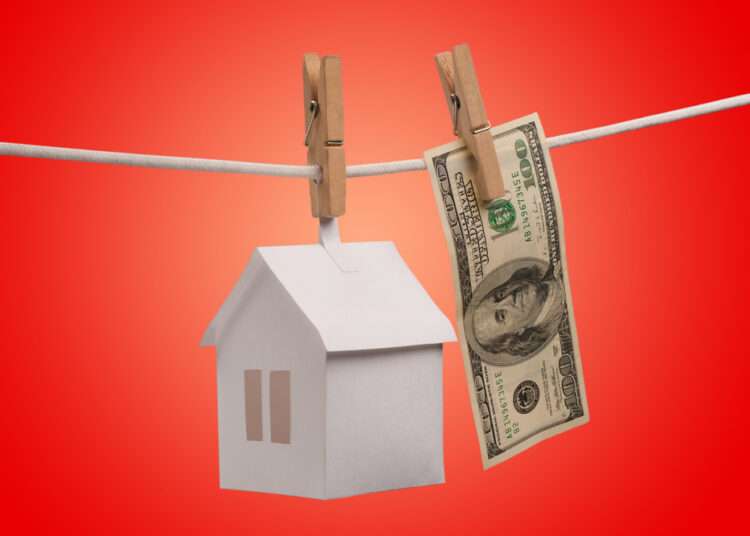
When a country houses an uninvited guest who has nothing but evil intentions of literally washing his dirty linens, thereby staining the credibility and threatening the survival of genuine ‘landlords’, it is certainly time to clean house.
Development is obviously a good indication of a country’s growth prospects and everyone welcomes it wholeheartedly, and housing by no small means, plays a critical role in changing the scenes of a country’s landscape and Ghana’s real estate sector is offering the needed relief.
Accra has certainly become a sight for sore eyes with respect to the springing up of high-rise buildings dotting prime locations of the city.
However, beneath the beautiful facade of perfection are clandestine activities of money laundering in the country’s burgeoning real estate sector – essentially burning a hole in its survival prospects.
Ghana last year, was removed from the European Union’s (EU) list of high risk third countries with strategic deficiencies in their Anti-Money Laundering and Countering the Financing of Terrorism (AML/CFT) regimes.
This was after Ghana had strengthened the effectiveness of its AML/CFT regime by addressing related technical deficiencies including strengthening the legal and regulatory framework to meet the commitments in the FATF action plan, with a view of removing strategic deficiencies identified under the Article 9 of 4th Anti-money Laundering Directives.
Nonetheless, this hasn’t deterred unscrupulous people from cleaning their ‘dirty monies’ and make them legal by all means.
Shedding light on this sinister act perpetrated in the real estate sector, Member of Parliament for Ningo Prampram, Sam Nartey George, in July this year disclosed that real estate businesses operating in the country are engaged in money laundering. He asserted that the real estate industry is often used as a front for money laundering activities.
“The cost of real estate in Ghana is not justifiable by any stretch. You keep seeing all these new high-rise buildings going up and they are selling them for half a million, a million dollars and they keep buying and buying amongst themselves…
“I have dirty money to clean, I put up a real estate property, you have dirty money you come and buy the property from me and then automatically your money becomes clean, then tomorrow you also start building your own then I come back and buy, and we are just cleaning the money.”
Sam Nartey George
Despite the genuine intentions of the legislator, the Ghana Real Estate Developers Association (GREDA), the umbrella-body of property developers, threatened legal action against Sam George for his comment.
However, four months down the line, GREDA is eating humble pie as it bemoaned the influx of illicit money into the real-estate sector, describing it as alarming and with dire repercussions for the economy.
GREDA’s Executive Secretary, Sammy Amegayibor, revealed that the disturbing phenomenon was reported on by the Inter-Governmental Action Group against Money Laundering in West Africa (GIABA) at a recent conference attended by actors in the real-estate sector across West Africa.
“If you look at how the banks and other financial institutions operate these days, you will realize that they have tightened their systems; so, it is not easy for laundered money to pass through. This leaves the real-estate sector as the next frontier; we have noticed that people buy properties in the names of relatives and friends, making it difficult to trace the source and true beneficial owners.”
Sammy Amegayibor
Now that the cat is finally out of the bag, creating a pathway through the rubble of money laundering is vital to the thriving of the sector.
Tightening anti-laundering regime
Curtailing a problem of money laundering in Ghana’s real estate sector is all the more pressing as the country struggles with issues of corruption, mismanagement and housing deficits.
Indeed, the housing deficit for last year reduced by 33% but beyond providing an arguably affordable housing market to offset this trend and create a robust sector, real estate which has become a very lucrative business venture has the potential to thrive even more.
Per the Ghana Statistical Service, the performance of the real estate sector to the Gross Domestic Product (GDP) saw a 10.5 percent of the overall performance of the real GDP growth for the period of 2021.
This must certainly call for celebration, but the country has to chop more woods to raze down the building of money laundering within the system first.
The growing diversification and complexities used in perpetrating financial crimes within the real estate sector requires government to improve the effectiveness of prevention and detection systems into regulatory governance and supervision of sectors at risk of abuse.
Now more than ever before, well improve law enforcement tools and systems to trace and prosecute illicit activities that have been detected, although it must be consciously effected to restore sanity in the sector.
Also, real estate transactions are rarely between just the buyer and seller. Agents, banks and brokers all play their role, and have opportunities to stop corrupt money entering the market.
Essentially, collaborative efforts between government and key stakeholders within the sector, coupled with an effective mechanism to weed out such corrupt activities progressively gaining grounds in real estate, is the redemptive approach to this canker.
READ ALSO: No Matter The Hardship There Will Be Opportunity For An Election- Mahama