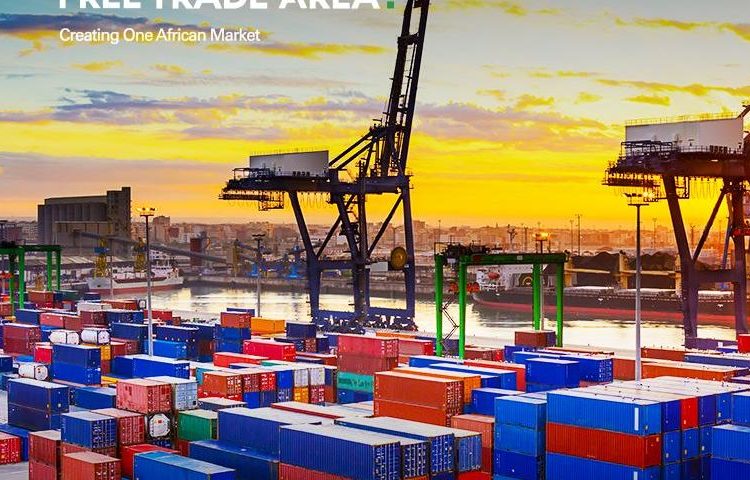
Africa’s biggest trade pact, the African Continental Free Trade Area (AfCTA) has just commenced with 54 African countries out of 55 member states of the AU having signed the agreement, among which 34 have ratified the agreement — Eritrea is the only country which has yet to sign onto the pact.
According to the World Bank, the pact is estimated to connect 1.3 billion people across the 55 countries with a combined GDP valued at US$3.4 trillion. And not only that, it has the potential of lifting 30 million people out of poverty.
Along these lines, the Executive Secretary for the Economic Commission of Africa (ECA) Ms. Vera Songwe, during a virtual launch of the AfCFTA on January, 1 2020 said that if done right, AfCFTA “will be the plan that turbo charges investment, innovation and ultimately growth and prosperity for Africa.”

Within the context of a recovery from the devastating impact of the COVID-19 pandemic, the implementation of the AfCFTA is among the notable drivers of the continent’s resilience post-COVID-19.
Against this backdrop, the Bretton Woods Institutions— IMF and the World Bank have prompted the adoption of several policy reforms- largely fiscal in nature as enablers to maximize the benefits of the AfCFTA. These policies range from the removal of non-trade tariff barriers (NTRs) to the improvement of hard and soft infrastructure at the borders.
However, it must be noted that fiscal policies and/or measures do not exist in a vacuum. For the purpose of complementarity, monetary policy measures and outcomes are contemporaneous with fiscal policies and therefore must not be relegated to the background, since they may either be conflicting with fiscal policies or consistent with them. Thus, these considerations, herein raised are important for the success of the AfCFTA.
Speaking about free trade agreements, the renowned Economist, Paul Krugman once said that:
“Contrary to what some seem to believe, textbook economics doesn’t say that free trade is a win-win for everyone. Instead, trade policy involves very real conflicts of interest. But these conflicts of interest are overwhelmingly between groups within each country, rather than between countries.
“Free trade is not the main cause of economic difficulties… The slowdown in growth is almost entirely due to internal causes.”

Hence, the single market created by the CFTA, also has great influence on monetary policy on the basis that convergence among countries has not yet been reached ( i.e. the criteria that there are low-debt levels, low volatilities in exchange rate and low inflation rates) among participating countries due to country-specific political and economic complexities.
Impact of the Trade Area on Price levels
The CFTA impact on inflation is an important issue to be considered, since it has an influence on the direction of monetary policy. Coming out of the COVID-19 pandemic with skyrocketing debt levels has initiated calls for fiscal consolidation on the part of government and also to improve economic growth. There are also indications for the Central Bank to make a U-turn towards its toughened policy mechanisms pre-COVID-19 as a result.
Looking at the conditions, the Central Bank is therefore being pressured to further reduce interest rates to encourage private investments or reduce cost of borrowing and to allow businesses to expand production in order for them to thrive in an AfCFTA era.
Should that happen, this would mean that economic activity would increase and that may slightly increase inflation. Of course, it is observed that during the implementation of a free trade area, there is low inflation.
But, this trajectory is influenced by other factors that may affect this trend. And the above condition is a typical scenario. The Central Bank’s mandate to anchor inflation is against achieving a particular level of output. To support the government in achieving increased output, this may be at the expense of meeting its mandate.
Impact on financial stability
Also, the vulnerabilities and risks in individual countries may affect the financial system. With such deepened trade openness, the Central Bank would now have the difficult task of incorporating continent-wide vulnerabilities and risks of the financial sector landscape to its formulation of monetary policy and the financial system of the country.
All of these are to be considered in light of the uncertainties underlying efforts to bring the economy back to normalcy.
Recommendations
Economic analysts are of the view that, the government does not have the fiscal flexibility or fiscal space for investments in public infrastructure due to the level of indebtedness. Therefore, the Central Bank must be very tactful in its duty of targeting inflation and ensure a robust and resilient financial sector.
Particular emphasis should be placed on the fact that, whatever the influences exerted in the implementation of the continental free trade area, amidst the government’s need to accelerate economic output, the fundamental principle is that inflation is a monetary phenomenon and so the free trade area is less likely to influence it.
Therefore, in the short term, the Central Bank should continue to anchor inflation expectations and/or target monetary aggregates at its desired level.