• About
  • Advertise
  • Privacy Policy
  • Contact
Friday, May 15, 2026
  • Login
The Vaultz News
  • Top Stories
  • News
    • General News
    • Education
    • Health
    • Opinions
  • Economics
    • Economy
    • Finance
      • Banking
      • Insurance
      • Pension
    • Securities/Markets
  • Business
    • Agribusiness
    • Vaultz Business
    • Extractives/Energy
    • Real Estate
  • World
    • Africa
    • America
    • Europe
    • UK
    • USA
    • Asia
    • Around the Globe
  • Innovation
    • Technology
    • Wheels
  • Entertainment
  • 20MOBPL2DNew
  • Jobs & Scholarships
    • Job Vacancies
    • Scholarships
No Result
View All Result
The Vaultz News
  • Top Stories
  • News
    • General News
    • Education
    • Health
    • Opinions
  • Economics
    • Economy
    • Finance
      • Banking
      • Insurance
      • Pension
    • Securities/Markets
  • Business
    • Agribusiness
    • Vaultz Business
    • Extractives/Energy
    • Real Estate
  • World
    • Africa
    • America
    • Europe
    • UK
    • USA
    • Asia
    • Around the Globe
  • Innovation
    • Technology
    • Wheels
  • Entertainment
  • 20MOBPL2DNew
  • Jobs & Scholarships
    • Job Vacancies
    • Scholarships
No Result
View All Result
The Vaultz News
No Result
View All Result
in Banking

Interbank interest rates decline by 1.85%

thevaultzby thevaultz
January 20, 2021
Reading Time: 3 mins read
COVID-19 introduces several risks in the banking sector

The Bank of Ghana has intimated that the rate of interest charged on short-term loans made between banks within the Ghanaian economy has eased marginally.

The interbank interest rate declined from 15.41 percent recorded last year to 13.56 percent in 2021, indicating a year-on-year decline of approximately 1.85 percent.

Banks may decide to borrow money from other banks to ensure that they have enough liquidity or cash for their immediate transactional needs. In a similar vein, banks may lend to their fellow counterparts when they have excess cash on hand.

Moreover, banks are required by the Bank of Ghana which is their regulatory authority to hold enough cash in reserve to accommodate day-to-day withdrawals from their customers. As such to meet such urgent liquidity needs of clients, banks sometimes borrow to cover any shortfall.

ADVERTISEMENT

Giving further trends on the rates, the Central Bank asserted that at the beginning of 2020 quarter one, the interbank interest rate ranged between 15 – 16 percent.

However, getting to the end of the first quarter last year, that is March 2020, the interbank rates dipped down to hover around 14 percent, then to 13.7 percent in the second quarter, and since then it has kept declining steadily entering the new year.

The downward adjustment of the interbank lending rate can also be attributed to the cut in the monetary policy rate in March 2020 to 14.5 percent from 16 percent and the decision of the Monetary Policy Committee to keep it as such for the rest of the year.

Also, the decrease in the interbank interest rate will not only enable banks to borrow freely, but can encourage investment.

Although, the banks enjoy such reductions, this cannot be passed on to customers. All interest rates for borrowing or saving money that apply to customers of financial institutions are based on the Bank of Ghana’s monetary policy rate.
BoG 696x456 2
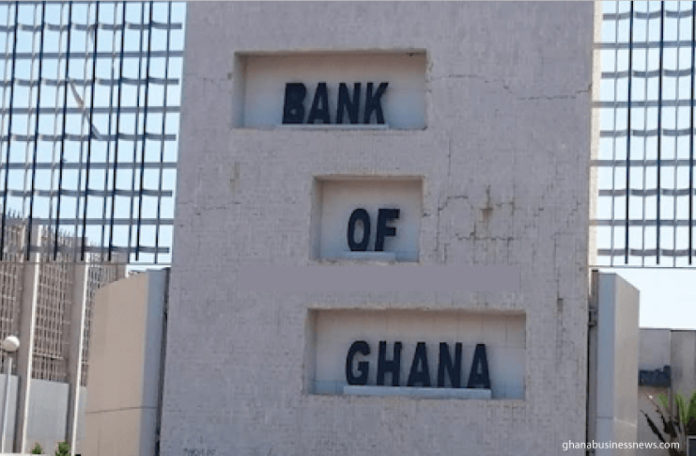
The Bank of Ghana

Moreover, individuals and businesses have raised concerns that the rate at which banks lend to the private sector remains high and as such deters such individuals and businesses from taking loans. Multiple business groups including the Ghana Union of Traders Association (GUTA) have been calling for a reduction in the cost of credit to enable them to be competitive in the sub-region as trading under the African Continental Free Trade Area (AfCFTA) commenced officially on January 1, 2021.

With the current global crises, the economy is still hobbling, coupled with the high cost of borrowing and current inflationary pressures as we are yet to attain pre-pandemic levels whiles there are fears that the resurgence of the virus seems to be more delicate than before.

Despite the improvement in the economy and vaccine optimism, however, analyst have raised concerns about current government borrowings which keep escalating, coupled with all these happenings, may cause lending rates to remain unchanged in the short term.

In conclusion, although banks seem to be enjoying benefits from these interbank rate reductions, individuals and businesses continue to face challenges as lending rates hover around 21.3 percent as at October 2020.


Sign Up to Our Newsletter

Fresh updates, Straight to your inbox

Tags: Bank of GhanaBanksinterbank lendinginterest rates
Share2Tweet2ShareSendSend
Please login to join discussion
Previous Post

Government’s rejection of British Airways plan; “a dangerous precedent”- Sean Mendis

Next Post

AfDB and EIB signed an agreement to fast-track development in Africa

Related Posts

Absa Bank Ghana Empowers Academic City University College With Money Skills
Banking

Absa Bank Ghana Empowers Academic City University With Money Skills

May 14, 2026
Access Bank Strengthens Ashanti With Strategic Investment
Banking

Access Bank Strengthens Ashanti With Strategic Investment

May 14, 2026
United Bank for Africa Posts Industry’s Lowest Bad Loan Ratio United Bank for Africa Ghana has delivered one of the most remarkable performances in Ghana’s banking industry, emerging with the lowest non-performing loan ratio in the sector and setting a new benchmark for prudent lending, asset quality, and corporate discipline. At a time when banks across emerging markets continue to battle rising credit risks, economic uncertainty, and pressure on asset quality, UBA Ghana’s latest financial performance has become a standout success story. The bank’s Non-Performing Loan ratio, which stood at 29.40 percent in 2021, has dropped sharply to an impressive 2.11 percent in 2025. This exceptional improvement places the bank well ahead of regulatory expectations and significantly below the target set by the Bank of Ghana, which requires banks to maintain bad loan ratios below 10 percent by June 2026. The numbers tell a powerful story of strategic execution, disciplined lending, and a leadership team committed to sustainable growth. Bad Loans Fall Dramatically The bank’s total non-performing loans have also seen a dramatic reduction over the four-year period. From GH¢334 million recorded in 2021, the figure has now dropped to just GH¢28 million in 2025. Industry analysts say this sharp decline reflects a deliberate and aggressive approach to loan portfolio management, one that prioritizes risk identification, credit discipline, and rapid intervention. For many financial observers, this is not merely a statistical improvement. It is evidence of a bank that has transformed its internal credit systems and strengthened its ability to manage lending risk in a highly competitive market. UBA Ghana’s performance is being viewed as a model for other financial institutions seeking to improve balance sheet quality while still expanding lending activities. Strong Risk Culture Drives Results According to Kenneth Amponsah, the achievement did not happen overnight. He explained that the bank adopted a consistent and structured approach to managing credit risk across every stage of the lending cycle. He noted that the improvement in the bank’s loan quality was the result of stronger lending standards, improved loan screening procedures, tighter monitoring systems, and faster recovery mechanisms. The bank’s risk management strategy focuses on ensuring quality at the point of loan origination while maintaining strict oversight throughout the life of each facility. This includes strategic portfolio planning, efficient approval processes, proper documentation, collateral verification, real-time account monitoring, and proactive loan recovery. Banking experts say such a full-cycle approach is critical in today’s economic environment, where loan defaults can quickly erode capital and investor confidence. Recovery Efforts Yield Strong Returns One of the strongest drivers behind the bank’s improved asset quality has been its recovery operations. UBA Ghana has significantly strengthened its debt recovery framework, resulting in consistent gains over the years. In 2025 alone, loan recoveries reached an impressive GH¢168 million, highlighting the effectiveness of the bank’s recovery teams and internal enforcement systems. This strong recovery performance has helped the bank clean up its balance sheet while improving liquidity and strengthening capital resilience. Analysts believe the recovery figures also demonstrate the bank’s ability to engage customers proactively while maintaining professional relationships and ensuring compliance. Leadership Applauds Team Performance Commenting on the achievement, Bernard Gyebi praised the collective effort of the bank’s staff, management, and board. He said the milestone reflects the dedication and discipline of Relationship Managers, Risk teams, Executive Management, and Board members who have all contributed to building a resilient institution. According to him, UBA Ghana remains focused on balancing business growth with sound risk management practices. He emphasized that the bank is intentional about creating long-term value for shareholders, customers, and regulators while maintaining high standards of governance and accountability. His remarks underline the bank’s broader strategy of building a strong institution capable of supporting businesses and contributing to national economic growth. Setting the Pace for Ghana’s Banking Sector Industry observers believe UBA Ghana’s latest achievement reflects broader improvements within Ghana’s banking sector, which has undergone major reforms in recent years. However, they note that UBA Ghana’s performance stands out because of the speed, consistency, and scale of its transformation. By bringing its bad loan ratio down to just 2.11 percent, the bank has positioned itself as one of the safest and most disciplined lenders in the market. As competition intensifies and regulatory standards become stricter, UBA Ghana’s performance could serve as a benchmark for banks seeking to combine profitability with responsible lending. With strong governance, effective execution, and a clear commitment to excellence, UBA Ghana appears firmly positioned to sustain its leadership in Ghana’s evolving financial sector. READ ALSO: Tema Manhean Facility To Halt Fisheries Value Leakage United Bank for Africa Posts Industry’s Lowest Bad Loan Ratio
Banking

United Bank for Africa Posts Industry’s Lowest Bad Loan Ratio

May 13, 2026
Banks Exit Survival Mode With Strong Buffers
Banking

Banks Exit Survival Mode With Strong Buffers

May 12, 2026

Sign Up to Our Newsletter

Fresh updates, Straight to your inbox

Recent News

Andy Burnham, Mayor of Greater Manchester

Burnham Plots Westminster Comeback Amid Deepening Starmer Crisis

May 15, 2026
Eric Gyamfi hit his trademark celebration after scoring a stunner against Algeria

Ghana Held To a Draw in U-17 AFCON Opener

May 14, 2026
Ing. Kenneth Ashigbey, the Chief Executive Officer of the Ghana Chamber of Mines.

Chamber of Mines Warns Against State Ownership Failures Amidst IEA Policy Dispute

May 14, 2026
Dr. Kenneth Ashigbey, the Chief Executive Officer of the Ghana Chamber of Mines.

Let Data and Science Drive Ghana’s Mining Policy Debate – Kenneth Ashigbey

May 14, 2026
Hon. Sampson Ahi, Deputy Minister for Trade, Agribusiness and Industry at the 2026 Let Africa Go Conference

“Let Africa Go” Conference Targets Ethical Anchor In Trade Growth

May 14, 2026
Next Post
AfDB and EIB signed an agreement to fast-track development in Africa

AfDB and EIB signed an agreement to fast-track development in Africa

The Vaultz News

Copyright © 2025 The Vaultz News. All rights reserved.

Navigate Site

  • About
  • Advertise
  • Privacy Policy
  • Contact

Follow Us

Welcome Back!

Login to your account below

Forgotten Password?

Retrieve your password

Please enter your username or email address to reset your password.

Log In
No Result
View All Result
  • Top Stories
  • News
    • General News
    • Education
    • Health
    • Opinions
  • Economics
    • Economy
    • Finance
      • Banking
      • Insurance
      • Pension
    • Securities/Markets
  • Business
    • Agribusiness
    • Vaultz Business
    • Extractives/Energy
    • Real Estate
  • World
    • Africa
    • America
    • Europe
    • UK
    • USA
    • Asia
    • Around the Globe
  • Innovation
    • Technology
    • Wheels
  • Entertainment
  • 20MOBPL2D
  • Jobs & Scholarships
    • Job Vacancies
    • Scholarships

Copyright © 2025 The Vaultz News. All rights reserved.

This website uses cookies. By continuing to use this website you are giving consent to cookies being used. Visit our Privacy and Cookie Policy.

Discover the Details behind the story

Get an in-depth analysis of the news from our top editors

Enter your email address