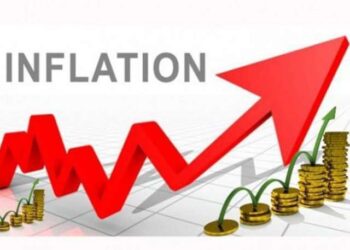
The Institute of Economic Affairs (IEA) has clarified that it did not call for the abolition of the Inflation Targeting Framework that is currently being used by the Central Bank as was wrongly reported.
According to the Public Policy Institute, it only raised concerns over the effectiveness of the framework, looking at the causes of Ghana’s inflation which is mostly a supply-side phenomenon.
“The IEA wishes it to be known that, contrary to some of the reports circulating around, the IEA never called for the IT framework to be abandoned. The IEA only said that the framework is less effective in the Ghanaian context where transmission of the PR impulses is slow and inflation has strong supply and cost undercurrents.
“It is in view of these limitations that the IEA called for a more comprehensive approach, whereby the IT framework would be complemented with interventions directly targeting the entrenched supply and cost factors”.
IEA
The IEA stated that during the 106th MPC meetings, the Governor said IT has served the country well in contributing to bringing inflation down from the high levels during the pre-IT period. This, according to the Governor, had prompted the BOG to consider lowering its inflation target of (8+/-2) % at some point.
“While the IEA recognizes that inflation has been brought down progressively under IT, it has to be noted that, along with inflation, almost all key macroeconomic indicators have improved during the period in question, in line with the generally improved macroeconomic management of the economy.
“Regarding the inflation target, it is the case that the (8+/-2) % has been in place almost forever, which, in a way, seems to suggest a lack of sufficient ambition on the part of the MPC to lower inflation further to levels comparable to those of Ghana’s peers or trading partners”.
IEA
The IEA noted that the Inflation Targeting (IT) framework that the BOG has used since 2007, had limitations in a developing country like Ghana that needed to be recognized.
First, the transmission of the Policy Rate is constrained by an under-developed and less-responsive financial sector. Second, and perhaps more important, is the fact that Ghana has a long history of inflation with strong supply or cost undercurrents, in particular, food, fuel and the exchange rate.
IT framework suited to mature economies
Therefore, the IEA stated that as an essentially demand-management tool, the IT framework is less suited to Ghana’s type of inflation. It is rather suited to mature economies where inflation tends to be more demand-driven, the policy think tank emphasized.
The IEA buttressed its argument about the influence of fuel, food, and the exchange rate by pointing to the fact that Transport inflation (33.5%), Food and Nonalcoholic Beverages inflation (26.6%), and Housing, Water, Electricity and Gas inflation (25.0%) were much higher in April than the average inflation of 23.6%.
The IEA observed that the principle underlying the IT framework is that, it mitigates the second round inflationary effects of initial supply or cost shocks in addition to anchoring inflation expectations. However, to be effective, the IEA stated that these supply or cost shocks must be transient in nature.
In the Ghanaian context, however, the supply or cost shocks are entrenched, thereby rendering the IT framework less effective, the IEA explained.
“Strict reliance on the IT framework alone should, therefore, be avoided, as it will not be the solution to Ghana’s inflation persistence. In view of the limitations of IT in the Ghanaian context, the IEA called for a more comprehensive approach in stemming inflation on a durable basis”.
IEA
In particular, the IEA urged the BOG to engage with Government and relevant agencies to target directly the key sources of inflation pressures, in particular, fuel, food, transport and the exchange rate.
Bank of Ghana’s Response to Inflation Crisis Largely in Sync with IEA’s Expectations
In a press release, the IEA commended the Central Bank for raising the policy rate by 200 basis points to 19% as it has recommended before the MPC meetings held between May 18-20 to respond to Ghana’s inflation crisis.
The IEA indicated that it was pleased to note that the MPC came to the same conclusion when it declared that “…with the strong rebound in growth, the balance of risks is clearly on inflation”.
The IEA however, warned that even though the focus is now about inflation as an immediate problem, the other persistent macroeconomic problems such as high fiscal deficits, high public debt, exchange rate instability, high rate of employment, large external imbalances, etc. are “all manifestations of a bigger problem”.
“And that problem is the underlying weak structure of the economy, characterized by reliance on low-value added primary export products and high import dependency. The only way to find a durable solution to these recurrent problems is to address the economy’s weak structural fundamentals”.
IEA
This, according to the IEA, should be done through transformation of the colonial-type economy to a vibrant industrialized economy. It however, warned that this cannot “be achieved by relying on our narrow tax base and borrowing but rather by leveraging our vast natural resource wealth by taking ownership of it”.
READ ALSO: Polio Virus Found In Water Samples In Northern Region