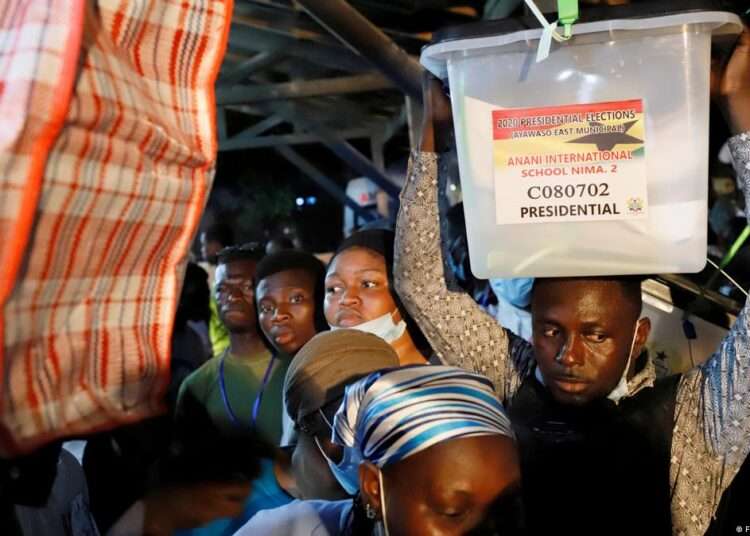
As Ghana prepares for its upcoming elections, concerns arise regarding the potential impact on the country’s economic stability, particularly within the framework of the current IMF program.
The heightened focus on electioneering activities amplifies these risks which have the potential of jeopardizing the progress made in economic reforms and development under the IMF’s guidance.
Ghana finds itself at a critical juncture, with the promise of continued economic growth and stability hanging in the balance. The IMF program, implemented to address fiscal challenges and enhance macroeconomic stability, has seen notable gains in recent.
However, the looming specter of elections introduces a new layer of uncertainty, raising questions about the sustainability of these achievements.
Electioneering activities often divert attention and resources away from economic priorities, leading to policy inertia and reduced investor confidence. In the case of Ghana, where economic reforms are still ongoing, any disruption to the reform agenda could undermine investor trust and stall progress.
The risk of political maneuvering influencing economic decision-making further compounds these concerns, potentially leading to short-term measures that sacrifice long-term sustainability.
Moreover, the uncertainty surrounding the election outcome adds to the economic instability, as investors and businesses hesitate to commit to long-term projects amid political ambiguity. This hesitancy could slow down economic growth and impede the country’s ability to meet its development targets.
This concern was shared by Governor of the Bank of Ghana, Dr. Ernest Addison, who also expressed fears of a possible derailment of Ghana’s $3bn Fund programme this year due to the upcoming general elections.
The Governor’s apprehensions are based on the government’s historical difficulties in maintaining fiscal prudence and adhering to rigorous fiscal consolidation measures during previous election years.
“We must continue with steadfast programme implementation of policies, continue with the fiscal rectitude, continue with the tight monetary policy stance, and pursue the necessary structural reforms to underpin the sustainability of the progress we are making.
“In Ghana’s recent history, we have not been able to successfully implement an IMF-supported programme in an election year without derailment. The Government and the Central Bank are committed to changing that narrative. We recognize the importance of continued macroeconomic stability and an early return to the capital markets, and we will remain committed to ensure that programme implementation stays firm.”
Dr. Ernest Addison
History of Overspending During Election Years
Ghana has a history of overspending during election years, leading to significant fiscal challenges, as evidenced by previous election expenditures.
With the exception of the year 2004, Ghana has exceeded the budget deficit ceiling of 5%. In 2000, Ghana ran a deficit of 9.7%; 2004, 2.9%; 2008, 11.5%; 2012, 11.8%; 2016, 10.3%; and in 2020, 11.7%.
Although Ghana was under an IMF programme in 2016, an election year, it spent more than it budgeted for. The programme required the John Mahama government to not exceed 5.3 percent budget deficit, which he did. Given this context, the possibility of Ghana overspending again is very high.
Currently, the government is forecasted to incur a budget deficit of 5.9% of GDP for 2024, surpassing the budgeted 4.6% for 2023. This projection includes expenditures totaling GHS 226.7 billion, with total revenue and grants estimated at GHS 176.4 billion.
On a positive note, Ghana has reached a staff-level agreement with the IMF on economic policies and reforms to complete the second review of the 36-month ECF-supported program. Once approved by the IMF Management and formally completed by the IMF Executive Board, Ghana will gain access to approximately $360 million in financing.
The country’s performance under the program has been generally robust, with most quantitative targets met and significant reforms implemented. The IMF acknowledges Ghanaian authorities’ strong policy efforts, which have led to higher-than-expected economic growth, continued decline in inflation, and notable improvements in both fiscal and external positions in 2023.
While the government faces the challenge of balancing the demands of electioneering with the imperative of maintaining economic stability, prioritizing prudent fiscal management and transparent economic policies are essential to mitigating the risks associated with the electoral process.
Additionally, fostering dialogue and collaboration between political stakeholders, civil society, and international partners can help ensure a smooth transition and minimize disruptions to economic activities.
Moreover, while elections inherently bring a degree of uncertainty, proactive measures can mitigate their adverse effects on Ghana’s economy. By reaffirming its commitment to the IMF program and prioritizing economic stability amidst the electoral process, Ghana can steer through this tipping point and safeguard its hard-earned economic gains for the benefit of its citizens.
READ ALSO: NDC Aware Of Irregularities At The Scholarship Secretariat- Dafeamekpor