In a democratic society, the judiciary plays a crucial role in upholding the rule of law and ensuring that justice is served.
One way to promote transparency and accountability in the judicial process is by allowing media coverage of court proceedings.
Furthermore, media coverage provides a window into the judicial process, allowing the public to see how justice is being served.
This transparency is essential in a democratic society, where the public has a right to know how the judicial system operates.
As such, by broadcasting court proceedings, the media can provide a firsthand account of the legal process, enabling citizens to understand how the law is applied in practice.
Moreover, media coverage holds judges, prosecutors, and lawyers accountable for their actions as when court proceedings are broadcast, the public can scrutinize the performance of legal professionals, which can help to identify any biases or irregularities in the judicial process.
This accountability is essential in ensuring that the legal system operates fairly and impartially.
More so, media coverage can educate the public about the legal system and the principles of justice.
As such, the media can help to demystify the judicial process and promote a better understanding of the law by providing a platform for legal experts to explain complex legal concepts.
Furthermore, media coverage can foster trust in the judicial system by showing that the legal process is fair and impartial.
Accordingly, when the public sees that justice is being served, it can enhance confidence in the legal system and promote a sense of faith in the rule of law in a democracy.
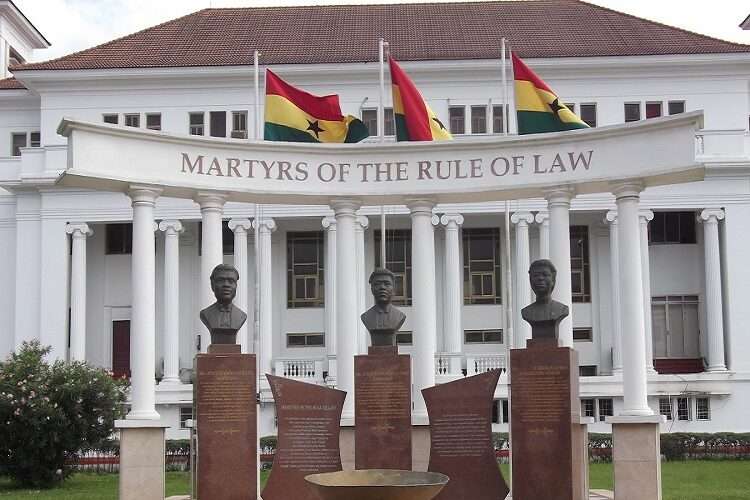
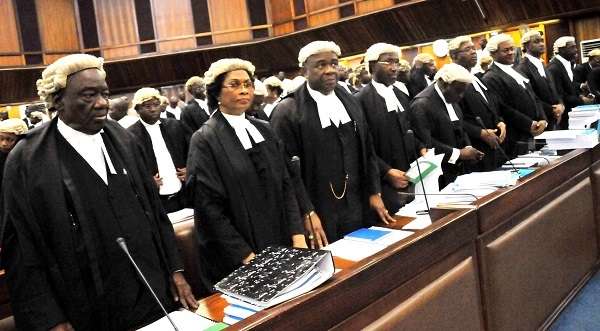
Ghana’s court proceedings have been televised before, but the high public interest in the anti-LGBTQ+ bill has prompted the court to televise the Richard Sky vs Speaker of Parliament case, a first for a non-election petition case.
As such, Ghanaians praised the Supreme Court’s decision to broadcast the hearing, ensuring transparency and direct access to information, bypassing potentially biased third-party media reports.
Accordingly, Prof. Kwadwo Appiagyei-Atua, a law lecturer, emphasized that public involvement in the case hearing enhances public comprehension and demystifies the legal process, fostering greater understanding and transparency.
“It will clear people’s minds about whether there are some ways that the government may be employing to stifle justice. I think it is a good idea. In the wisdom of the Chief Justice or the general legal council, it could be proposed that there are clear guidelines…and rules as in who can take part in the live telecasting”.
Prof. Kwadwo Appiagyei-Atua
Balancing Transparency & Integrity
Sulemana Braimah, Executive Director of Media Foundation for West Africa (MFWA), concurred with Prof. Appiagyei-Atua, noting that while broadcasting court proceedings promotes transparency and reinforces democratic values, it is crucial to uphold the integrity of trials and ensure that the fundamental principles of justice are not compromised.
“Today in the United States, quite a number of states have made provisions that allow for that [media coverage] except that in those circumstances there are procedural mechanisms in place that journalists…would have to abide by. It will be good for us to learn about what happens in the courtroom but we need to go through the processes and the procedure. It has to be gradual…to ensure that the process is not abused”.
Sulemana Braimah
The advent of technology and the increasing demand for transparency in the judicial process have led to a growing demand for live coverage of court cases in Ghana.
While live coverage can promote accountability and public understanding of the legal system, it also poses risks to the integrity of the judicial process.
As such, the establishment of clear guidelines for live coverage is crucial, hence, the judiciary, in collaboration with media stakeholders, should develop guidelines that outline what can be broadcast and what restrictions apply.
For instance, the identities of witnesses or victims may need to be protected, and sensitive information may need to be redacted.
Furthermore, approval from the court should be required before broadcasting live coverage of a trial as it ensures that the court is aware of the live coverage and can take steps to protect the integrity of the process.
As such, the court may need to restrict live coverage in certain cases, such as those involving national security or sensitive personal information.
Moreover, journalists covering court cases should receive training on the principles of trials and procedures in Ghana’s courts as this will ensure that they understand what can and cannot be broadcast live, and can report responsibly.
As such, sanctions should be imposed on media outlets that violate the guidelines or compromise the principles of trials and procedures. This can include fines, suspension of broadcasting licenses, or other penalties.
Responsible live coverage of court cases in Ghana requires a balance between transparency and judicial integrity. By establishing clear guidelines, requiring court approval, preventing disruption, training journalists, monitoring coverage, and imposing sanctions, Ghana’s courts can promote accountability while protecting the integrity of the judicial process.
READ ALSO: NTEs ‘Gold Mines’ In Disguise