Ghana’s banking industry is facing a rapidly evolving digital threat, with artificial intelligence creating new opportunities for fraudsters to exploit financial institutions, compromise customer information and undermine confidence in the banking system.
The growing threat has placed additional responsibility on the Chartered Institute of Bankers, Ghana (CIB Ghana), as its newly constituted Governing Council assumes office with a commitment to strengthen professional standards, ethical conduct and digital capabilities across the banking industry.
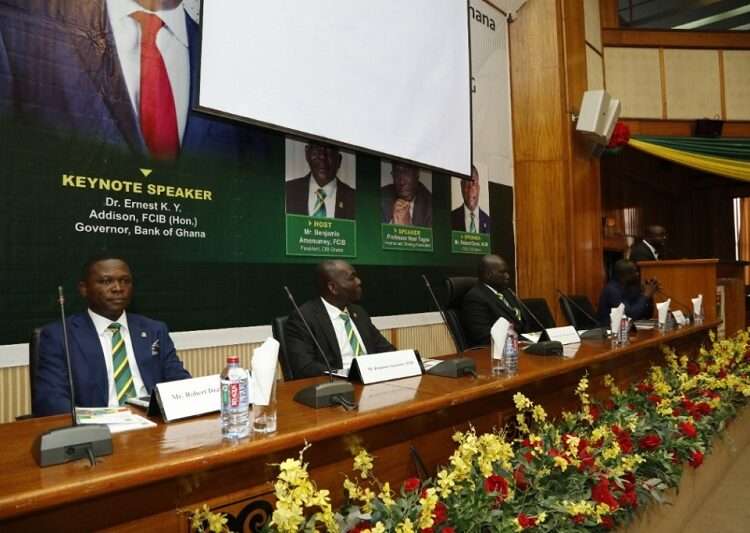
At the swearing-in ceremony held at the Ministry of Education in Accra, the Minister for Education, Haruna Iddrisu, challenged the new Council to confront emerging risks associated with artificial intelligence, particularly the increasing sophistication of banking fraud.
“We expect that you will respond to the new emerging challenge of artificial intelligence and how that can impact on fraud associated with banking in Ghana.”
Haruna Iddrisu
The warning comes at a time when digital banking services are becoming increasingly important to Ghana’s financial system, exposing banks and their customers to increasingly complex cybersecurity risks.
AI Fraud Emerges as a Major Banking Threat
The newly sworn-in Council, led by its President and Chairperson, Dr Mrs Ellen Ohene-Afoakwa, faces an important responsibility in preparing banking professionals to respond to technological developments that are changing how financial services are delivered.
Artificial intelligence is transforming banking through automation, data analytics and improved customer services. However, the same technology is creating opportunities for criminals to develop sophisticated fraud schemes, manipulate information and exploit weaknesses in digital financial systems.
Minister Iddrisu believes CIB Ghana must play a stronger role in preparing banking professionals to identify and respond to these emerging threats.
He urged the Council to fulfil its statutory responsibilities under the Chartered Institute of Bankers, Ghana Act, 2019 (Act 991), particularly in promoting professional excellence, setting standards of competence and ensuring ethical banking practices.
Beyond cybersecurity, the Minister drew attention to persistent concerns surrounding non-performing loans, regulatory compliance and corporate governance.
He stressed that professional integrity must remain central to banking operations, warning that financial institutions cannot maintain public confidence without responsible conduct from their employees.
“Ethics is fundamental to your calling, this is why bankers must provide accurate information, avoid fraud, uphold confidentiality and avoid discriminatory practices.”
Dr Mrs Ellen Ohene-Afoakwa
The concerns reflect the growing expectations placed on banking professionals as financial institutions embrace digital innovation while managing risks that could threaten their stability and reputation.
New CIB Leadership Promises a Future-Ready Profession
Dr Mrs Ohene-Afoakwa, responding on behalf of the Council, acknowledged the responsibility associated with leading the Institute at a time when technology, innovation and emerging financial risks are redefining the banking profession.
She explained that the Council’s mandate extends beyond providing strategic direction and oversight, with a broader responsibility to prepare the profession for the demands of a changing financial environment.
She described the responsibility as one “to help shape the future of the banking profession in Ghana”.
The Council intends to strengthen professional standards, advance digital finance capabilities, promote ethical leadership and create better opportunities for the next generation of banking professionals.
“Banking is ultimately more than just institutions and transactions. It is about enabling business to grow, supporting investments, creating opportunities and contributing to the economic progress of our country.
“Our ambition therefore is to build a profession that is future-ready, globally competitive, strong in integrity, competence and public trust.”
Dr Mrs Ellen Ohene-Afoakwa
Dr Mrs Ohene-Afoakwa also acknowledged the Minister’s concerns about cyber fraud and non-performing loans, indicating that both issues align with the Council’s priorities.
She disclosed that the Institute had already incorporated cybersecurity and virtual assets into its curriculum, alongside data analytics and green finance.
The move is intended to equip banking professionals with the knowledge required to operate in an increasingly technology-driven financial sector.

Bankers Face Mandatory Professional Development Requirements
Beyond the immediate threat of digital fraud, CIB Ghana is preparing to tighten professional development requirements for its members.
The Institute’s Chief Executive Officer, Robert Dzato, reaffirmed that continuing professional development will become an important requirement for maintaining membership and professional status.
He explained that membership will no longer be sustained through subscription payments alone, as chartered bankers will be required to demonstrate continuous learning and professional development.
“To be a member in the institute going forward, it’s not just paying subscription, but you must take a certain minimum number of credit hours in a year to continue to maintain that status as a chartered banker.”
Robert Dzato
The requirement represents an important shift in how the Institute intends to maintain professional competence among bankers.
CIB Ghana is also expanding its training focus beyond traditional banking knowledge to include leadership, soft skills and digital capabilities.
The Institute is strengthening its faculty through recruitment, training and teaching assistants while expanding the use of digital learning platforms.
It is equally working to develop a stronger talent pipeline through university-level banking and ethics programmes, as well as initiatives supporting financial literacy in secondary schools.
The Minister has specifically requested that CIB Ghana advise the Ministry of Education on the feasibility of incorporating financial literacy into the national curriculum.
Banking Industry Braces for Technology-Driven Reforms
The Institute’s renewed priorities will receive further attention at its 30th National Banking and Ethics Conference scheduled for November 9 and 10, 2026.
Under the theme “Trust, Technology and Transformation,” the conference will bring together industry stakeholders to examine the future of banking, digital assets, artificial intelligence, fraud prevention, professional ethics and public trust.
The Governor of the Bank of Ghana and the Minister for Communication, Digital Technology and Innovations are also expected to participate, alongside the Minister for Education, who has confirmed his attendance.
The conference comes as Ghana’s banking industry continues to balance technological advancement with the need for stronger governance, improved risk management and responsible financial practices.
With artificial intelligence increasingly influencing financial services, the pressure on banking professionals to acquire new skills and uphold higher ethical standards is intensifying.
The new CIB Ghana Council therefore faces a defining responsibility: ensuring that technological progress does not create new vulnerabilities that weaken confidence in the country’s financial system.
READ ALSO: Ghana’s Cities Hold Untapped Potential to Transform Economic Growth- World Bank