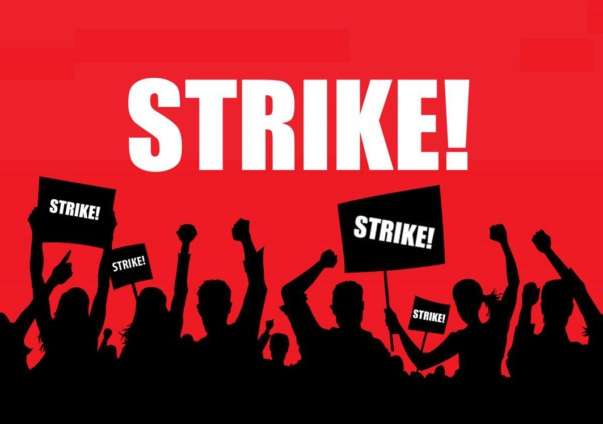
In recent months, Ghana has witnessed a notable increase in industrial actions, driven largely by labour unions’ demands for improved conditions of service and fair wages.
In fact, in recent years, industrial strike actions have become an all too familiar sight across various sectors in Ghana as what was once seen as a last resort for workers to voice their grievances has now become a frequent occurrence, with unions increasingly resorting to strikes as the primary means to press their demands onto the government.
Among the latest to join this trend are the Colleges of Education Teachers Association of Ghana (CETAG), the Medical Laboratory Professional Workers Union (MELPWU) and the Divisional Executive Council of the Public Services Workers Union (PSWU), under the Ghana Trades Union Congress (TUC), National Identification Authority Division.
Again, Senior Staff Association-Universities of Ghana (SSA-UoG), the Federation of Senior Staff Association of Ghana (FUSSAG), and the Teachers and Educational Workers Union of Trade Union Congress (TEWU-TUC), three prominent university staff unions in an industrial action notice addressed to the Fair Wages and Salaries Commission (FWSC), demanded immediate rectification of perceived disparities in the Vehicle Maintenance Allowance (VMA) and other related allowances with immediate effect.
In addition, three major tertiary education workers unions, the Tertiary Education Workers Union of Ghana (TEWU-GH), the Technical University Administrators Association of Ghana (TUAAG), and the Technical University Workers Association, Ghana (TUWAG) have also signalled their irrevocable intention to embark on industrial strike action over similar concerns.
These actions speak volumes about the challenges faced by workers in the country, underscoring a series of grievances rooted in the violation of labour laws and contractual agreements, and workers’ demand for better conditions of service.
A renowned Political Science Lecturer at the University of Education, Winneba, Dr Ishmael Kwabla Hlovor, in an interview with Vaultz News, provided a detailed analysis of the factors contributing to this wave of strikes and their potential implications for the country’s political landscape, particularly in the context of the upcoming 2024 elections.
The Root Causes of Industrial Actions
Highlighting the root causes of the ongoing wave of industrial action in the country, Dr. Hlovor noted that the primary catalyst for the recent strikes is the perceived failure of key institutions, particularly the Fair Wages and Salaries Commission (FWSC) and the National Labor Commission (NLC), to proactively address labor issues.
He asserted that these bodies have often been slow to respond to labour demands, leading to prolonged negotiations that can stretch over years without resolution.
This institutional perceived inertia he noted frustrates labor unions, pushing them to resort to strikes as the most effective means of compelling action.
“But if you observe how the Fair Wages and Salary Commission has engaged labour in this country, it’s as if they adopt a strategy where they eventually want to be negotiating in perpetuity. So to overcome that, labour always tends to use Strike as a means to compel those who are supposed to act to act. So on one breath, yes, it’s becoming common because labor recognize that strike actions are the only means that gets those, actors that should act on their conditions of service to act”.
Dr Ishamel Kwabla Hlovor, Political Science Lecturer at the University of Education,Winneba
Again, Dr Hlovor posited that the economic situation in Ghana has exacerbated the tensions, adding that with the rising living costs and inflation eroding real incomes, workers are increasingly struggling to make ends meet.
This economic pressure he mentioned has intensified labour’s demands for better wages and working conditions, emphasizing that labour leaders are under significant pressure from their members, who view strikes as the only viable strategy to achieve tangible results.
Strikes as a Political Tool
Furthermore, the renowned political scientist, Dr. Hlovor underscored the political dimensions of the recent wave of industrial actions by labour unions in the country.
He noted that in an election year, labour unions recognize the heightened sensitivity of the government to public discontent, asserting that strikes can be a powerful political tool, pressuring the government to accede to demands to avoid alienating voters.
Dr Hlovor emphasized that no government wants to face widespread industrial actions during an election year, as they signal governance failures and can significantly damage the incumbent’s electoral prospects.
According to him, labour unions therefore leverage this political context, pushing for concessions that might be more readily granted in the run-up to elections.
“So, there’s that political capital that labour, leverage on, when it comes to strikes during election years. For instance, at the beginning of the year, I think the Fair Wages and Salaries Commission or the National Labor Commission came out with the issue of zero strikes and they believed that they would deal with labour, demands, promptly, but that has not happened.
“And a lot of labour unions have taken strike as a means to come to put all capers. So what I see, is an attempt by labour to use, the election year and to push through some of the demands that they have made over the years. So, yes, it’s a political tool”.
Dr Ishamel Kwabla Hlovor, Political Science Lecturer at the University of Education , Winneba
The Impact on the 2024 Elections
Touching on the possible impact of the ongoing wave of industrial action on the incumbent government’s fortunes in the 2024 general election, Dr Hlovor indicated that the ongoing industrial actions pose a significant threat to the government’s chances in the 2024 elections.
He asserted that strikes create a negative perception of the government’s ability to manage the economy and address workers’ concerns.
Here, Dr Hlovor added that strike actions provide opposition parties with ammunition to criticize the ruling party, portraying it as incompetent and out of touch with the needs of ordinary Ghanaians.
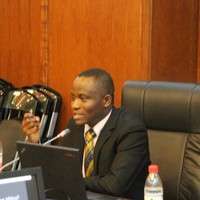
Dr Hlovor further explained that while politically expedient, yielding to labour demands excessively can have dire economic consequences, adding that if the government accedes to all labour demands, it risks exacerbating the already fragile economic situation, leading to long-term fiscal challenges.
This cyclical problem of overspending in election years to placate various interest groups, he noted is mainly responsible for the country’s frequent economic instability post-elections.
“Again, as people go on strike and vital services to the public are not being delivered, the public will not turn on those who are on strike but they always turn on the government. And that is the strategy of most strikes, to get the public onto the side of striking unions, against the government. And once that happened in an election year, it would translate to votes against the government.
“So every government in power is always cautious of this situation. But we are in a very serious economic crisis the government must play a very balanced game, in as much as it wants to meet labour to prevent a strike and to prevent, dissatisfaction for the government, it must look at the sustainability of the various things that labour is demanding for. Because granting them too much of its demands in an attempt to win power will create a big problem for us going forward”.
Dr Ishamel Kwabla Hlovor, Political Science Lecturer at the University of Education Winneba
The Way Forward
To navigate this complex landscape, Dr. Hlovor suggested several strategies. Firstly, he urged the government to communicate transparently about the state of the economy, balancing optimism with realistic assessments of its capacity to meet labour demands.
This transparency he asserted can help manage expectations and foster a more collaborative negotiation environment.
Secondly, Dr Hlovor admonished state institutions responsible for labour relations, including the Fair Wages and Salaries Commission, the National Labour Commission and the Ministry of Finance to adopt a more proactive stance in addressing labour unions’ grievances.
This, he mentioned includes ensuring that key officials are present at negotiations, setting clear timelines for discussions, and honouring existing agreements.
He emphasized that by demonstrating a commitment to timely and effective resolutions, these bodies can reduce the impetus for strikes.
Lastly, Dr Hlovor recommended that both the government and labour unions need to adopt a balanced approach, arguing that while labour unions are justified in their demands for better conditions, they must also consider the broader economic implications of their actions.
Similarly, he urged the government to strive to meet labour’s legitimate needs without compromising the long-term stability of the economy.
From the foregoing, it is without doubt that the surge in industrial actions in Ghana is a multifaceted issue, rooted in economic hardship, and institutional lapses and compounded by political dynamics.
As Dr Hlovor outlined, the solution lies in proactive and transparent engagement between the government and labour unions, ensuring that demands are met within the constraints of economic sustainability.
As the 2024 elections approach, the handling of these strikes will be crucial in shaping the political and economic future of the country.
The stakes are high, and the path forward requires careful navigation to balance immediate labour needs with the long-term health of the nation’s economy.
READ ALSO: Grant Shapps Concedes Conservative Election Struggle