
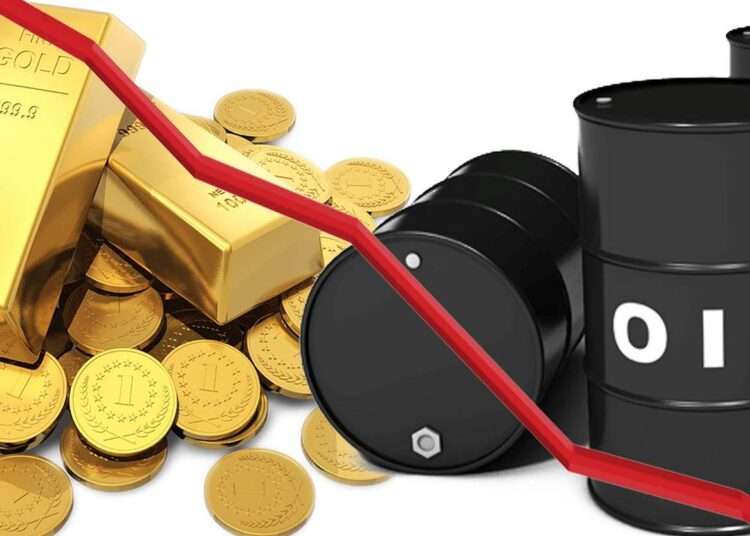
Ghana’s Gold-for-Oil (G4O) programme, launched in 2022, was introduced with the ambitious goal of reducing fuel costs by leveraging the country’s gold reserves to purchase imported petroleum.
The policy was designed to stabilize fuel prices, alleviate forex pressures, and strengthen the local economy. While the initiative aimed to reduce fuel costs and ease the demand for foreign currency, concerns about its effectiveness, transparency, and long-term sustainability have emerged.
A closer examination of Ghana’s economic landscape and findings from the Chamber of Oil Marketing Companies (COMAC) suggest that the G4O programme may not fully achieve its intended objectives.
The fundamental premise of the G4O programme is that using gold as a medium of exchange for oil imports would reduce the demand for U.S. dollars, thereby stabilizing the Ghanaian cedi and lowering fuel prices.
While this approach has some merit, the COMAC report highlights several underlying inefficiencies in the downstream petroleum sector that the programme fails to address.
“While trading gold can indeed help reduce forex demand and stabilize the cedi, it does not directly translate into lower fuel prices.
“Global fuel prices are influenced by a myriad of factors; including supply and demand dynamics, geopolitical risks, and refining expenses; that remain largely outside the control of any single government.”
Chamber of Oil Marketing Companies (COMAC)
Thus, even if gold transactions reduce forex pressures, they do not directly impact the fundamental drivers of high fuel costs in Ghana.
One of the major contributors to fuel price hikes in Ghana is the depreciation of the cedi. According to COMAC, while global oil price benchmarks such as Platts and Argus remain relatively stable year-on-year, the volatility of the cedi exacerbates fuel price fluctuations.
Since Ghana imports most of its petroleum products, priced in U.S. dollars, a weakening cedi increases import costs, which are passed down to consumers.
“Therefore, stabilizing the cedi is not only an economic necessity but also a strategic imperative to mitigate fuel price volatility and curb inflation.”
Chamber of Oil Marketing Companies (COMAC)
COMAC’s analysis over a five-year period shows a direct correlation between cedi depreciation and rising fuel prices. This raises concerns about whether the G4O initiative alone is sufficient to combat inflationary pressures in the petroleum sector.
G4O’s Regulatory Bottlenecks
Beyond exchange rate fluctuations, several inefficiencies in Ghana’s petroleum sector contribute to high fuel prices. COMAC highlighted three key regulatory and operational challenges.
Initially implemented to streamline fuel distribution by assigning specific supply zones, COMAC indicated that the G4O policy has inadvertently led to fuel shortages, logistical delays, and increased transportation costs due to bureaucratic inefficiencies.
COMAC further revealed that the Integrated Customs Management System (ICUMS) introduced has “experienced persistent downtimes, disruptions lead to delays in product loading, increased administrative costs, and heightened uncertainty in the fuel distribution process.”
“Additionally, tax inefficiencies within the Customs Excise and Preventive Service (CEPS) system lead to double taxation, when fuel is sourced from alternative depots. These cumulative costs directly translate into higher prices at the pump.”
These inefficiencies highlight the need for broader sectoral reforms beyond the G4O initiative.
Ghana’s reliance on imported refined petroleum remains a key challenge. COMAC pointed out that the country’s refining capacity is insufficient to meet local demand, despite the recent addition of the Sentuo Oil Refinery. As a result, Ghana remains vulnerable to external oil price shocks and exchange rate fluctuations.
Additionally, inadequate storage facilities and outdated infrastructure further exacerbate supply chain inefficiencies. Limited strategic fuel reserves make Ghana more susceptible to supply disruptions, contributing to price volatility.
The country’s over-reliance on Bulk Road Vehicles (BRVs) for fuel transportation also increases costs and strains the Unified Petroleum Price Fund (UPPF).
G4O to Phase Out
While the G4O initiative represents an innovative approach to addressing fuel price volatility, COMAC argued that it is not a comprehensive solution.
Meanwhile, the Energy Minister John Jinapor has served notice of cancelling the inherited Gold-for-Oil programme instituted by the erstwhile administration.
As the government moves forward with plans to phase out the programme, stakeholders-including Parliament, energy sector players, and the general public-will be closely watching for developments on the new framework that will replace the G4O initiative.
While the Gold-for-Oil programme introduces a novel mechanism for securing fuel imports, its effectiveness remains limited by structural inefficiencies, exchange rate volatility, and regulatory bottlenecks.
Stabilizing fuel prices in Ghana requires a broader, multi-faceted approach that addresses systemic challenges in the petroleum sector.
Without these critical reforms, the G4O initiative risks being a short-term intervention rather than a sustainable solution to Ghana’s fuel price challenges.
READ ALSO: GSE Sees Positive Momentum as Bulls Return